
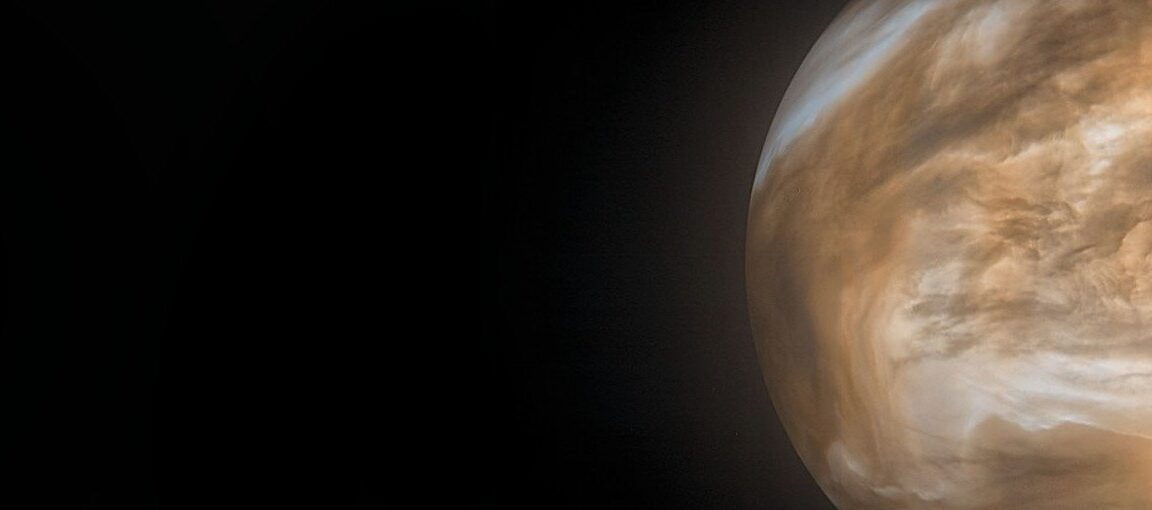
A recent study has unveiled the mystery behind the yellowish "lower haze" of Venus, revealing that it is composed of cosmic dust particles from meteorites. This haze was first observed by the Venera and Pioneer Venus probes in the 1970s, but its origins remained unexplained for decades.
Discovery of the Haze
The haze forms when sulfuric acid interacts with particles left behind by meteorites that burn up in Venus' atmosphere. Hiroki Karyu, a planetary scientist at Tohoku University in Sendai City, Japan, and his research team utilized a microphysical model to understand the formation of this haze. Karyu stated,
“"The continuous influx of cosmic dust is sufficient to sustain this lower haze layer with the particle size distribution observed by the entry probes."
Previous Theories
Earlier theories suggested that the haze could be a result of volcanic ash, given that Venus is known as the most volcanically active planet in our Solar System. However, Karyu's research indicates that volcanic ash is not the source of the haze particles.
- Key Findings:
- Surface dust was ruled out as a contributor to the haze.
- Even larger influxes of volcanic or surface dust would not interact with the atmosphere’s sulfur in the necessary way to form the haze.