
After five years of work, 5,750 panels of toughened glass will help keep hundreds of plants safe from Scottish winters, but more work needs to be done.
A Fragile Sanctuary
In the early autumn sunlight, the Royal Botanic Garden Edinburgh’s extensive plant collection appears safe in their glass enclosures. However, danger lurks from above for the tropical ferns, cycads, and rare alpine heathers. Soon, the September sunshine will give way to the storms and gales of the Scottish winter, which can bring hundreds of glass panels crashing to the greenhouse floor on the windiest days. Nobody is allowed inside when the wind is above 30 mph.
““We’ve had plants that have essentially been decapitated by falling bits of glass,” says Sadie Barber, the glasshouse curator at RBGE. “You go into one of these tropical spaces in winter and there’s icy air coming in. It’s traumatic for those of us who put decades into caring for these plants. A storm can literally just wipe them out.”
Restoration Efforts
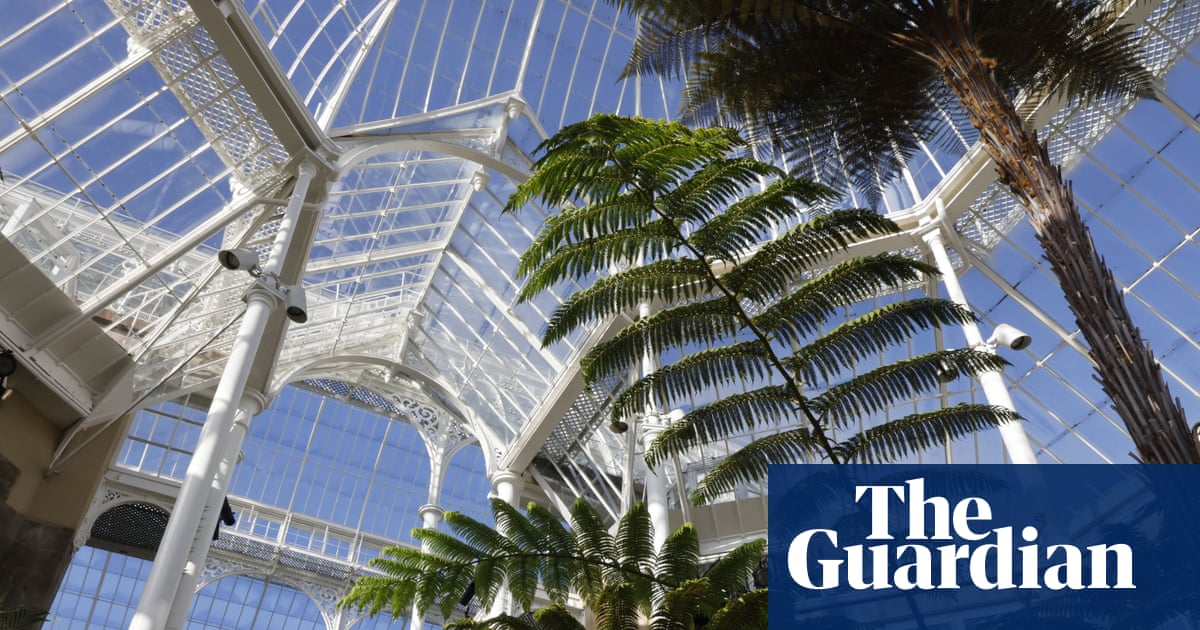
This week, change is in the air for the creaking infrastructure at the 356-year-old botanic garden, the second oldest in Britain after Oxford. On Friday, the palm houses are reopening after five years of painstaking restoration work, complete with 5,750 panels of toughened glass to keep out the elements. Before they closed for renovation works, the horticultural team had installed a net in case panels fell from the weathered structure. The new ones are not bulletproof, but they are strong enough to resist a bird strike.
The £23.5 million refurbishment has kept nearly all of the original sandstone and wrought iron shell. Inside, more than 600 temperate plants have returned to the building. The air is clean and crisp, purified by ferns that naturally remove toxins from the air. Its temperature and humidity are still controlled by the original pulleys and winches.