
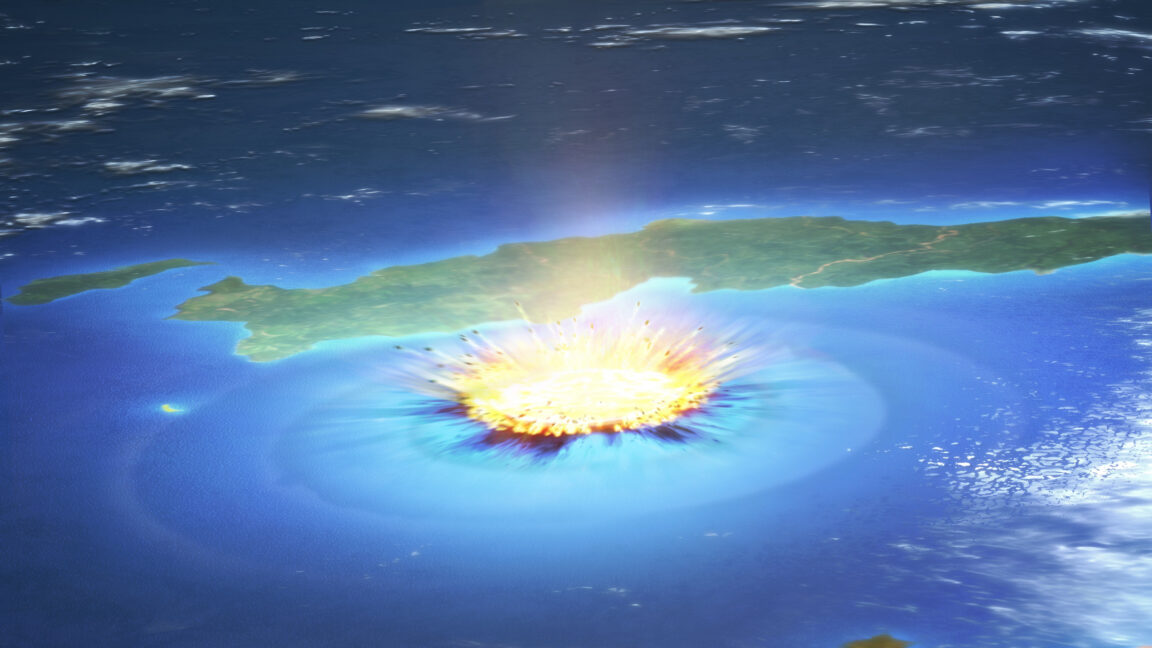
Hot, nutrient-rich water may have persisted for over 5 million years after the Chicxulub impact, which occurred about 66 million years ago. This asteroid collision not only caused massive tsunamis and the extinction of non-avian dinosaurs but also created conditions that could have supported life.
The Impact and Its Aftermath
The Chicxulub asteroid struck what is now the partially submerged Yucatán Peninsula, generating enough heat to create a hydrothermal system that lasted for 8 million years. Researchers who drilled for samples in the impact zone in 2016 studied the types of rock formed as a result of the asteroid strike, providing insights into the immediate and long-term effects of this catastrophic event.
The collision was intense enough to deform rock layers far beneath the surface, reaching depths of 35 km (almost 22 miles). This deformation melted a significant amount of rock, which, when exposed to seawater, became porous. Hot water seeping into these pores likely created a hydrothermal system that could have attracted microorganisms and other life forms struggling to survive in the harsh conditions.
New Findings on Hydrothermal Activity
A recent study led by Annemarie Pickersgill, a geologist and planetary scientist at the SUERC Center for Isotope Sciences at the University of Glasgow, examined rock samples for further evidence of the hydrothermal system's formation and longevity. Contrary to previous beliefs that the system lasted only 2 million years, the new analysis indicates it remained active for at least 8 million years.
““Longer periods of hydrothermal activity will generate extended windows of opportunity for prebiotic chemical reactions to occur, life to develop, and microorganisms to thrive and propagate beyond their point of origin,” said Pickersgill in a study published in Communications Earth & Environment.