
Introduction
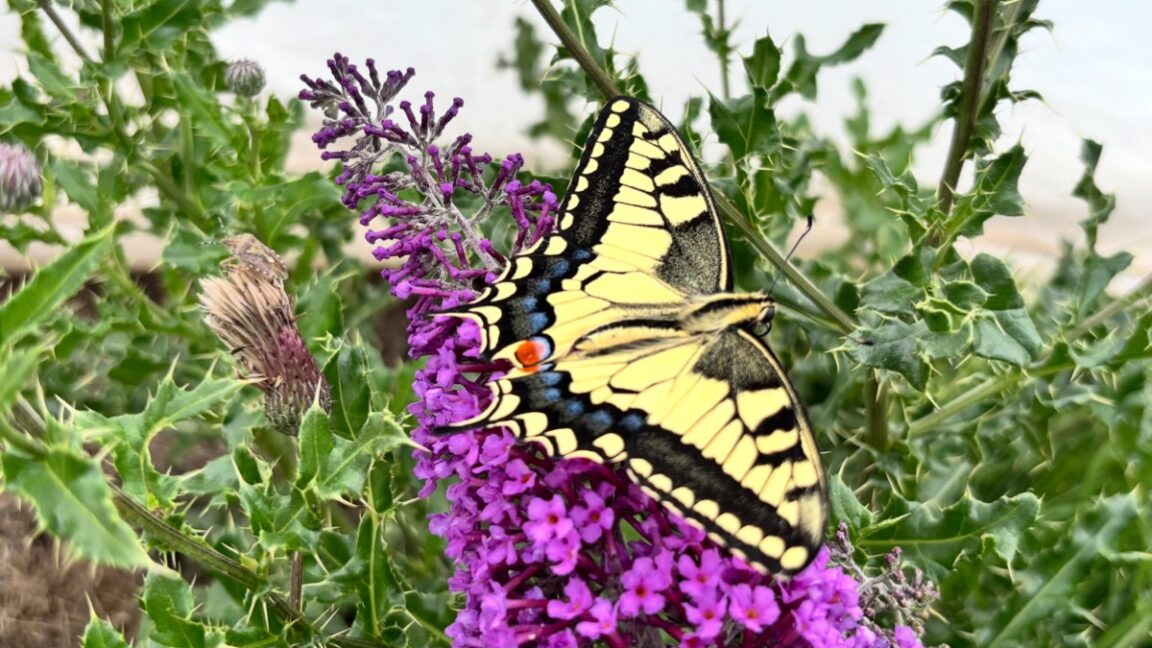
A recent study published in the journal Nature reveals a fascinating connection between butterfly wings and the visual illusion created by barbershop poles. The research suggests that the unique flight and wing patterns of butterflies create a "motion dazzle" effect, making it difficult for predatory birds to accurately gauge their speed and direction.
The Motion Dazzle Effect
George Hancock, a co-author of the study from the University of Exeter, explains:
“"The stripes and spots on many butterflies’ wings interfere with the way visual systems try to guess the direction and speed of moving things, boosting false motion cues while hiding the butterfly’s true heading."
This illusion disrupts the predator's visual targeting system, leading to missed attempts at capturing butterflies. The study highlights how these patterns serve as an effective anti-predator defense mechanism.
Historical Context
Butterfly wings have intrigued scientists for decades, with the first documentation of their growth occurring in 1938. By 2021, researchers at MIT captured the structural growth of butterfly wings on video for the first time, showcasing their development inside the chrysalis.
Butterfly wings are a prime example of structural color in nature, where bright iridescent colors arise from photonic crystals rather than pigments. The arrangement of chitin scales on the wings creates a diffraction grating that produces specific colors of light.
The Paradox of Visibility
Hancock and his team sought to understand a paradox: despite their striking patterns, butterflies are rarely caught mid-flight by predators. This contrasts sharply with more plainly colored moths, which are often targeted by airborne predators. The researchers hypothesized that the vibrant wing patterns might function as a form of camouflage known as "motion dazzle."