
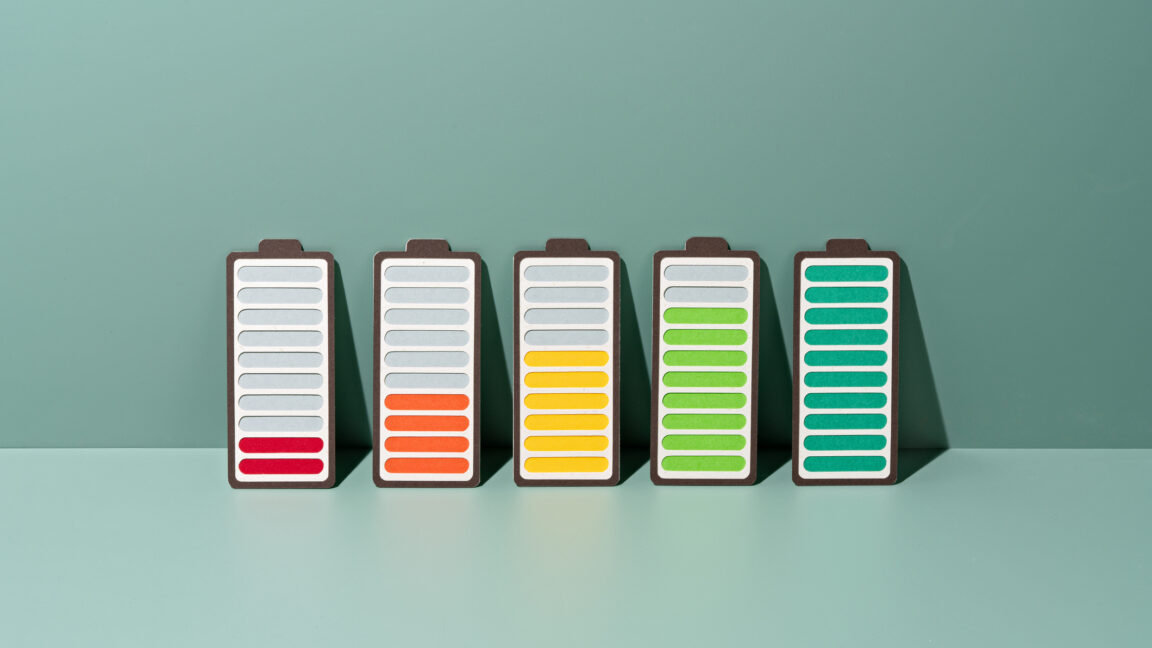
A new study led by James Buchen from the University of Delaware presents an innovative battery-based electrochemical technique for capturing carbon dioxide (CO2) that promises to be more energy-efficient than existing methods. This device captures CO2 from ambient air or smokestacks using a process that requires less energy than traditional reversible filter systems.
How It Works
Current carbon capture technologies typically involve passing air through materials that absorb CO2, which is then released through heating. In contrast, this new approach utilizes a battery-like system where hydroxide produced at the battery cathode reacts with CO2, converting it into carbonate or bicarbonate. This compound then travels through a separator membrane to the anode, where a lower pH reverses the reaction, releasing CO2 gas.
Key Components
- Cathode: Produces hydroxide ions.
- Anode: Consumes hydroxide ions.
- Both electrodes are made of nickel hydroxide, similar to those found in traditional rechargeable batteries.
The device operates like a chemical seesaw, where applying voltage in one direction drives the reaction forward, and reversing the voltage switches the roles of the electrodes, continuously capturing CO2.