
In a recent study, scientists have clarified a long-standing mystery regarding a reported train delay in Exeter caused by a geomagnetic storm in 1841. The original account, published in Nature in 1871, mistakenly attributed the event to the wrong year, which was identified as a typographical error.
Background
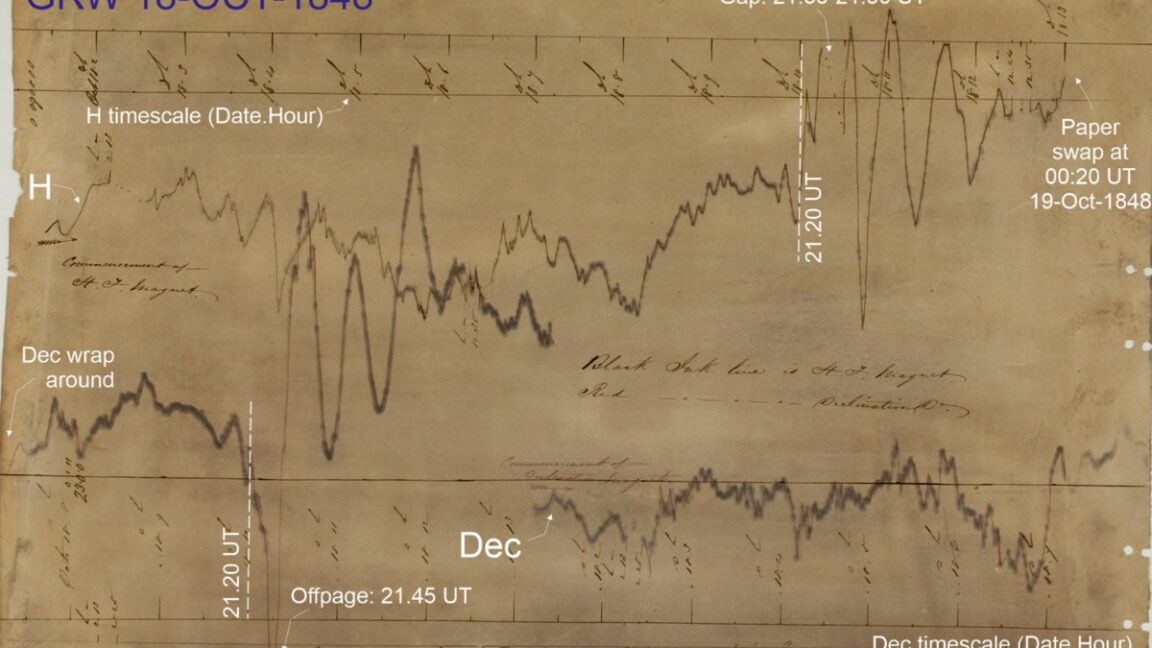
The Carrington Event of 1859 is widely recognized as the first extreme space weather event, but disturbances to telegraph systems during geomagnetic storms have been reported since the late 1840s. An anonymous report from 1871 described a significant magnetic disturbance that disrupted rail travel in Exeter in October 1841. If accurate, this would mark the earliest known account of such an event.
Key Findings
According to a paper published in the journal Space Weather, the date of the reported railway disruption is likely incorrect. Co-author Jim Wild from Lancaster University stated:
“"Space weather is often discussed as a modern challenge because of our dependence on technologies such as satellites, communications systems and electricity networks. What this study shows is that society has been experiencing the effects of space weather on technology for almost as long as electrical technologies have existed."
The Carrington Event remains the most powerful geomagnetic storm on record, causing widespread auroras and disruptions to telegraph systems. During this event, some telegraph operators were able to send messages even after disconnecting their power supplies, relying solely on the auroral current.