In the final part of our series on Poland, citizens reflect on how wages have soared alongside the rising cost of living.
A New Skyline
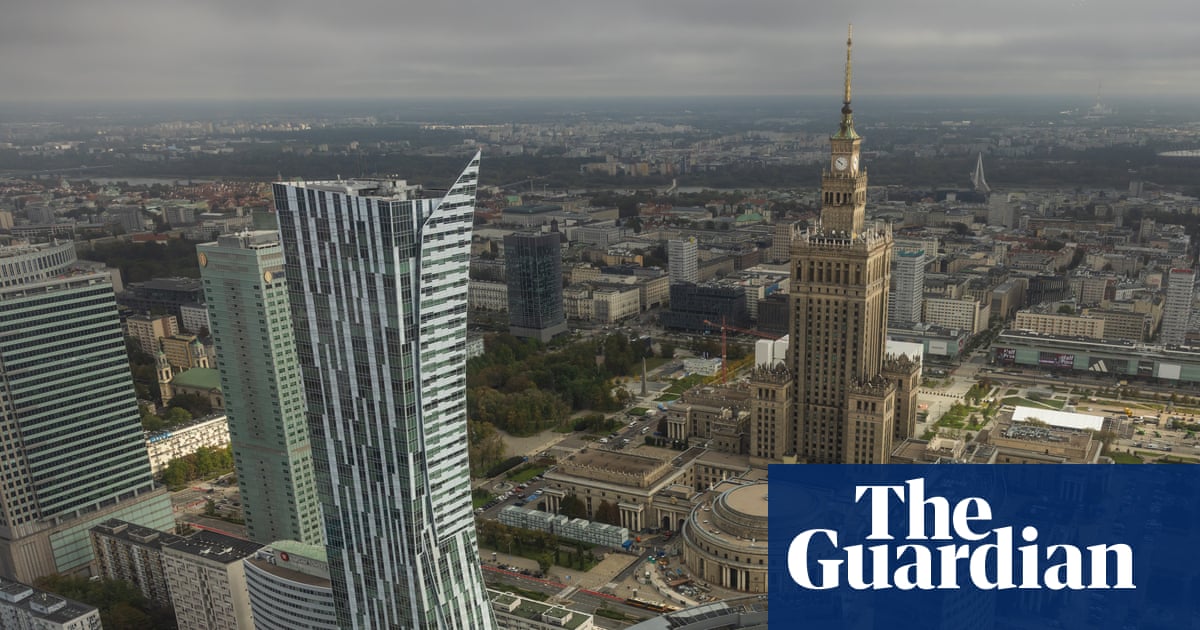
Above the rain-soaked streets of Warsaw, the observation deck of the Varso Tower overlooks the Palace of Culture and Science, a Soviet-era structure that has divided opinion for decades. For some, this palace is a relic of oppression that should have been demolished, while for others, it stands as an iconic warning from history.
For the managers of the Varso, completed four years ago and now the tallest building in the EU, it symbolizes Poland’s rapid economic growth. Cezary Błaszczyk, managing director of HB Reavis in Poland, gestures at the palace and states, "We look down on it." His colleague, Natalia Kasperska, adds, "It was a symbolic walk from the past to the future. Since we are higher and taller than the Palace of Culture, we treat it as: ‘We got over communism, and now we are a country with a strong economy.’"
Economic Transformation
Over the past four decades since regaining independence from Soviet rule, Poland has undergone a remarkable transformation. Excluding oil-exporting states and financial hubs, Polish incomes have converged with western levels at the fastest rate globally, rising from 40% of the EU average in the mid-1990s to 81% last year. National income surpassed $1 trillion (£755 billion) last year, placing Poland among the world’s 20 largest economies. Projections from the International Monetary Fund indicate that income per capita will soon exceed that of Japan and Spain.
Marcin Bosacki, the Polish deputy foreign minister, recalls the struggles of the 1980s, stating, "Four decades ago, we were in – excuse my English – deep, deep shit." He remembers waiting in long lines for basic goods during the communist regime. The Solidarność movement and Pope John Paul II’s 1979 pilgrimage to Poland paved the way for the country’s transition to democracy in 1990, leading to what many describe as an “economic miracle.”
Migration Trends
For years, many Poles emigrated to earn more abroad, particularly after joining the EU. The term "Polish plumbers" became synonymous with foreign labor in the UK. However, since 2021, twice as many Poles have left the UK compared to those who arrived. Interestingly, Germany has seen more non-Germans moving to Poland than vice versa for the first time on record in 2024.