In today’s newsletter: As Russia resists a ceasefire and Trump’s shifting priorities unsettle allies, an end to the conflict isn’t getting any closer.
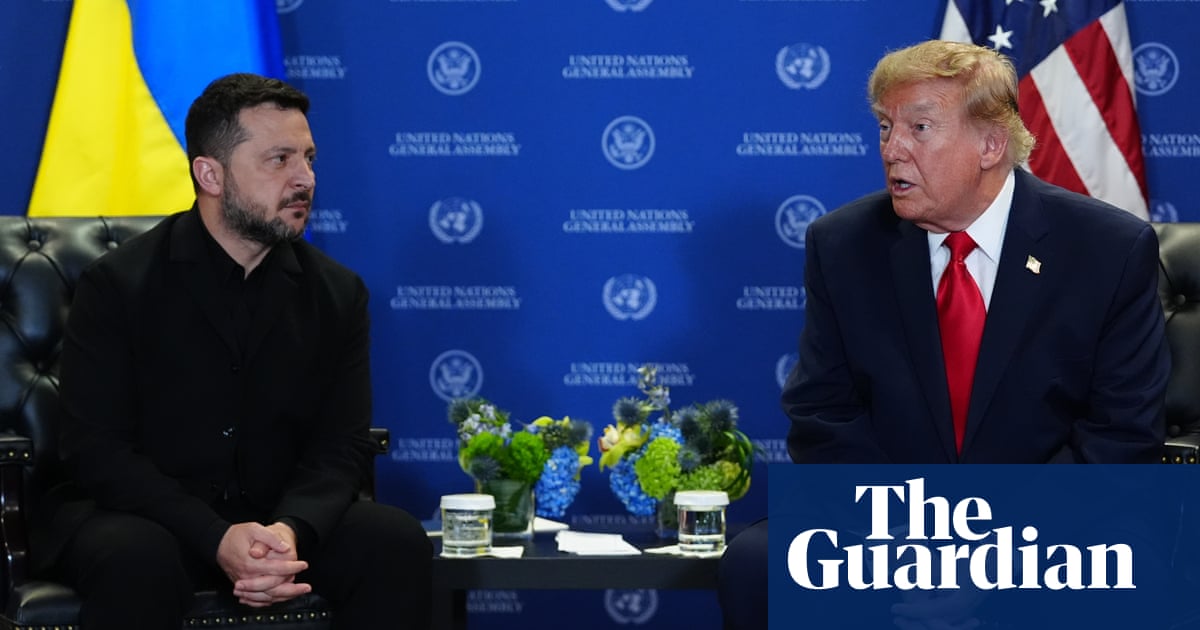
Good morning. In his usual unconventional approach to international relations, Donald Trump announced on Sunday via Truth Social an "ENERGY CEASEFIRE in the War between Russia and Ukraine", apparently without checking with either side. Volodymyr Zelenskyy, who said any such deal was "news to me," nonetheless declared he was "ready and we will accept it". Vladimir Putin responded by blowing up some Ukrainian power plants. This has been the tenor of much diplomacy during Trump’s tenure: false starts, U-turns, incoherent positions, and some playful flirting with Vlad.
Meanwhile, fighting continues, and America’s allies attempt to manage the fallout. Andy Burnham hosted Zelenskyy at Downing Street yesterday, stating the UK is doubling down on its support for Ukraine, and pointedly calling on others to "follow suit". It’s a negotiator's nightmare.
Diplomatic Challenges
So how are ambassadors, spooks, and diplomats handling the chaos? Is an actual ceasefire or peace deal within their grasp? For today’s First Edition, I spoke to career diplomat and former ambassador Nigel Gould-Davies to find out.
Before that, this morning’s headlines:
- UK: Sally Rooney has said she is being forced to withdraw her books from sale in the UK because of her support for the banned organization Palestine Action.
- Gaza: Israel is refusing to allow a key military outpost project for Donald Trump’s Board of Peace to proceed in Gaza, the Guardian has learned.
- EU: Britain will benefit from much closer trading relations with the EU even if that means giving up its ability to negotiate free trade agreements, the Scotland secretary has said.
- Ukraine: Ukraine’s military has suddenly had its access to Starlink satellite internet terminals restricted as the Trump administration has increased pressure on Ukraine to immediately halt long-range strikes on Russia’s oil industry.
- Vaccine: Guinea-Bissau has not approved the controversial hepatitis B study in newborns that would be funded by the US government and private partners, the African country’s minister of health said.
Since Russia’s full-scale invasion of Ukraine in early 2022, efforts to secure either a temporary ceasefire or a permanent peace deal have resolutely failed. Endless rounds of talks in Belarus, Turkey, Abu Dhabi, and Geneva have all proved futile. To Nigel Gould-Davies, it’s obvious why. A former British diplomat, he was head of economics at the Foreign Office in Moscow before his stint as the UK’s ambassador to Belarus. Today, he is senior fellow for Russia and Eurasia at the International Institute for Strategic Studies.
Gould-Davies tells me that there are established norms for negotiating during military conflicts. Diplomats look for the interests, needs, and red lines that each side articulates, in pursuit of the elusive "win set".
“"A peace agreement is only possible when both sides believe that it better serves their interests to end the fighting than to continue," he says. "You have to find that overlap in the Venn diagram that leads to a defined set of conditions which, despite involving painful compromises, is ultimately judged to better serve each side than continuing to fight."
The problem with this situation is that Russia has no interest in ending the war, he says. Tricky to find common ground, then.
The Non-Standard President
It is through this lens that we should view all Russia-Ukraine talks since Trump’s return to the presidency, Gould-Davies suggests. "They have not really been negotiations," but "parallel efforts by Russia and Ukraine to persuade the White House it’s the other side’s fault" that a peace agreement (and, perhaps more importantly to Trump, that elusive Nobel peace prize) had failed to materialize.