
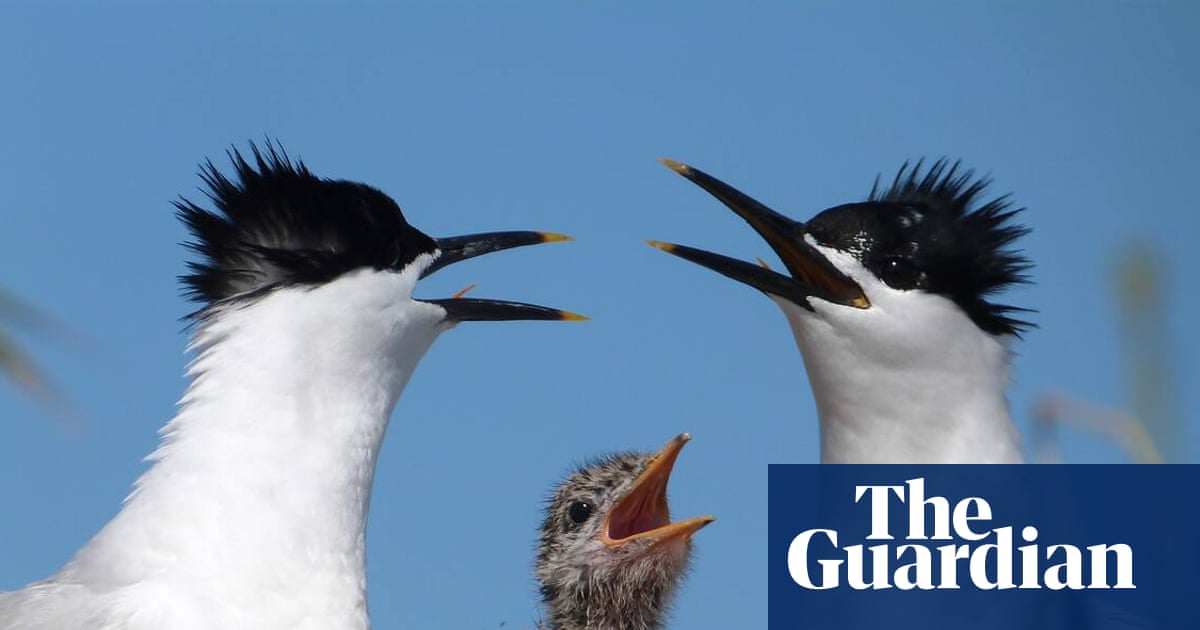
Conservation work by RSPB has led to a remarkable recovery of terns, gulls, plovers, and oystercatchers along England’s south coast. The colony of sandwich terns nesting at Pagham Harbour, West Sussex, was completely wiped out by bird flu in 2022. However, numbers have bounced back from zero to 756 breeding pairs in just three years due to dedicated conservation efforts in the Solent region.
Recovery of Bird Populations
Populations of breeding little terns, ringed plovers, oystercatchers, and black-headed gulls have also seen significant increases along the same coastline. This turnaround is attributed to the hard work of RSPB staff and volunteers at the Pagham Harbour Nature Reserve and similar initiatives across 52,000 hectares (or 128,000 acres) of coastline and estuary between the south coast and the Isle of Wight.
The sandwich terns produced 570 fledglings at Pagham Harbour this summer, marking one of the largest colonies ever recorded in the Solent region. Notably, the number of black-headed gulls increased tenfold, from 51 fledglings in 2025 to 504 in 2026, while little terns rose from 21 last year to 34.