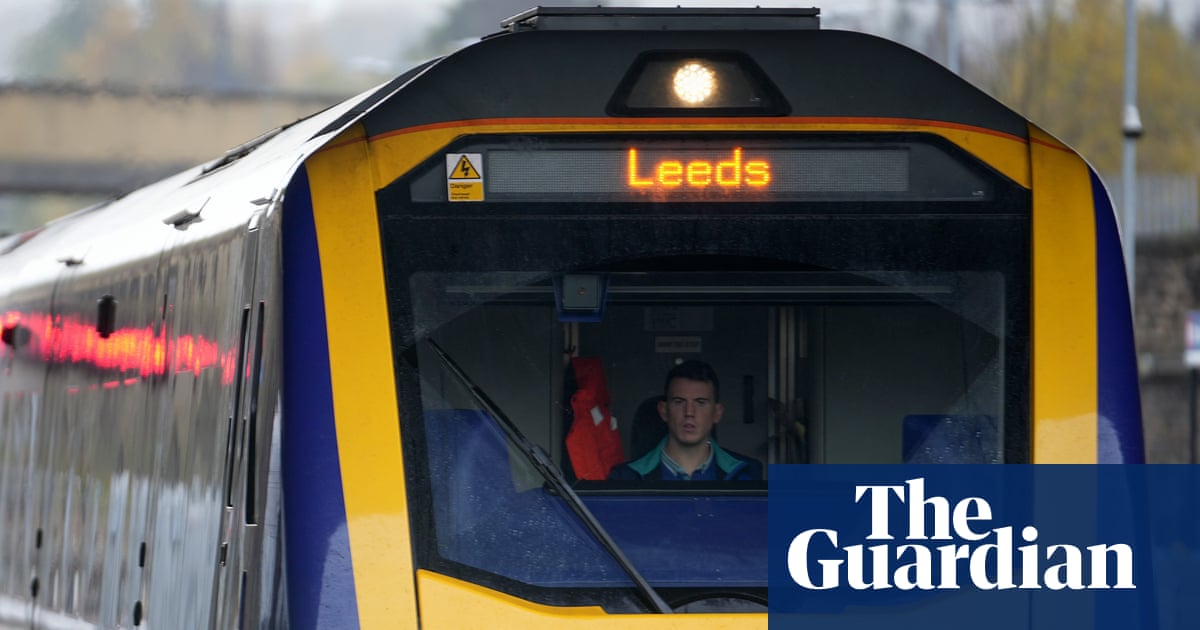

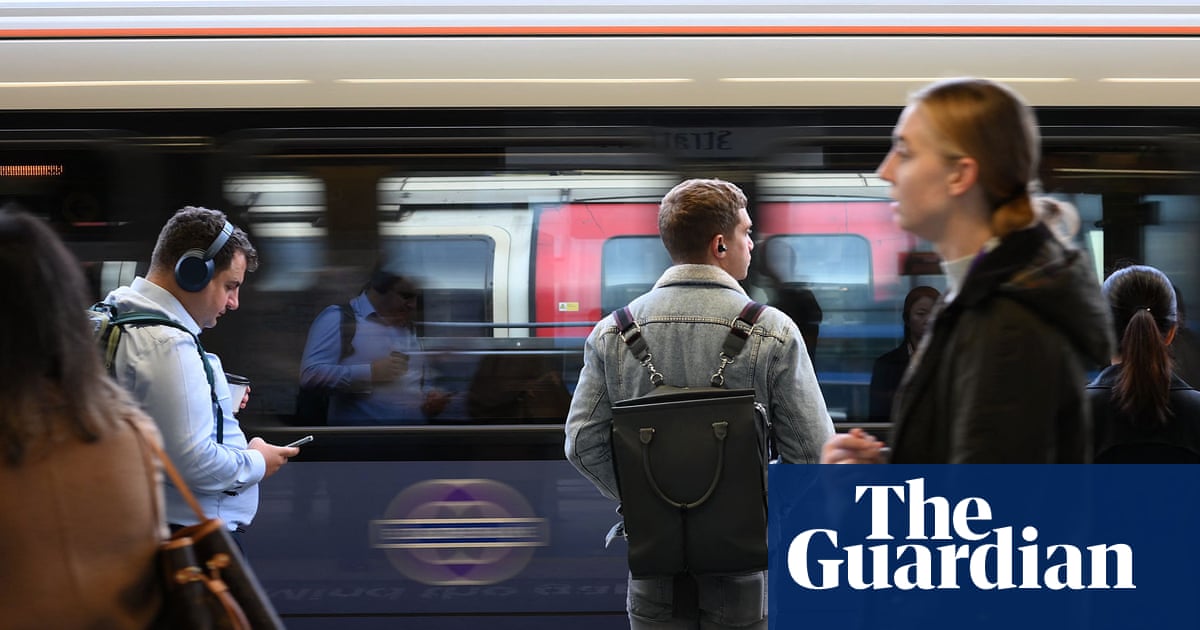
In today’s newsletter: The prime minister’s campaign against noisy passengers has struck a chord with commuters. Whether anyone hears him remains to be seen.
Good morning. Me again, back from the October school holiday (a week in glorious Wales, thanks for asking) and ready to hear your commuter woes. For our prime minister, it’s “one of the most annoying things on public transport”: maybe you’re trying to work, or read, or you’ve finally got your kid to sleep, when someone starts blasting sound from their phone at full volume.
As I sign off this First Edition en route from Glasgow to London (the things I’ve heard on this commute, against my will, I’ll save for another newsletter), I’m hoping everyone has been paying attention. I’m struck by how few voices there have been suggesting Burnham should be concentrating on more important matters. It seems to me that other people’s noise, and other inconsiderate behaviour on public transport, has become shorthand for wider concerns about social cohesion, generational conflict and political fragmentation. Put simply, we are all making much more noise, and have become much worse at listening to what anyone else is actually saying.
Headlines
- France: The prime minister has said he has asked regional authorities to impose partial curfews in some cities after the government admitted police had “lost control” in several places during violent weekend protests around the country.
- UK politics: Andy Burnham has told officials to rip up their plans for how to fix Thames Water and present him with more radical options for what to do with the stricken company.
- Yemen: At least 53 people have been killed in a Houthi ballistic missile attack on a training camp for Yemeni government forces in the largest single loss of life since the country’s civil war reignited in September.
- Israel: Israeli police have detained 10 people in a rare raid against settlers, after a weekend of extreme violence in the occupied West Bank including an attack on US photojournalist Heidi Levine.
- Reform: Nigel Farage undermined his own claims that a £5m gift was for security when he referred to the money as a reward for Brexit, according to one of his closest aides.
Burnham's Campaign Against Noise
When Andy Burnham launched his crusade against unnecessary noise and antisocial behaviour on public transport with a chatty Instagram post recorded on a morning train into Manchester Piccadilly, my first thought was: “I bet he didn’t upload that on the dodgy onboard wifi.” The prime minister’s sights were set on the phenomenon described as “loudcasting” or “headphone dodging” – but you don’t need a specialist term, because you know it when you hear the passenger next to you blasting Facebook slop on loudspeaker.
Alongside a nationwide campaign encouraging people to plug in their headphones and “share the carriage, not the noise,” Burnham announced new guidance to help local transport authorities introduce fines of up to £100 for nuisance behaviour like vaping, littering and playing loud music or videos on buses. Train operating companies already have powers to impose fines of up to £1,000 for antisocial behaviour.
If you’re grinding your molars at the thought, you’re not alone. A hefty majority of Britons, about 88% according to recent polling, consider it unacceptable to play music out loud on a train.
Enforcement Challenges
Who will actually enforce the rules? It’s still unclear how these new rules would be enforced. Government officials have reassured bus drivers that they won’t be expected to police passengers themselves. That job will fall on transport safety officers or police officers.
Mark, a bus driver in central London, tells me he and his colleagues simply don’t have the capacity to help. He spends his working life in the glass cabinet at the front of the vehicle. He can’t hear every noise or spot every puff of vape smoke on the top deck, and, as well as navigating the city traffic, he already has other things to focus on, such as fare-dodging.
Mark’s route has become noisier in recent years, though he’s keen not to point out “it’s an all-ages” issue, and not to lay the blame solely with younger passengers. He doubts whether Burnham can isolate the problem to public transport. “It’s a whole society thing: being kinder and more aware of their environment.”
““It’s not workable without resources,” he says. “I don’t really see how it would be enforceable: you can’t have someone on every bus and train.”
Here lies the difficulty: fines for nuisance noise on trains are already vanishingly rare, with offenders able to shut up or leave the carriage before enforcement arrives. The number of British Transport Police (BTP) officers has fallen by more than 10% over the past two years. The people left to challenge the noisy doom-scroller are, therefore, you and me.