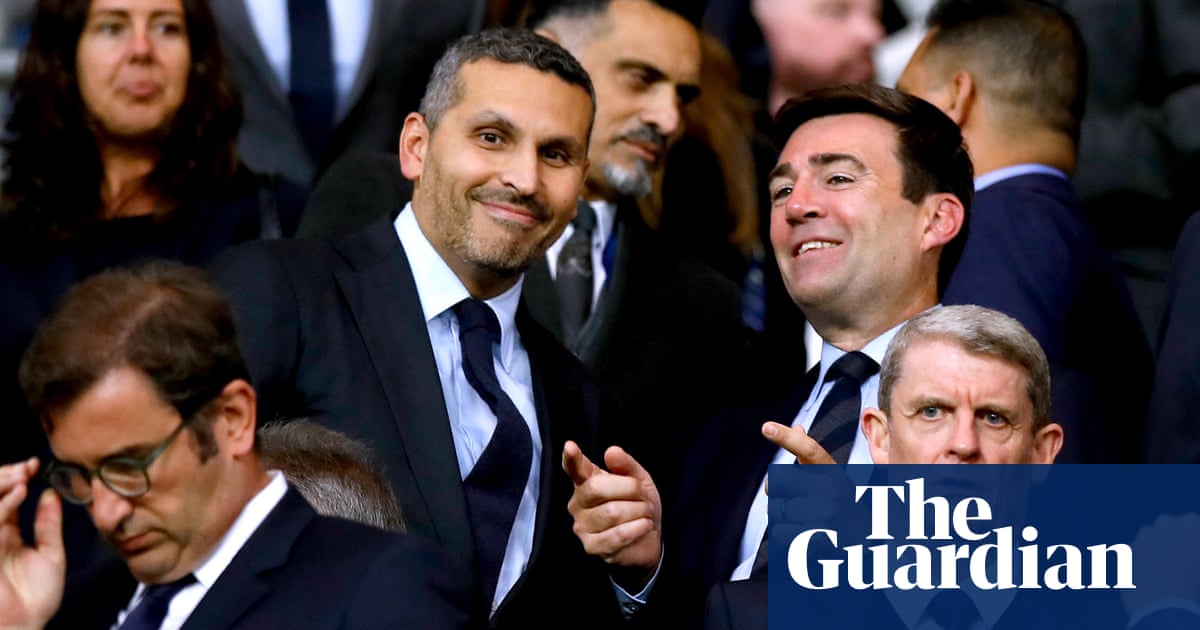

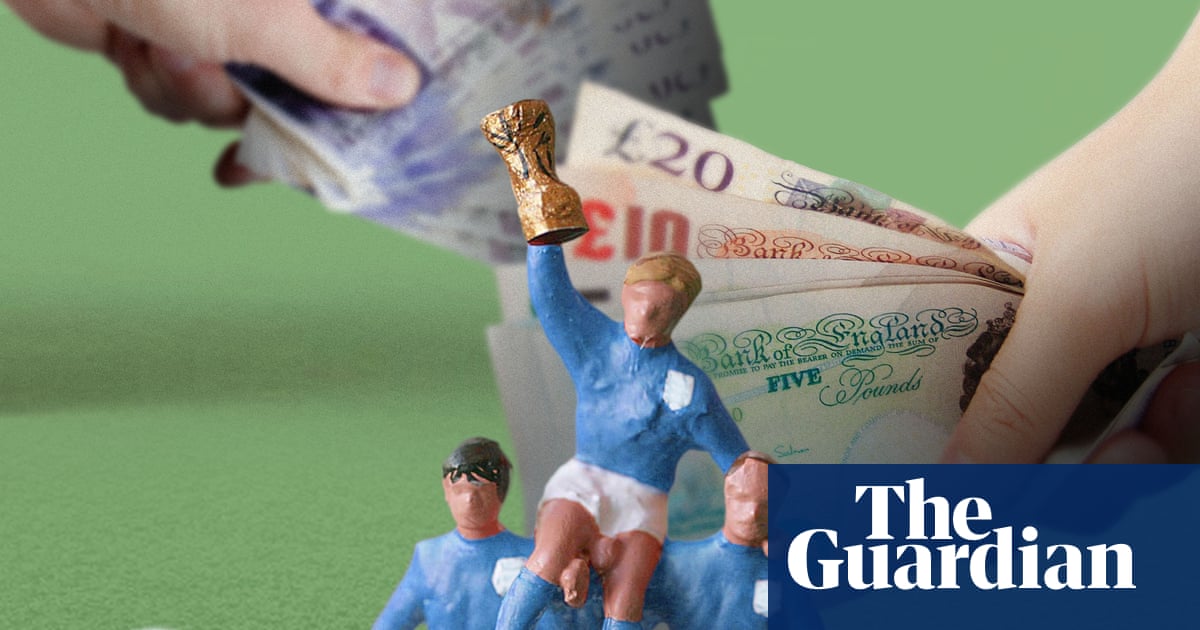
On the day Andy Burnham spoke of the wrong turn Britain took under Thatcher, football faced a day of reckoning over its own story of corporate acquisition. It was somehow fitting that Tuesday’s damning ruling against Manchester City landed in the heart of the Labour party conference, in the afterglow of Burnham’s rapturously received prime minister’s speech.
I was there, and read the astonishing 40 pages of findings – that City created “sham” contracts to boost income artificially by £900m – on my phone during a long meeting of the Socialist Campaign Group, where people were celebrating Keir Starmer’s ousting and Burnham’s more leftwing direction.
The Context of Burnham's Speech
At the core of Burnham’s speech was the wrong turn he says Britain took under Margaret Thatcher in the 1980s, selling off and privatising council housing, water, energy, transport, and care. “We built the common good,” he said, but “the common wealth … created for the many was seen as an opportunity for the few.” He could have been talking about football, too.
Where Manchester City have ended up, having been bought by Sheikh Mansour of the Abu Dhabi ruling family in 2008, is a culmination of decades in which “the people’s game” has been carved up for profits. Clubs like City, formed in the Victorian smog of industry by churches, schools, and workplaces, were sold off just when football finally had enough wealth to go round.
A Personal Reflection
I investigated and reported on that financial carve-up in my early years of journalism, and Burnham worked on it too, at the start of his political career, as the administrator of New Labour’s football taskforce. My 1997 book, The Football Business, in which I likened football’s commercialisation to Thatcher’s privatisations, resonated with many supporters’ groups campaigning against rocketing ticket prices, exclusive pay-TV deals, and the drawbridge the newly mega-rich Premier League had pulled up behind it.
My moment of clarity had come at Manchester City, reporting on an earlier takeover in 1994 by a beloved former player, Francis “Franny” Lee. I grew up in Manchester and from as early as I could answer the challenge – “which club do you support?” – it was always City for me. My dad took me, fast-walking, hand-in-hand, to big matches in the 1970s, floodlit glory nights of my boyhood.
For supporters of my generation, the only trophy City won was the 1976 League Cup, claimed with a wondrous overhead “bicycle” kick goal by our winger, Dennis Tueart. I like art as much as the next ignoramus, but the photograph of Tueart’s goal must be the picture I have gazed at more than any other: the perfection of it, Tueart’s straight back in mid-air, arcing the ball behind him into the Wembley net, Newcastle’s opposition defenders frozen in time forever.
The Corporate Takeover
Unlike Manchester United, Liverpool, and Arsenal, City never had a period of sustained success. They compressed a golden age into two years, 1968-70, and soon after that League Cup triumph, they were relegated in 1983. For years, while City fans became celebrated for their loyalty and humor, there always remained a mournful yearning for success to return.
When Lee finally took City over, acclaimed by all supporters, it seemed like deliverance. As a fan in the old Maine Road stadium, I cheered him on Saturday, then as a journalist on Monday I pestered for an interview. They agreed, and I was escorted behind the scenes, along some threadbare corridors into the chairman’s office, where Franny sat glowing behind the desk.
Everybody involved was so delighted to have pulled it off that they shared details quite gleefully. And that was when I first understood that Manchester City wasn’t a club at all. It was a company, with “owners,” and this had been a corporate acquisition.
Franny was one of many other business people, a consortium, who had bought the shares. Later, one of the lawyers proudly showed me some corporate engineering they had done. They had formed a holding company, Manchester City plc, that would own the old football club company.