

Prof Francis Halzen has been awarded the Nobel Prize in Physics for his significant contributions to the development of the IceCube Neutrino Observatory, which detects particles from space and enhances our understanding of the distant universe. Halzen's groundbreaking work at the South Pole utilizes a cubic kilometer of Antarctic ice embedded with light sensors to identify neutrinos, particles that convey information about high-energy cosmic events.
Background of IceCube Neutrino Observatory
The Royal Swedish Academy of Sciences recognized Halzen's vision and leadership as fundamental to the success of the IceCube project. He first proposed the idea of detecting neutrinos at the South Pole in 1988. Now a US citizen and a professor at the University of Wisconsin–Madison, Halzen expressed his surprise at the project's success during a news conference, stating,
“"I have to emphasize how lucky I was. Because when we started this project, everybody realized this was maybe a good idea, but very few thought it would work, including myself."
The Role of Neutrinos in Astronomy
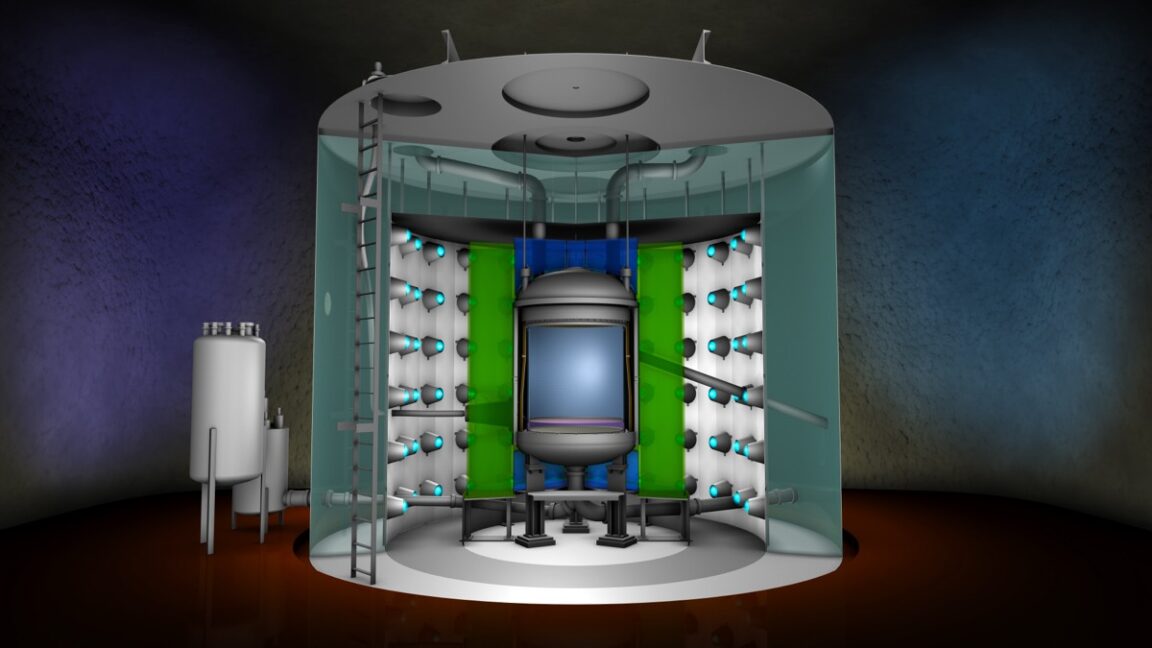
Neutrinos are elusive subatomic particles produced in vast quantities by the Sun, with billions passing through a fingernail-sized area every second. However, IceCube focuses on detecting high-energy neutrinos generated by violent cosmic processes in distant galaxies. The observatory consists of thousands of sensors connected by long cables, drilled and frozen into a cubic block of ice.