
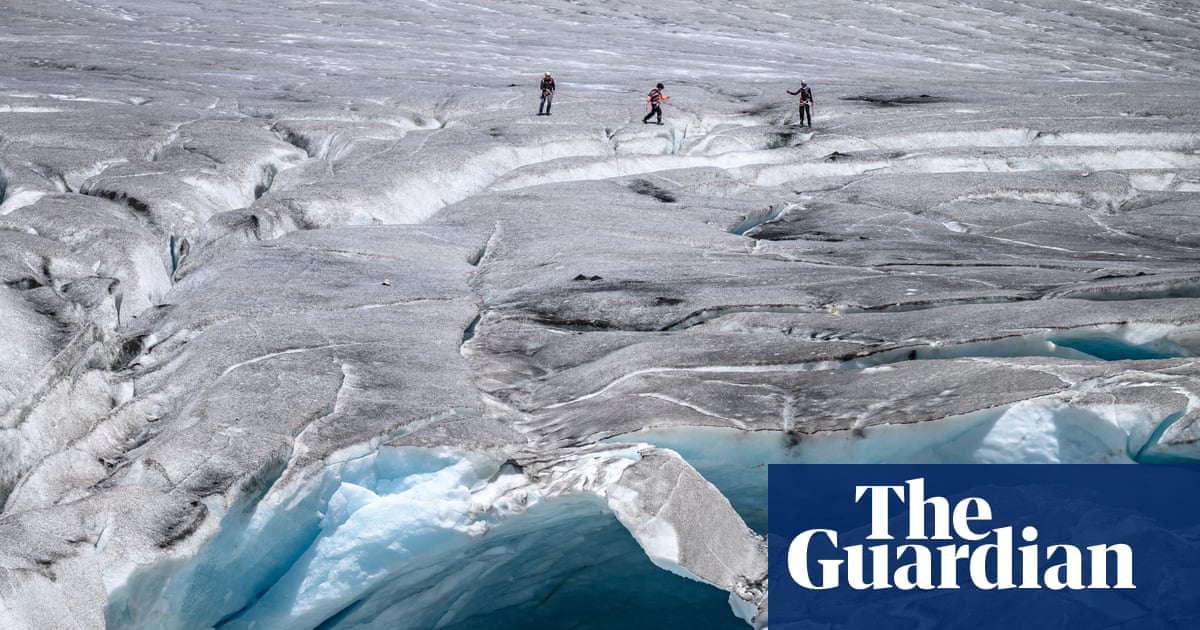
Alpine regions in Europe are experiencing extreme glacier collapse due to the heat-trapping effects of fossil fuel pollution. Switzerland has lost almost one-fifth of its ice in just five years, according to recent research, dramatically reshaping the Alpine country where large glaciers have been reduced to barren rock deserts.
Recent Findings
Swiss glaciers shrank by 5.5% in the first eight months of 2026, following a summer of scorching heatwaves and a winter with little snow. This reduction in ice volume falls just shy of the record set in 2022, bringing the total loss of glacier ice since 2021 to 19.4%.
Matthias Huss, a glaciologist at ETH Zürich and lead author of the report, noted that many people do not realize how quickly glaciers are retreating. He emphasized that just one generation ago, some now-barren sites were covered by hundreds of meters of ice. Although scientists have not yet compiled a formal tally of lost glaciers this year, they have observed the disappearance of several small ones.
““I visited one last week and it’s so impressive to stand in this moonlike landscape where there was a big layer of ice – an extensive glacier – just a few years ago,” said Huss. “And now it’s a rock desert where there’s some scattered blocks of old ice still lying around and melting on the hot rocks.”
Glacier Thickness and Internal Collapse
The report, a collaboration between the Swiss Glacier Monitoring Network and the Swiss Commission for Cryosphere Observation, found that the mean thickness of individual glaciers fell by between 2.5 meters and 4 meters in 2026. Huss explained that scientists are increasingly observing glaciers collapsing from the inside due to internal streams beneath the ice that excavate caverns, rather than merely retreating from surface heat.