
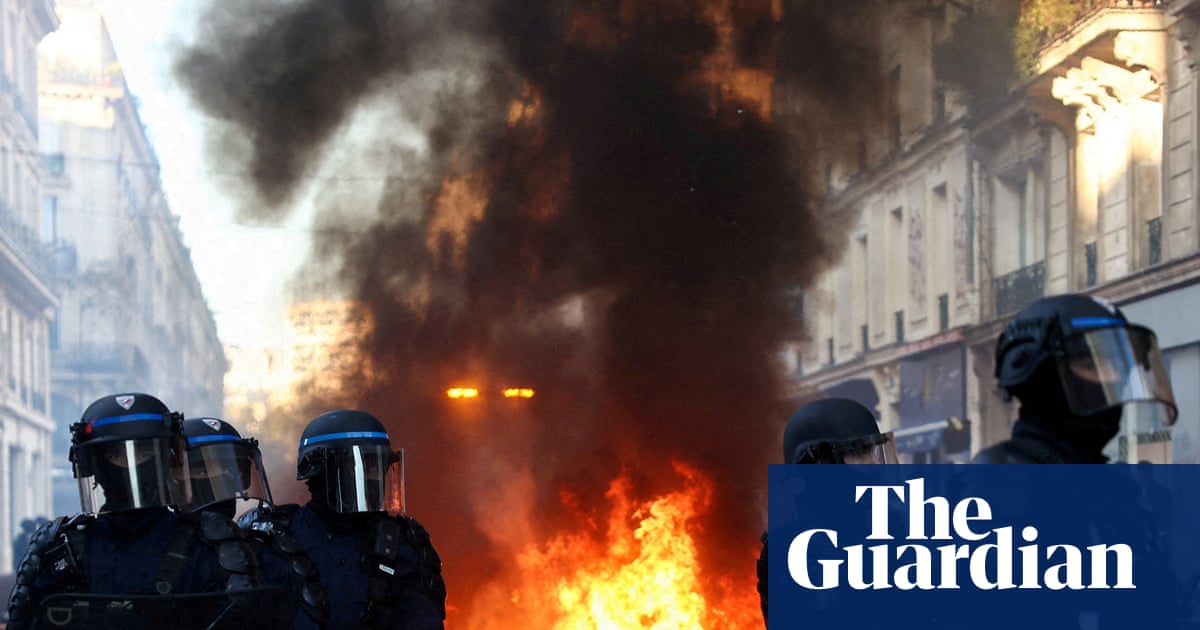
Nationalist leaders across Europe are framing recent unrest as a consequence of failed liberal governance and open-border policies, asserting that only they can restore law and order. The violence that erupted in numerous cities last weekend, initially sparked by peaceful protests over the cost of living and deteriorating public services, has been hijacked by violent rioters, providing an opportunity for authoritarian nationalists to capitalize on the situation.
Context of the Unrest
As key elections approach in Spain, France, and Italy, far-right parties are eager to weaponize the wave of street unrest. In France, cities such as Paris, Marseille, and Lyon faced widespread rioting and looting. The far-right National Rally (RN) has condemned the centrist government's handling of the situation, with party president Jordan Bardella stating that the government is "impotent." RN leader Marine Le Pen described the state as "collapsing" and having "lost control of everything" amid what she termed "migratory, budgetary and security chaos."
Reactions Across Europe
Le Pen, who is ahead in presidential polls, has sought to appeal to voters beyond her base without explicitly racializing the unrest. Instead, she frames it as a result of state and policy failures leading to "anarchic immigration" and a "total loss of authority."
In Germany, where no major protests occurred, the far-right Alternative für Deutschland (AfD) has warned that rioting could spill over the border. Co-leader Alice Weidel referred to France’s "violent excesses" as a "warning for Germany," linking the unrest to immigration and claiming that the combination of mass migration and left-wing extremism could lead to civil war-like conditions.
In Portugal, populist leaders have used peaceful housing and cost of living protests to caution against "importing" instability. André Ventura of the far-right Chega party emphasized the need to avoid bringing in climates of instability and protest.