Introduction
The story of the Maratha Empire is not merely the biography of Chhatrapati Shivaji Maharaj. It is the story of a people who lived through centuries of political instability, foreign invasions, shifting alliances, and regional conflicts before establishing one of the most powerful indigenous empires in Indian history.
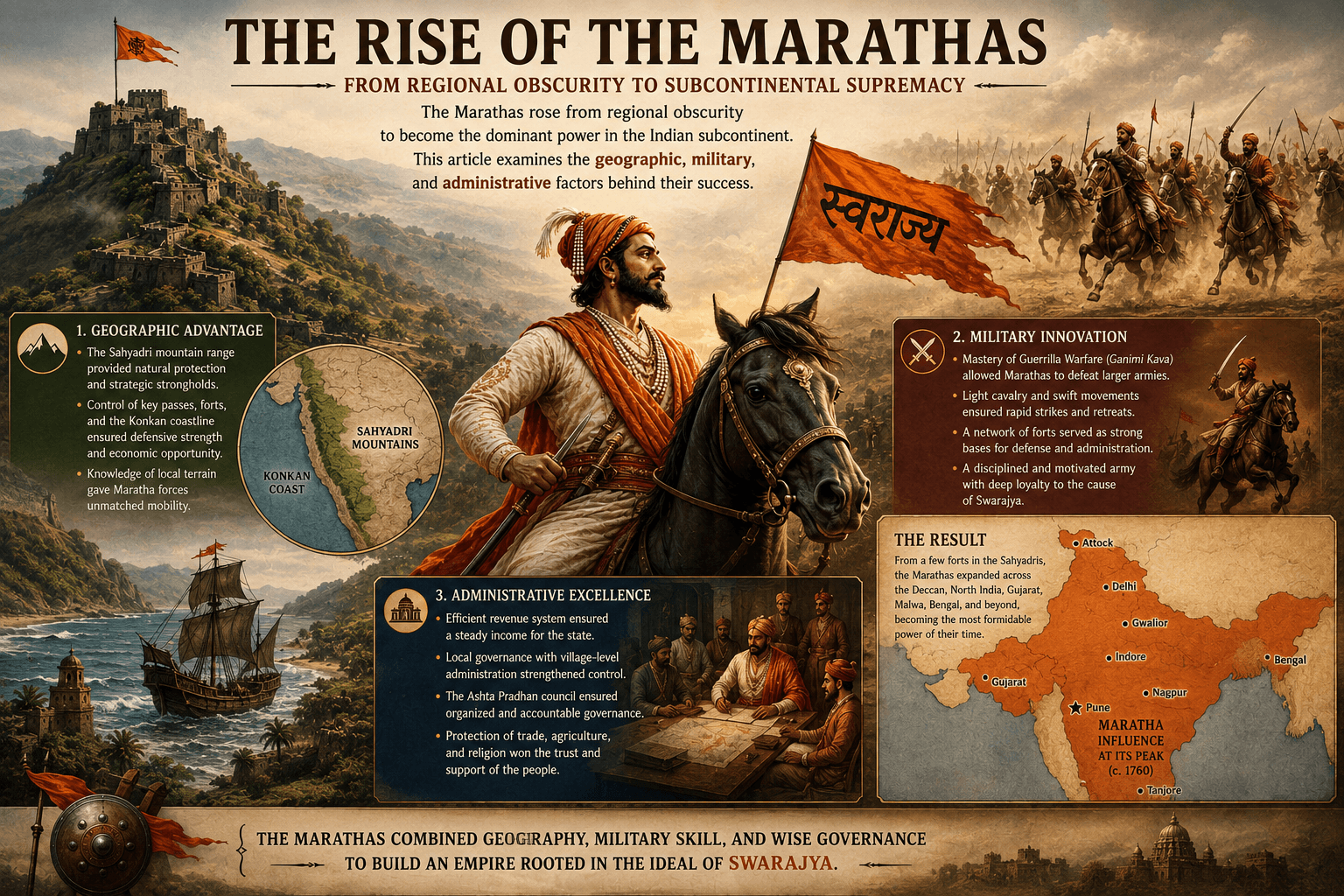
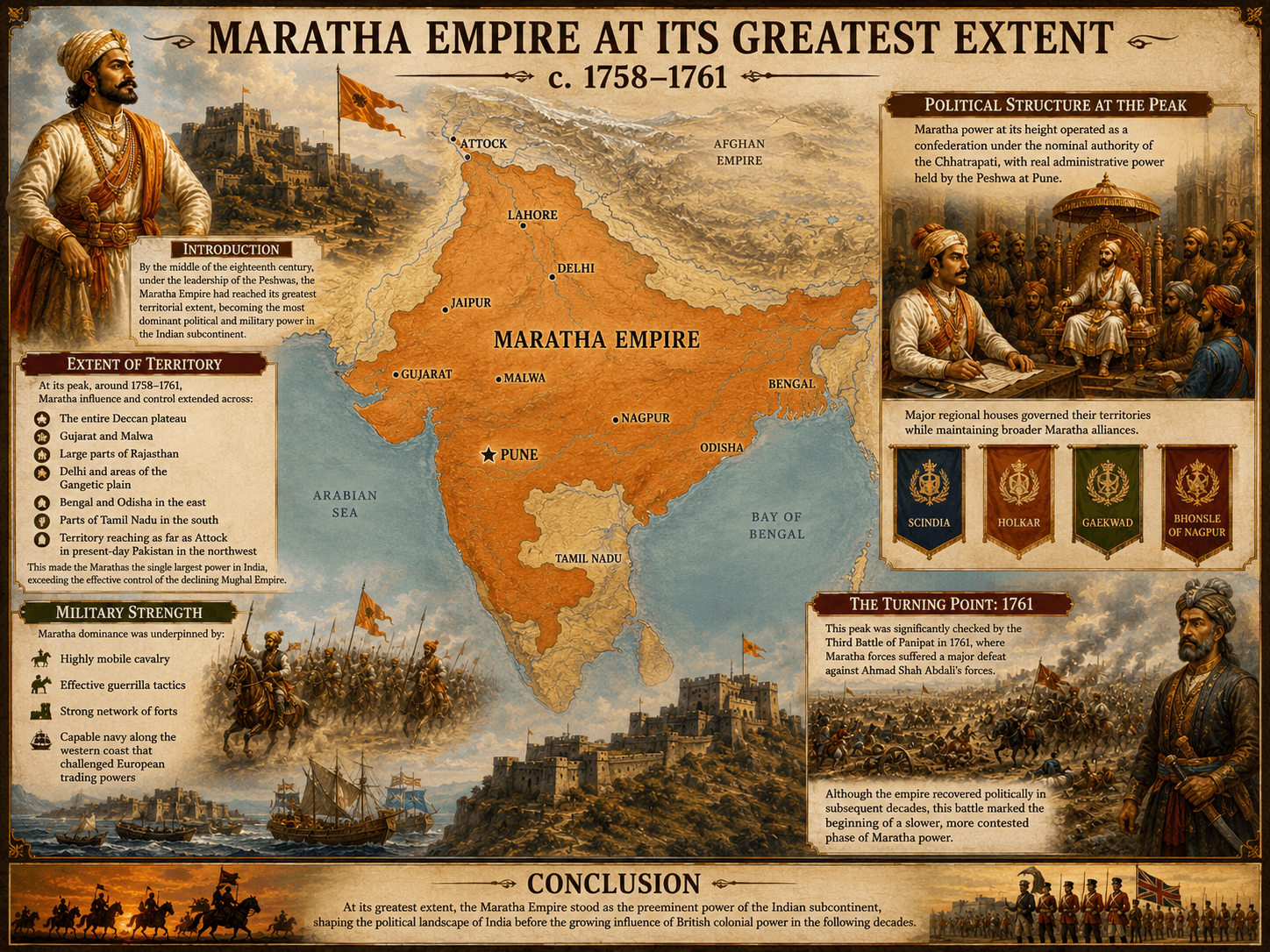
By the eighteenth century, the Marathas had become the dominant power across much of the Indian subcontinent. Their influence stretched from Tamil Nadu in the south to Attock in present-day Pakistan, and from Gujarat in the west to Odisha in the east. However, this remarkable rise began in a Deccan divided among competing kingdoms and imperial ambitions.
This article introduces the complete history of the Maratha Empire, while later articles in this series explore each event, personality, battle, fort, and administrative system in detail.
The Deccan Before the Rise of the Marathas
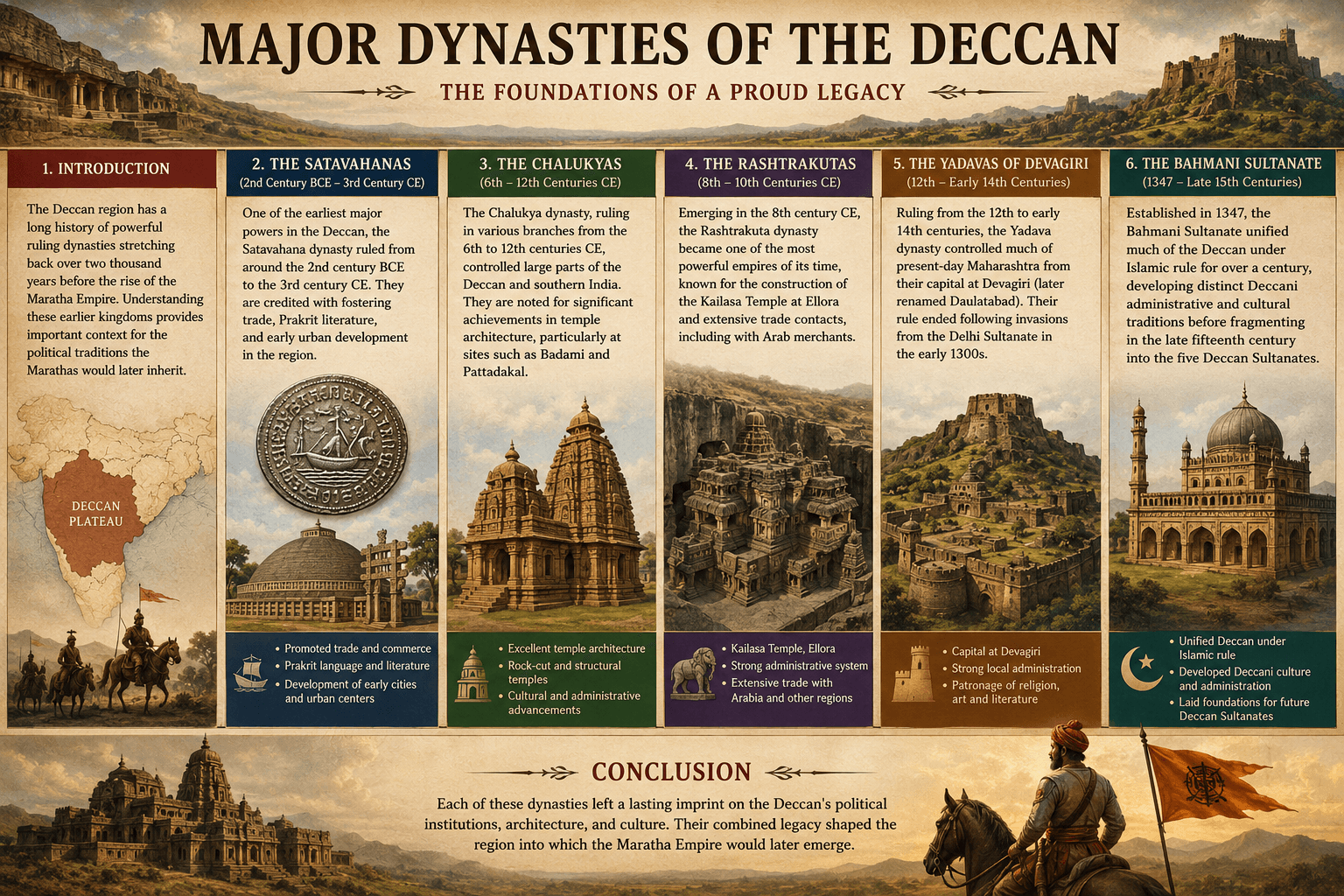
Long before the establishment of the Maratha Empire, the Deccan had witnessed the rise and fall of several powerful dynasties, including the Satavahanas, Rashtrakutas, Chalukyas, Yadavas of Devagiri, and the Bahmani Sultanate.
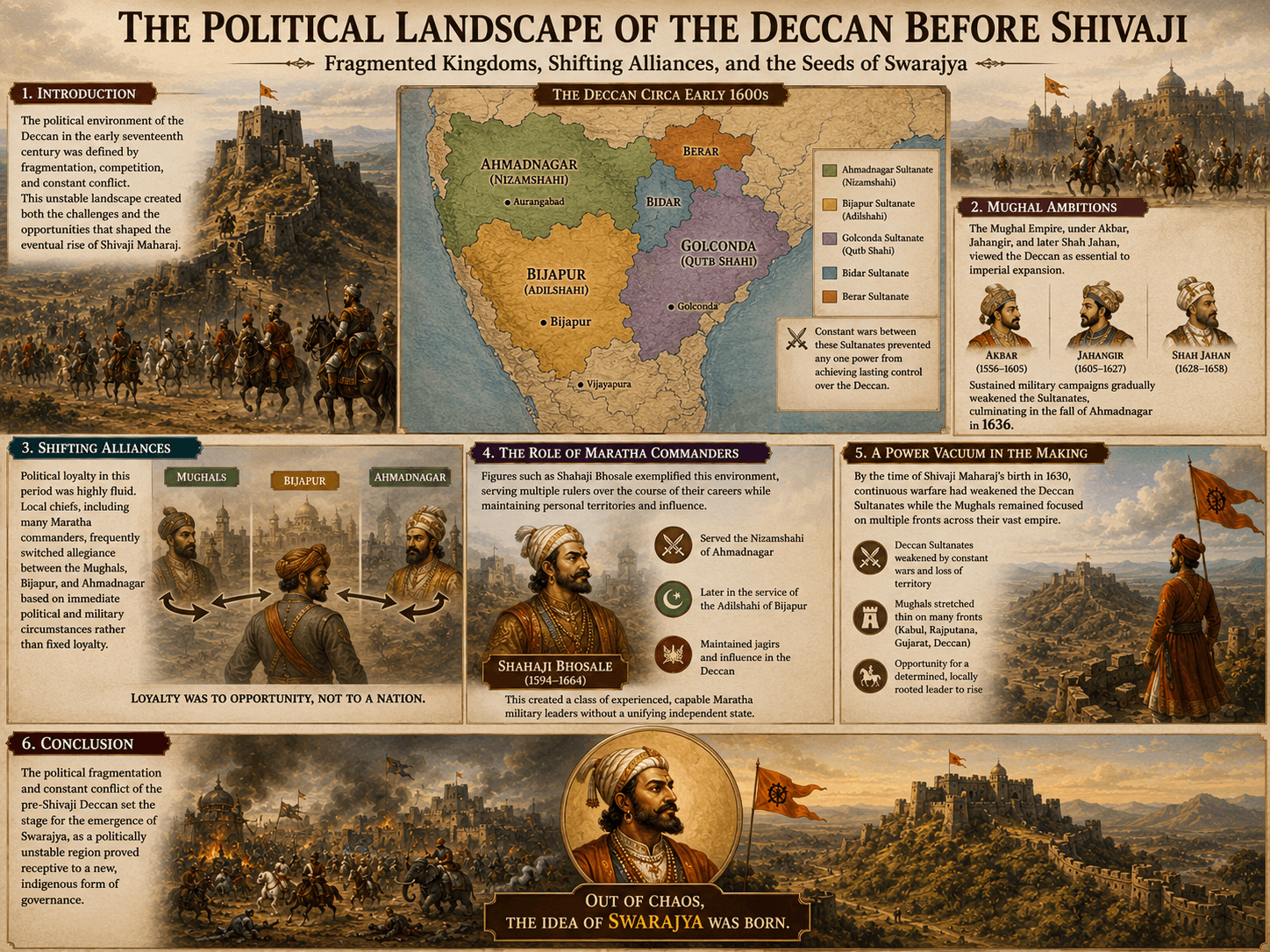
After the decline of the Bahmani Sultanate in the late fifteenth century, the Deccan fragmented into several independent Sultanates:
- Ahmadnagar (Nizamshahi)
- Bijapur (Adilshahi)
- Golconda (Qutb Shahi)
- Bidar
- Berar
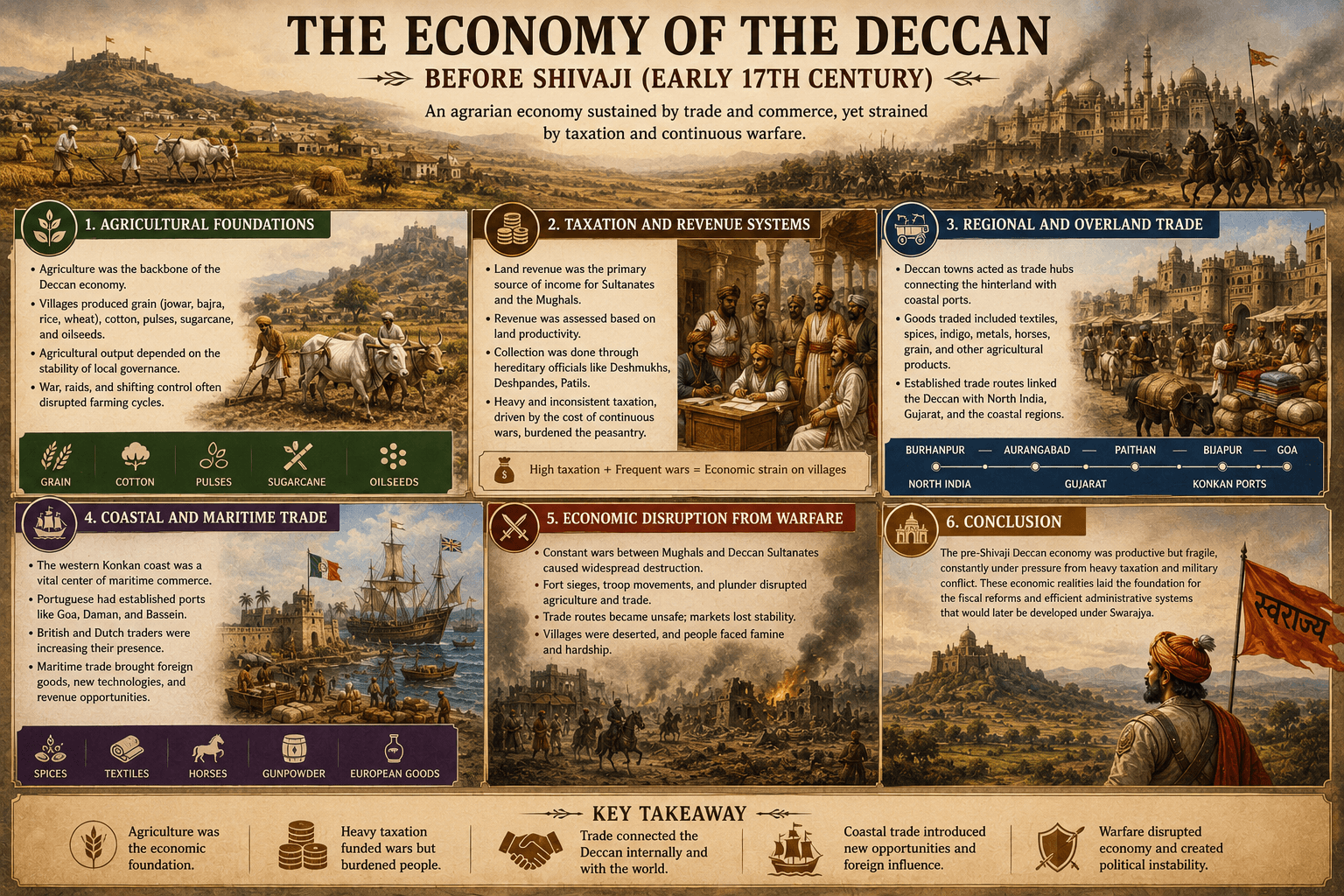
These kingdoms frequently fought one another while also competing against the expanding Mughal Empire from northern India.
The Mughal Expansion into the Deccan
The Mughal Empire, especially under Emperor Akbar and later Emperor Jahangir, sought to extend its authority into the Deccan.
During the reign of Emperor Shah Jahan, Mughal military campaigns intensified. One by one, the Deccan Sultanates came under increasing pressure.
In 1636, the Ahmadnagar Sultanate effectively collapsed under Mughal attacks. Much of its territory was absorbed into the Mughal Empire, while the remaining political influence shifted toward Bijapur and Golconda.
The struggle for the Deccan became one of the defining conflicts of seventeenth-century India.
The Marathas Before Swarajya
Before the establishment of Swarajya, the Marathas were not united under a single kingdom.
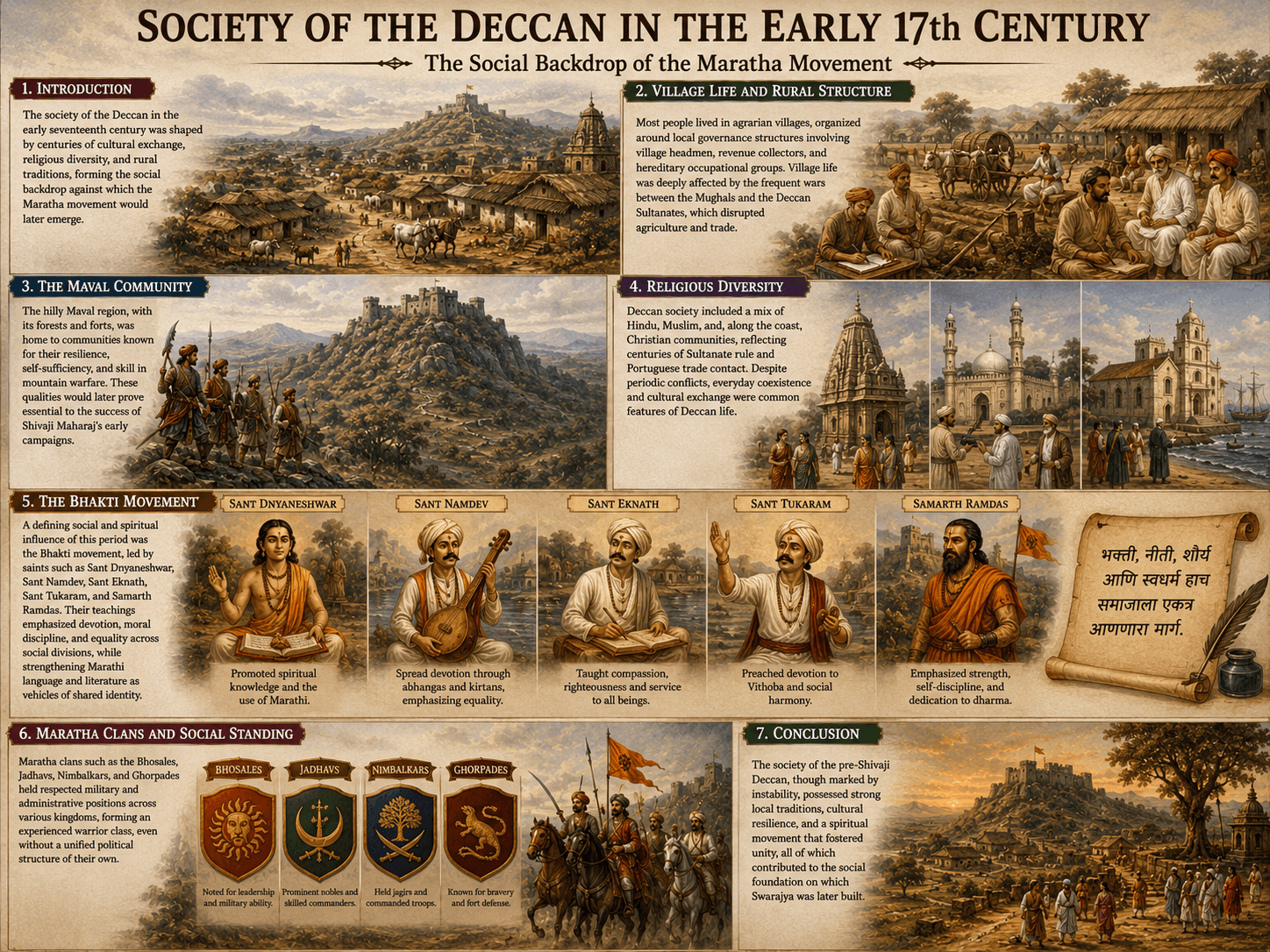
Instead, many Maratha families served as military commanders, cavalry officers, administrators, revenue collectors, and local chiefs under different rulers.
Several prominent Maratha clans earned respect for their military abilities, including the Bhosales, Jadhavs, Nimbalkars, Ghorpades, More, Mohites, and others.
Many Maratha warriors served in:
- The Adilshahi Sultanate of Bijapur
- The Nizamshahi Sultanate of Ahmadnagar
- The Mughal Empire
- Various regional kingdoms
Their loyalty generally depended on political circumstances, military service, and hereditary positions rather than the idea of a unified Maratha state.