
Introduction
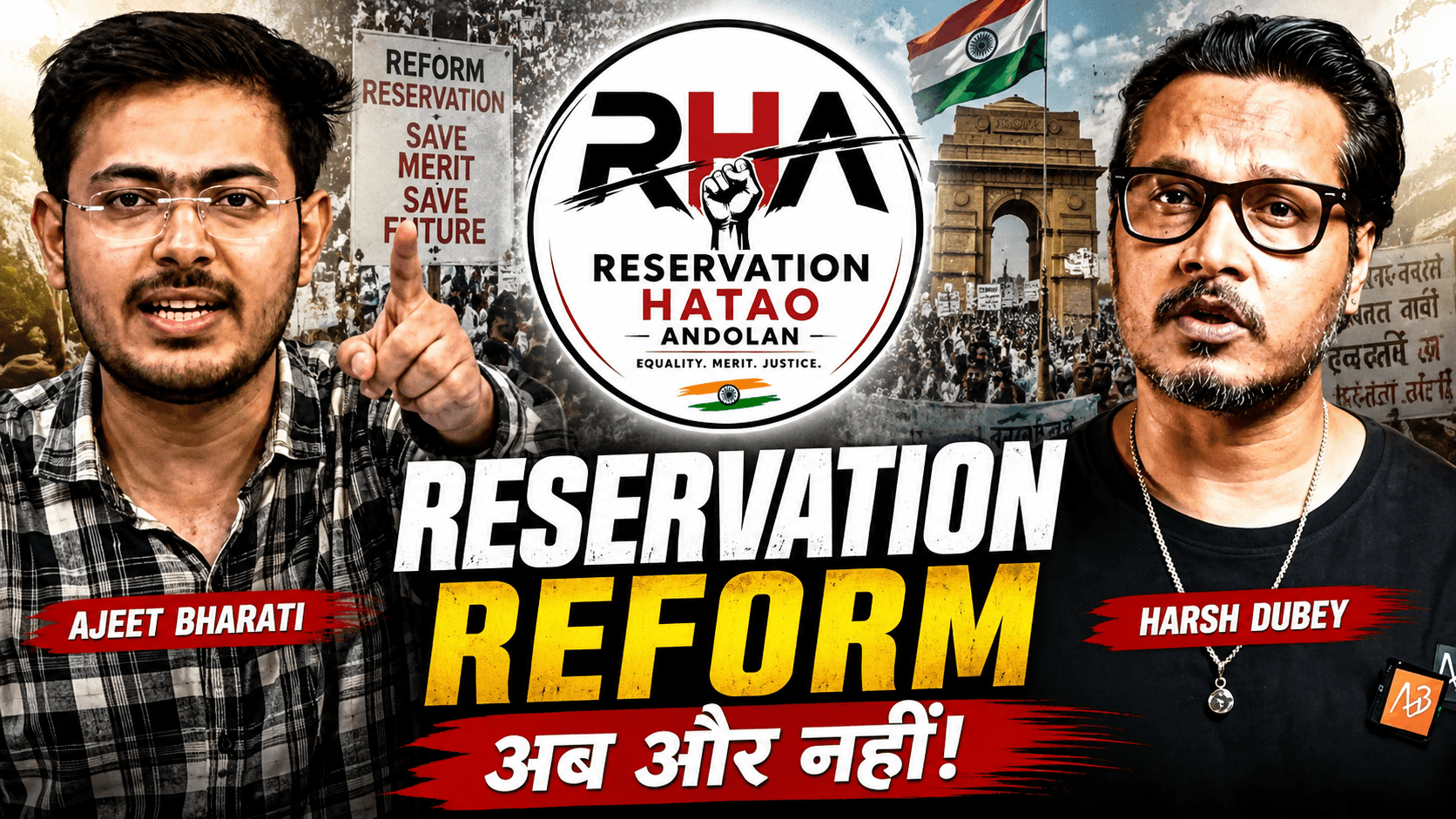
Jantar Mantar in New Delhi became the site of a fresh national debate on August 21, as a gathering under the banner of the Reservation Hatao Andolan (RHA) called for a rethink of India's caste-based reservation system. Organisers framed the protest not as a demand to abolish reservation outright, but as a call for evidence-based review of a policy that has remained largely unchanged for decades.
Who Spoke and What They Said
Among those addressing the gathering was YouTuber and political commentator Ajeet Bharti, who called on the government to prepare a white paper assessing the impact of reservation over time, and raised questions around quota-within-quota mechanisms, minimum qualifying marks across categories, and treatment of economically weaker sections. The protest followed earlier demonstrations against the UGC's 2026 equity regulations, during which several activists, including Bharti, reportedly faced police restrictions.
Core Demands of the Movement
Four broad demands emerged from the protest. First, a comprehensive review of the existing reservation framework, examining who currently benefits, who remains excluded, and whether the policy has achieved measurable upward mobility. Second, a government-issued white paper compiling data on education and employment outcomes across SC, ST, and OBC categories, generational patterns in benefit distribution, and the effectiveness of existing creamy-layer exclusions. Third, extending the creamy-layer principle, currently applied to OBC reservation, to SC and ST categories as well, a proposal that remains contested between those who see it as necessary targeting and those who argue caste-based discrimination cannot be reduced to income alone. Fourth, a quota-within-quota system to address uneven distribution of benefits among sub-communities within the SC, ST, and OBC categories.