Introduction
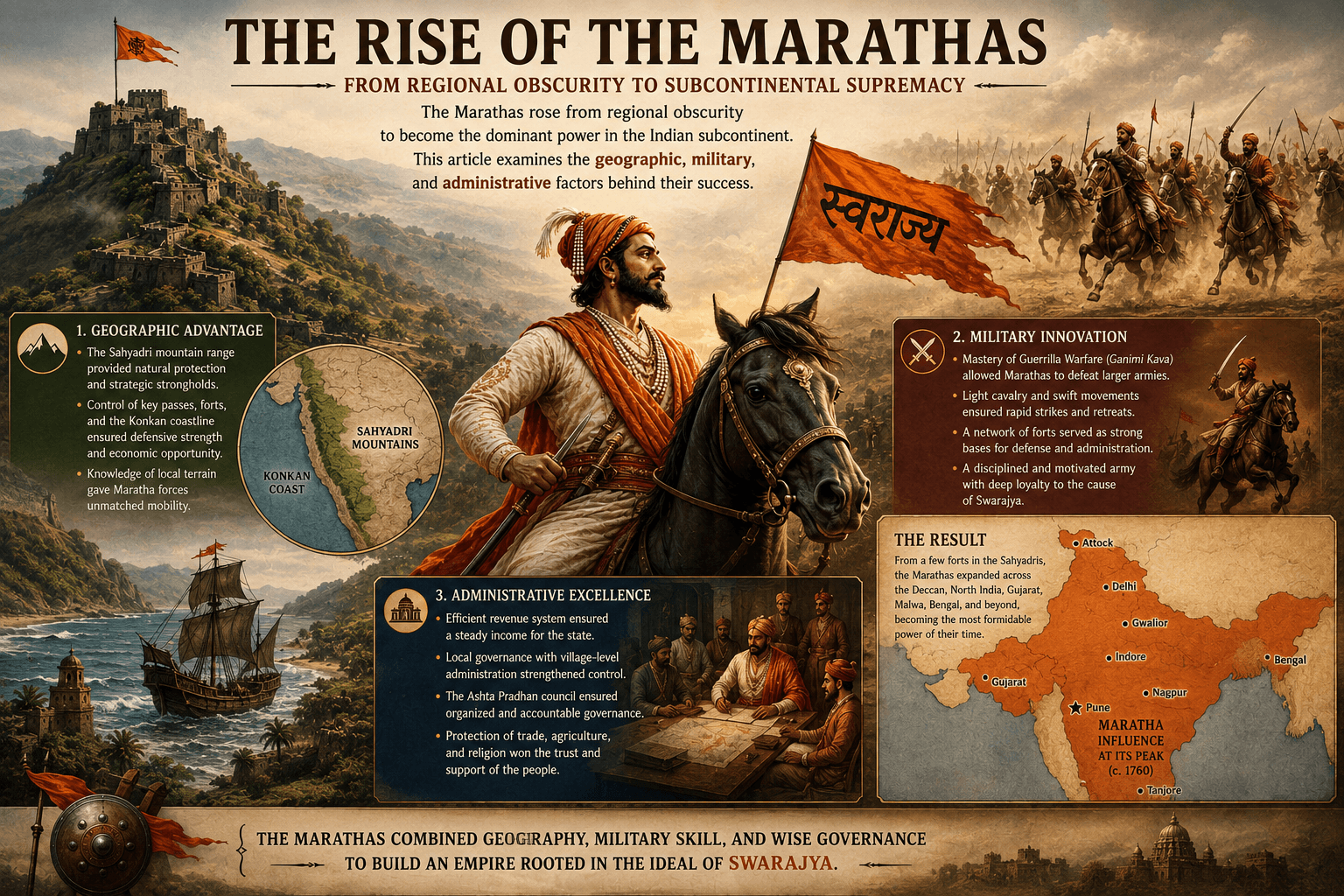
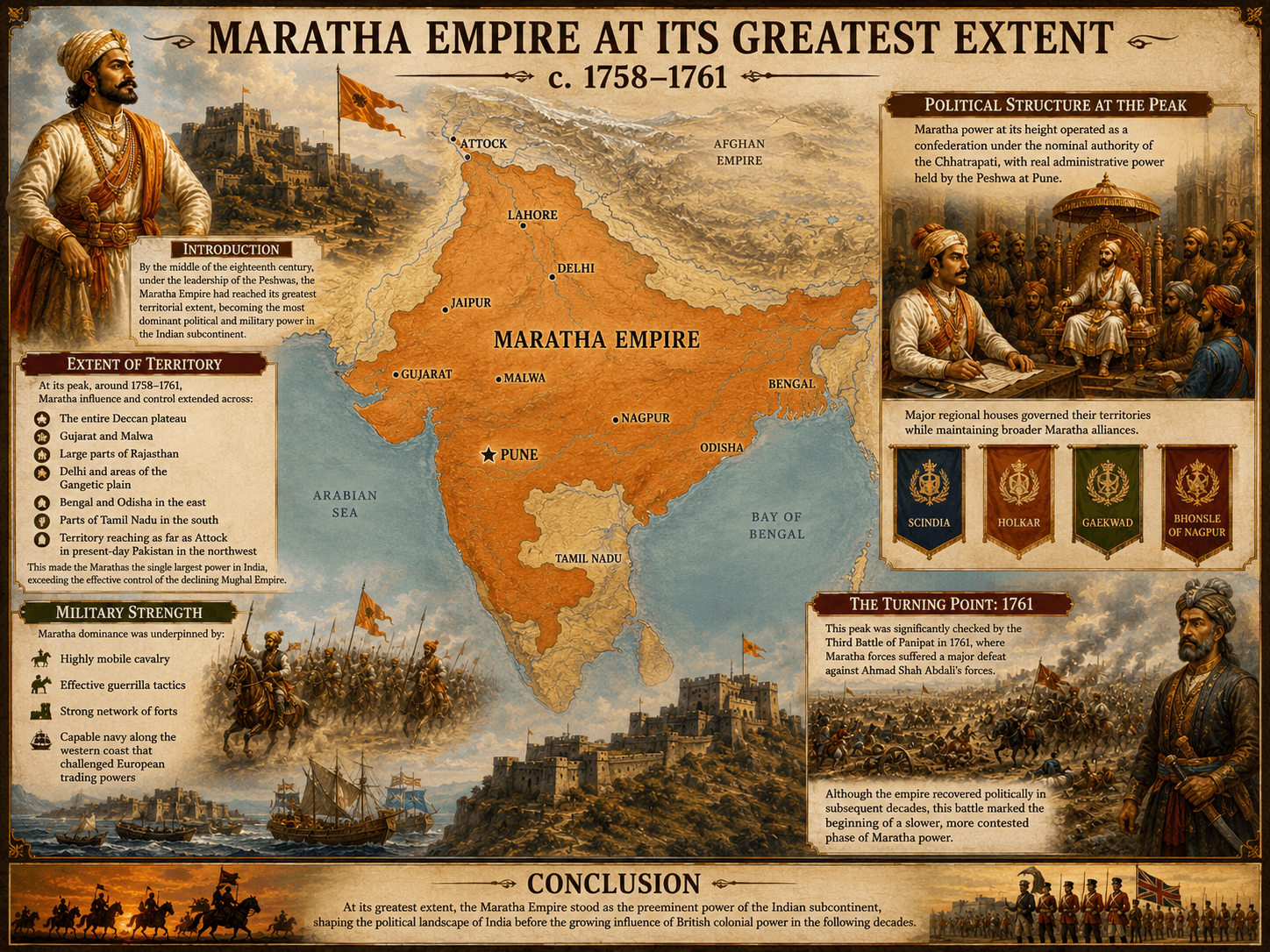
By the middle of the eighteenth century, under the leadership of the Peshwas, the Maratha Empire had reached its greatest territorial extent, becoming the most dominant political and military power in the Indian subcontinent.
Extent of Territory
At its peak, around 1758–1761, Maratha influence and control extended across:
- The entire Deccan plateau
- Gujarat and Malwa
- Large parts of Rajasthan
- Delhi and areas of the Gangetic plain
- Bengal and Odisha in the east
- Parts of Tamil Nadu in the south
- Territory reaching as far as Attock in present-day Pakistan in the northwest
This made the Marathas the single largest power in India, exceeding the effective control of the declining Mughal Empire.
Political Structure at the Peak
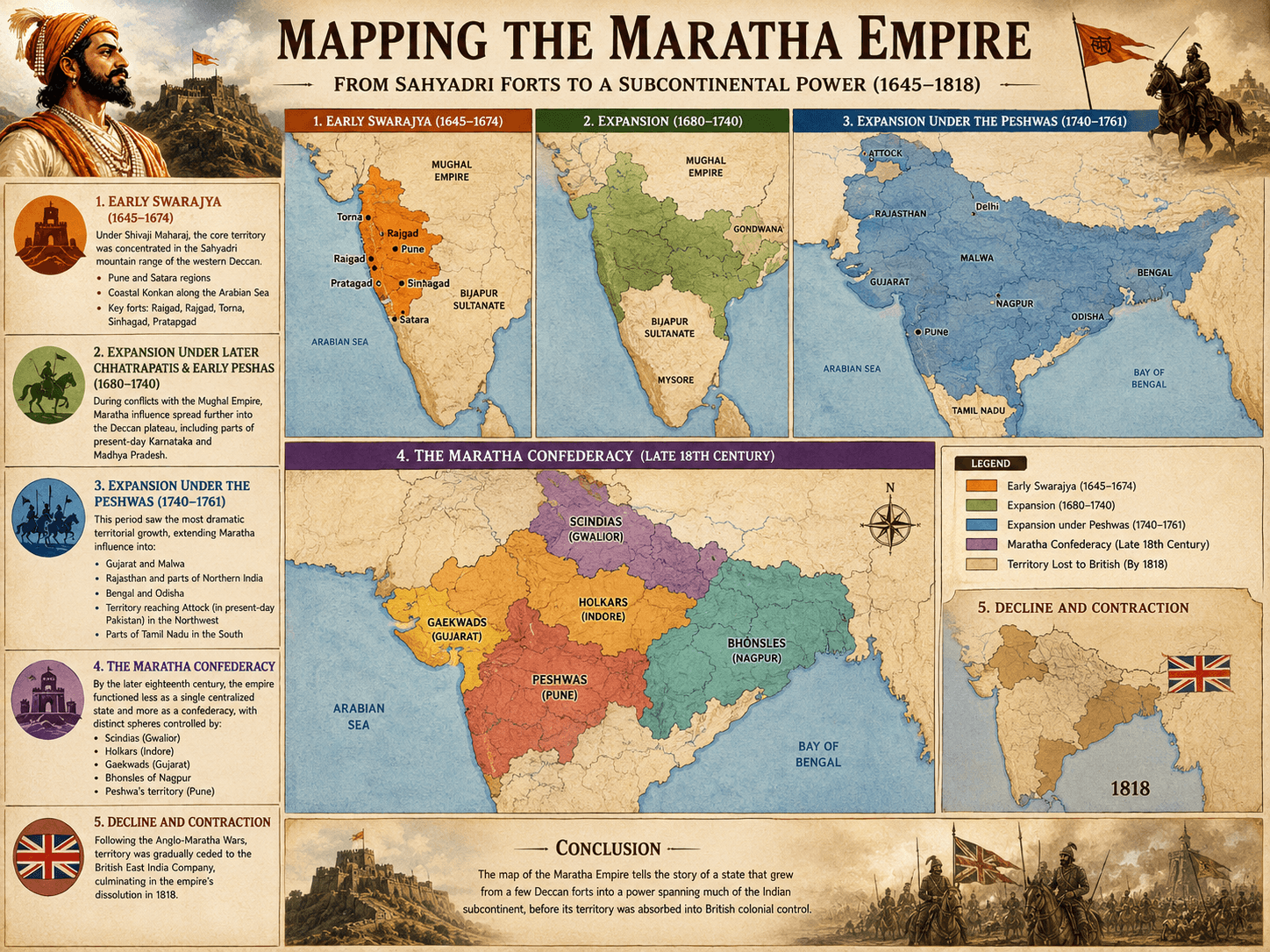
Rather than a tightly centralized empire, Maratha power at its height operated as a confederation under the nominal authority of the Chhatrapati, with real administrative power held by the Peshwa at Pune. Major regional houses, including the Scindias, Holkars, Gaekwads, and Bhonsles of Nagpur, governed their own territories while maintaining broader Maratha alliances.