Introduction
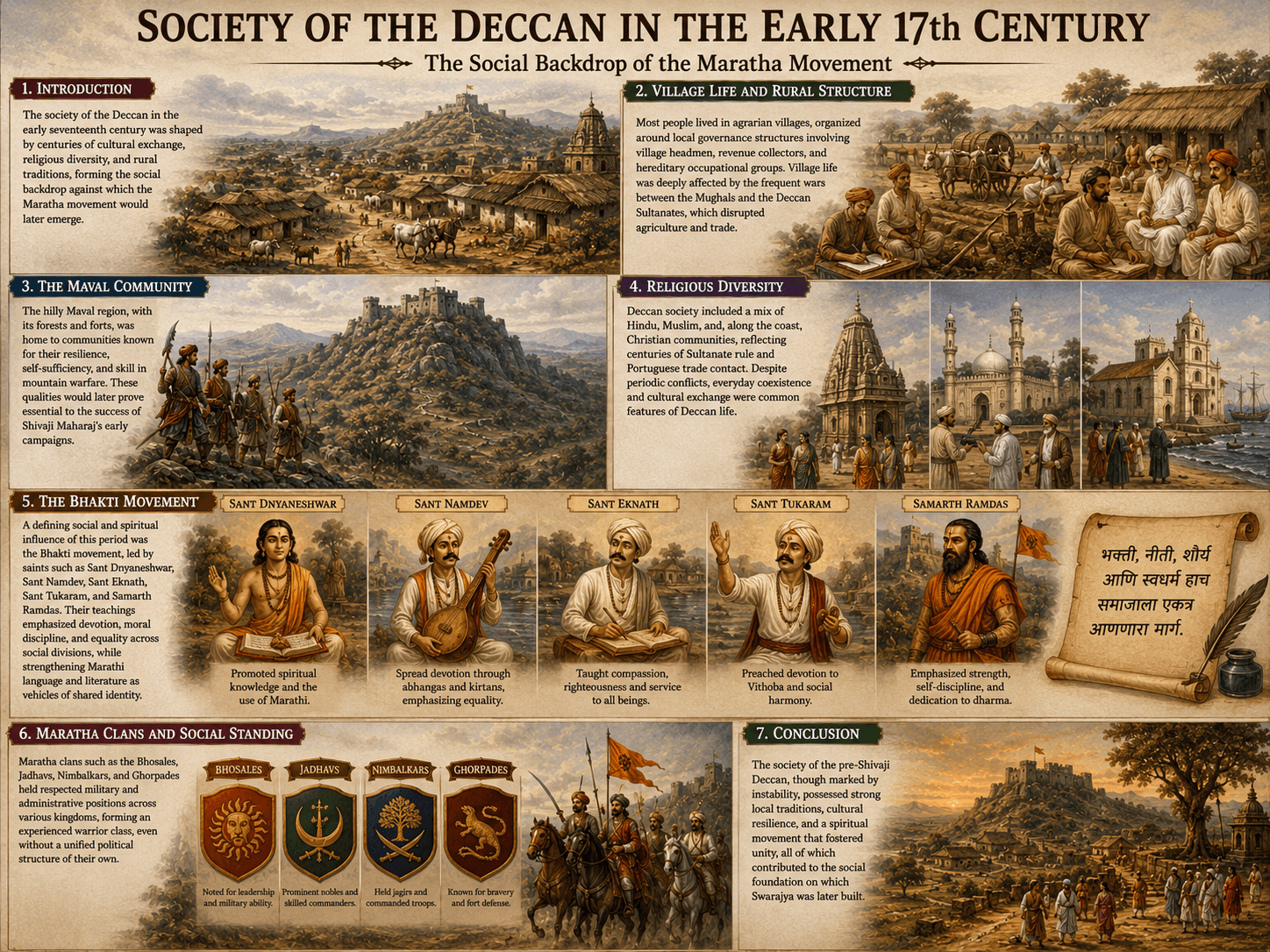
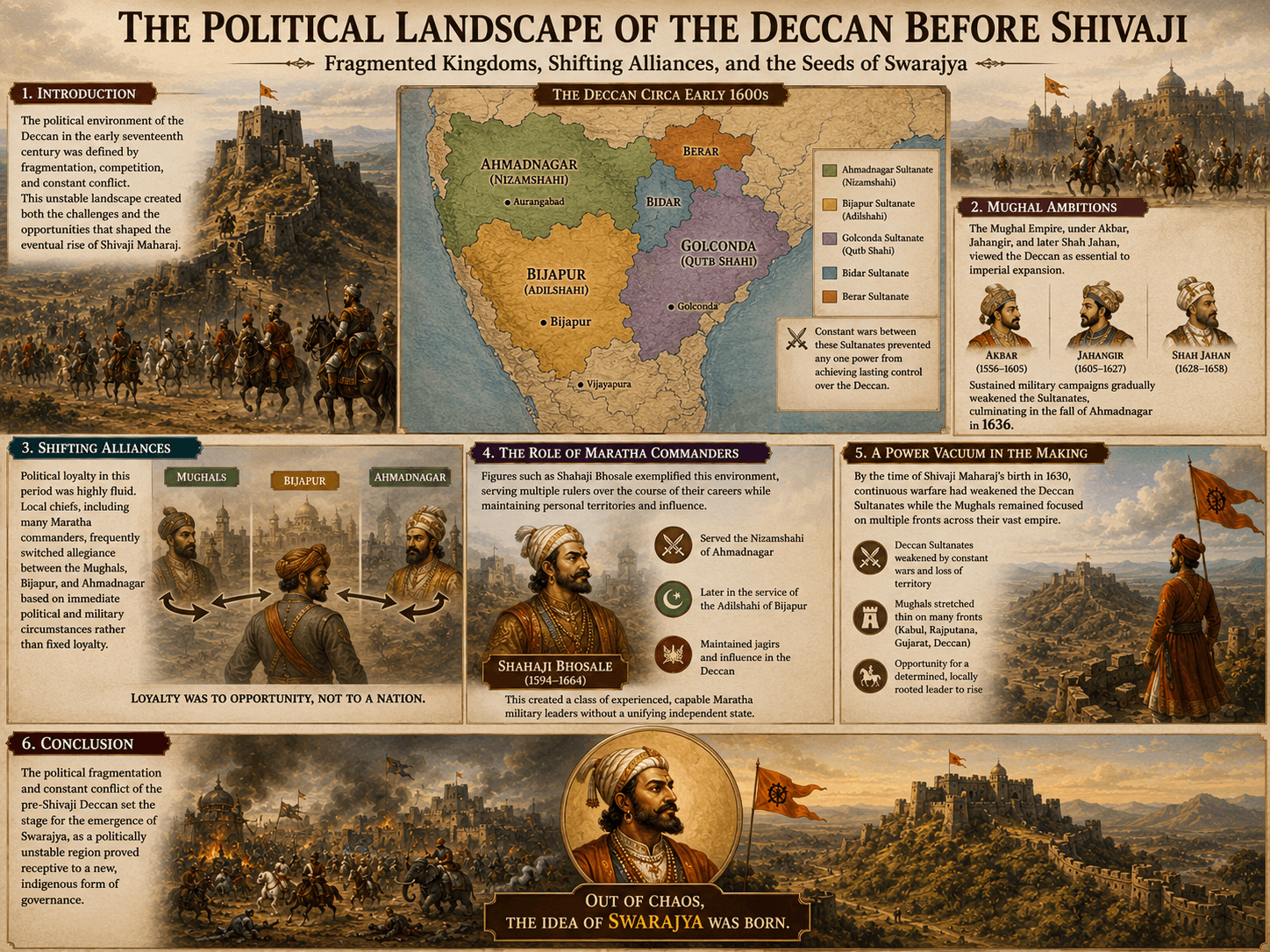
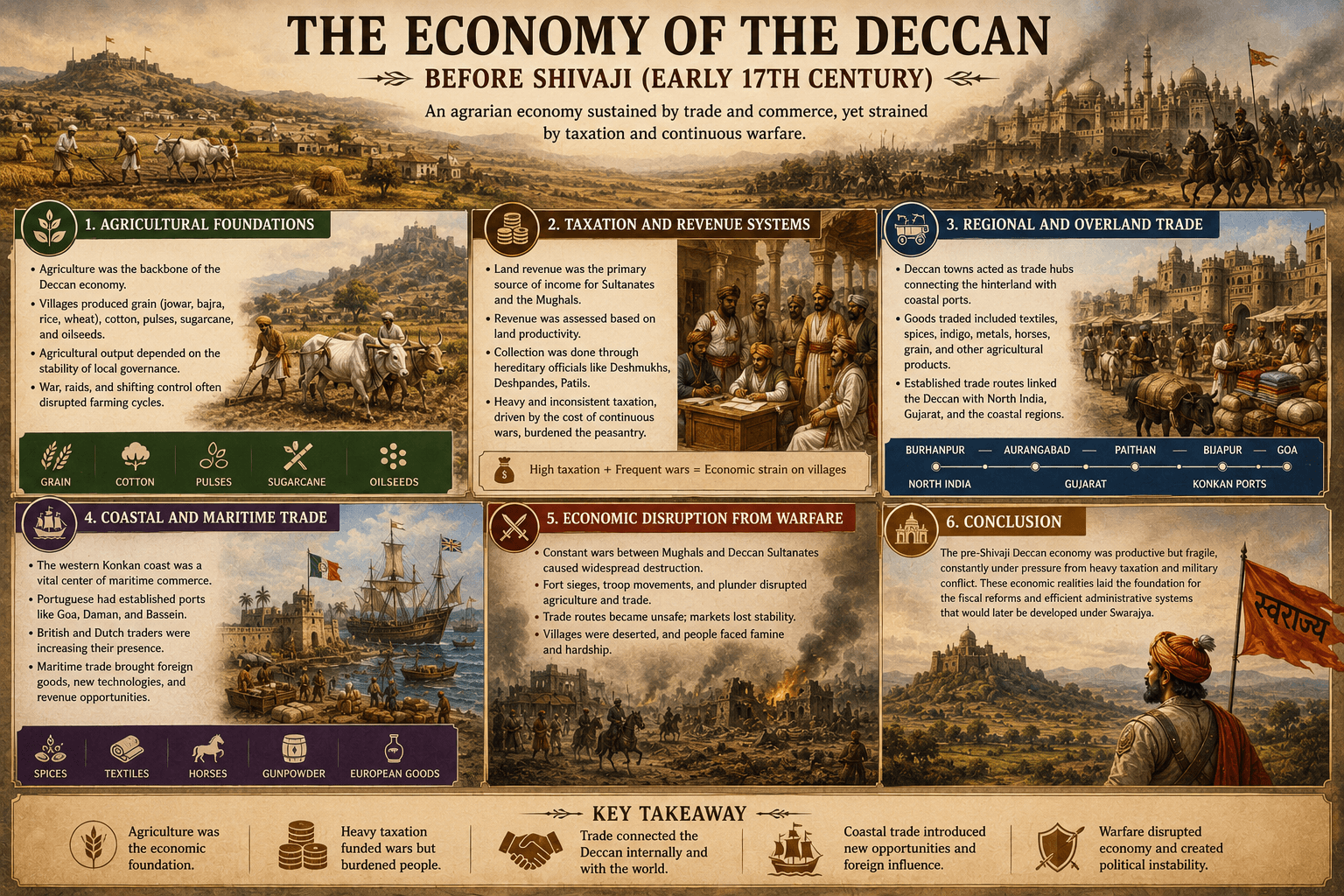
The economy of the Deccan in the early seventeenth century was largely agrarian, supplemented by regional trade and coastal commerce. Constant warfare between the Mughals and Deccan Sultanates significantly shaped economic conditions during this period.
Agricultural Foundations
Agriculture formed the backbone of the Deccan economy, with villages producing grain, cotton, and other crops suited to the region's climate. Agricultural output was closely tied to the stability of local governance, as war and shifting control often disrupted farming cycles.
Taxation and Revenue Systems
Revenue collection in the Deccan Sultanates and Mughal-controlled areas relied on land assessments and taxation, often administered through hereditary local officials. Heavy and sometimes inconsistent taxation, driven by the financial demands of continuous military campaigns, placed significant strain on rural communities.