Introduction
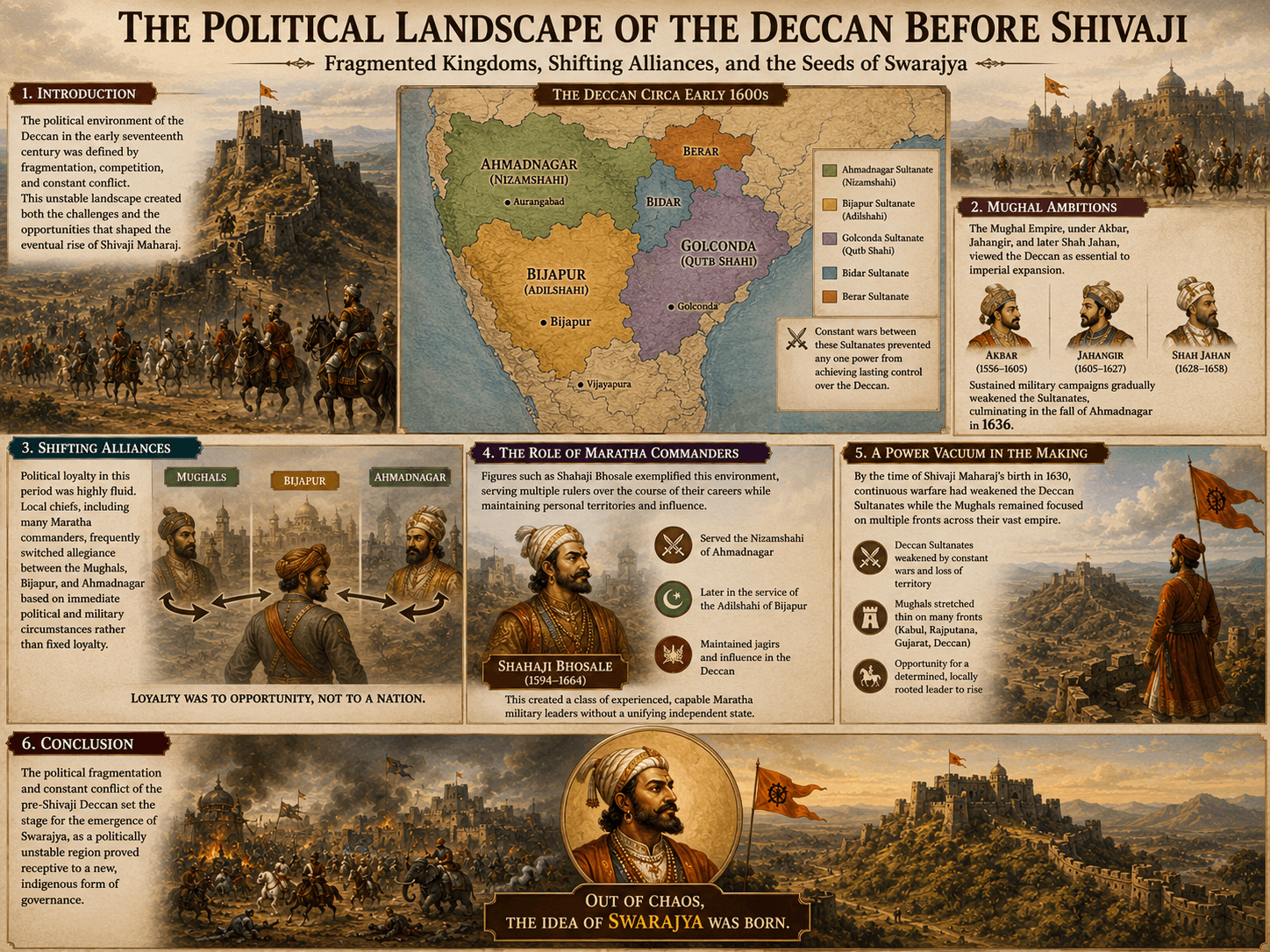
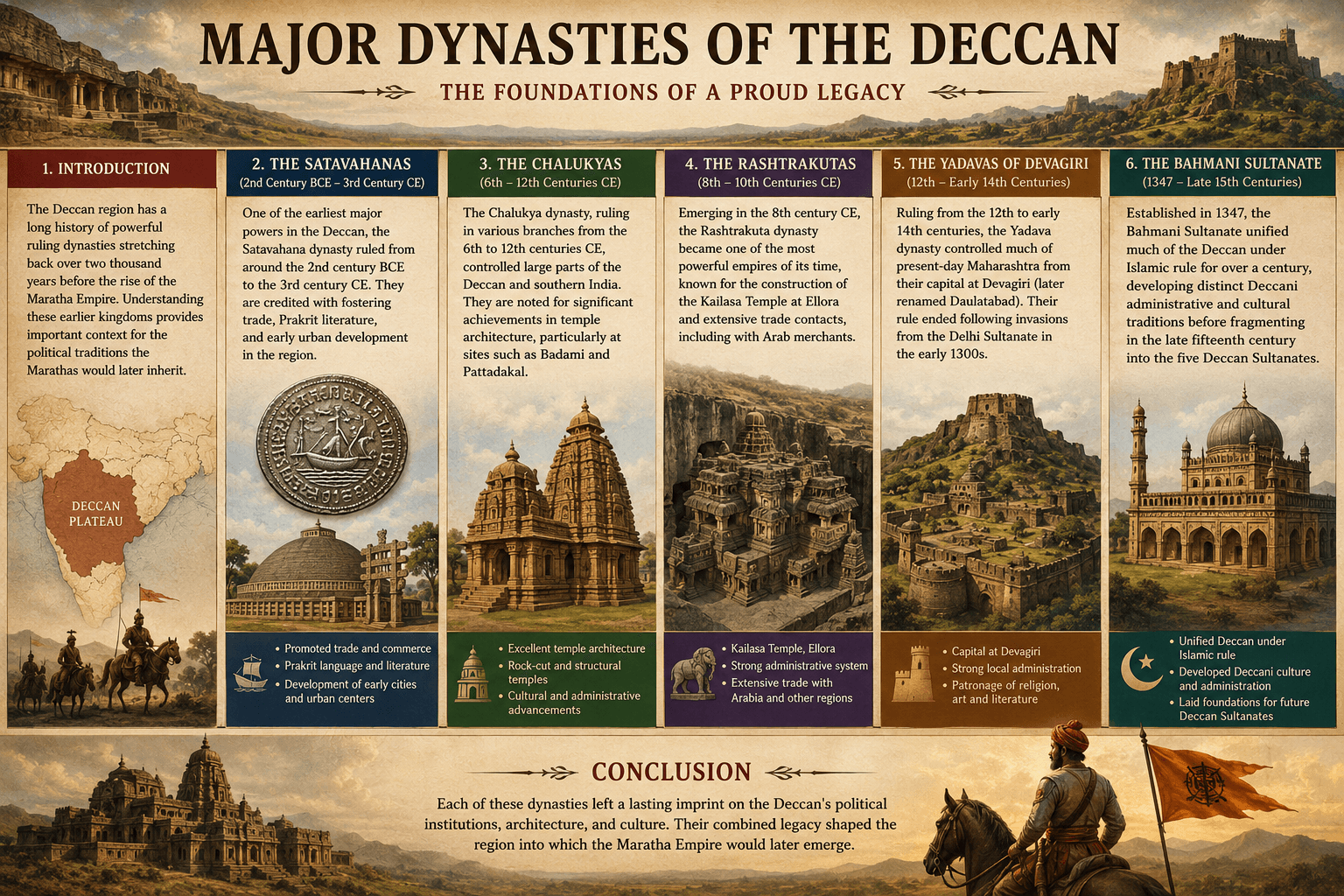
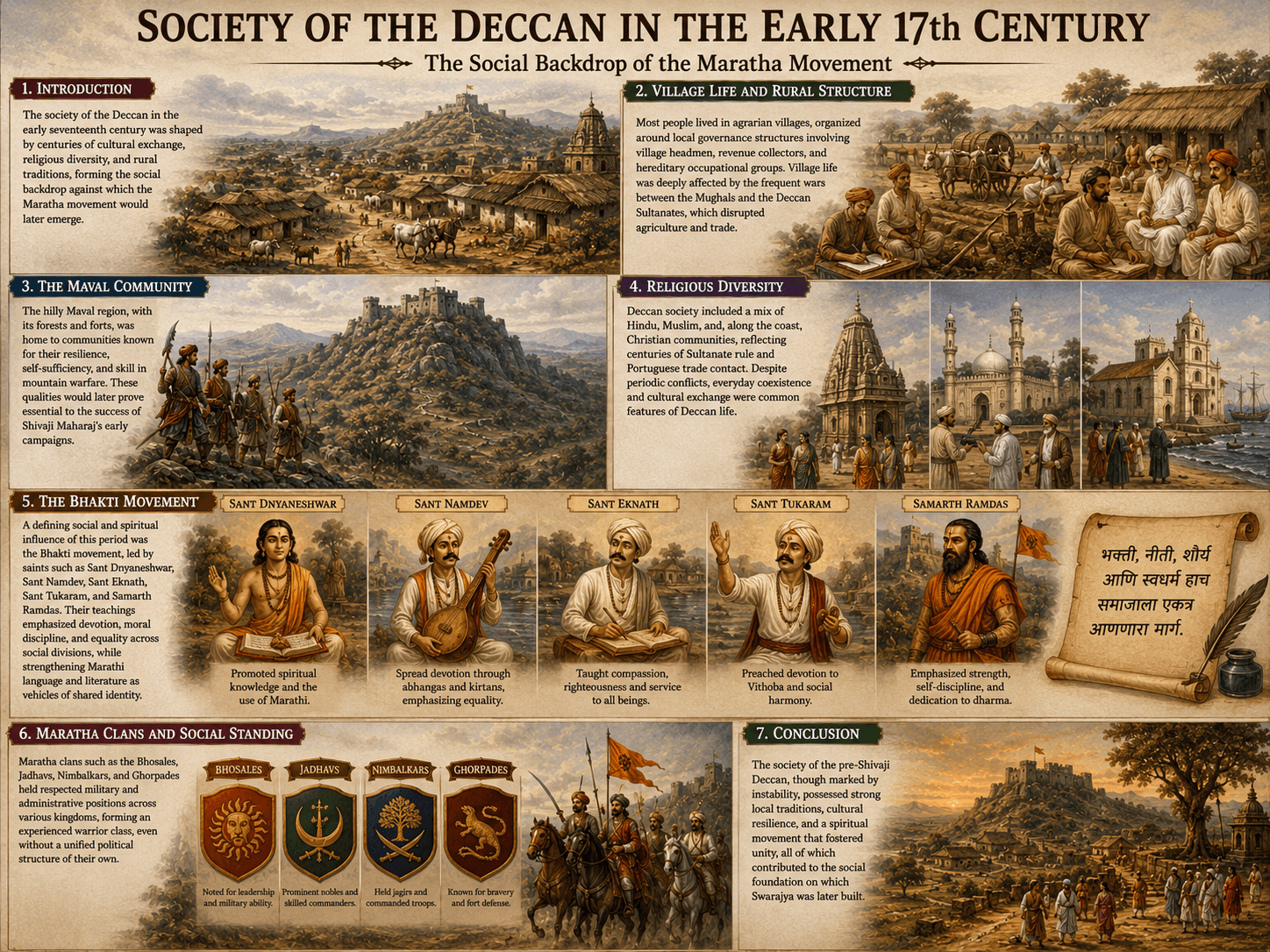
The society of the Deccan in the early seventeenth century was shaped by centuries of cultural exchange, religious diversity, and rural traditions, forming the social backdrop against which the Maratha movement would later emerge.
Village Life and Rural Structure
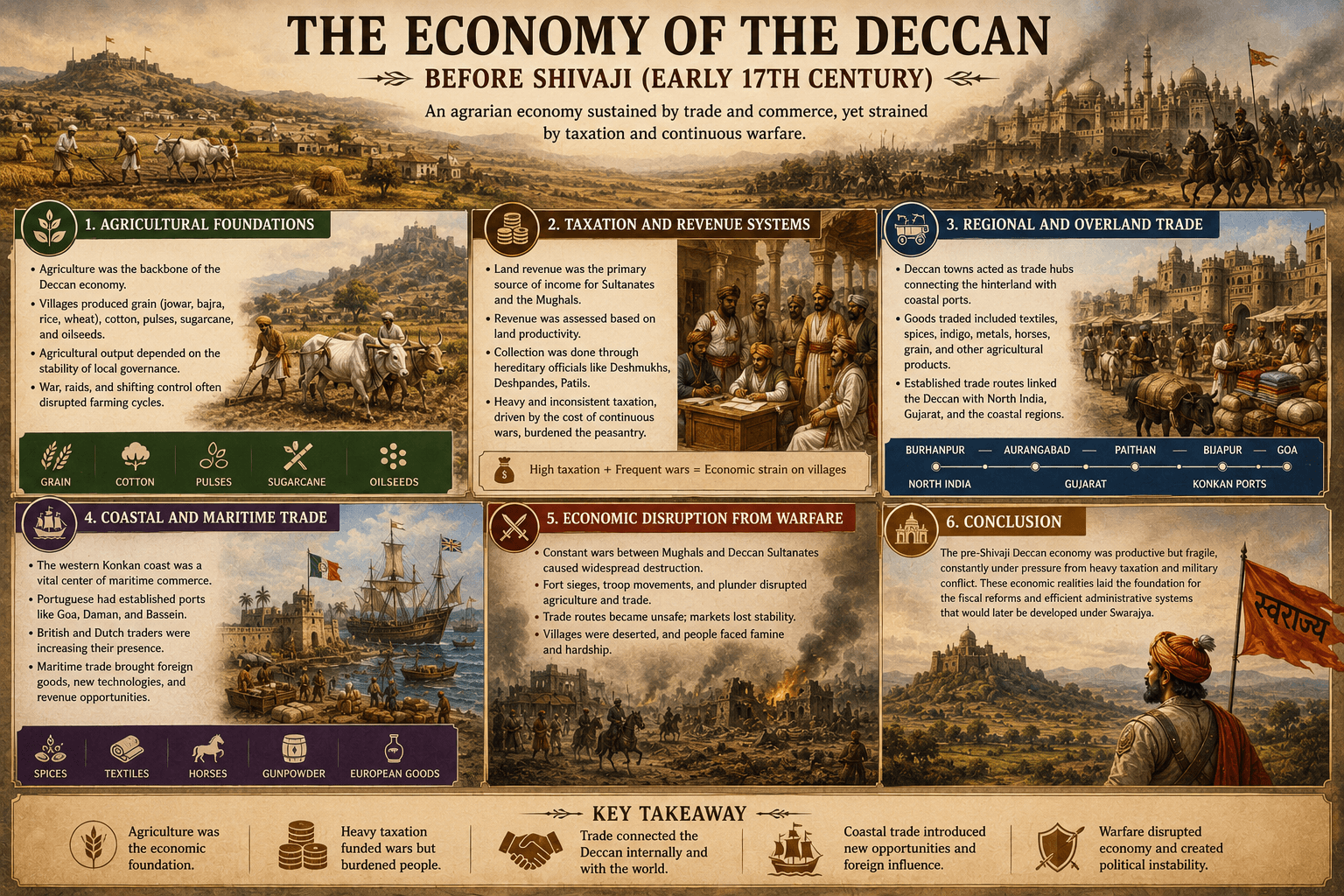
Most people lived in agrarian villages, organized around local governance structures involving village headmen, revenue collectors, and hereditary occupational groups. Village life was deeply affected by the frequent wars between the Mughals and the Deccan Sultanates, which disrupted agriculture and trade.
The Maval Community
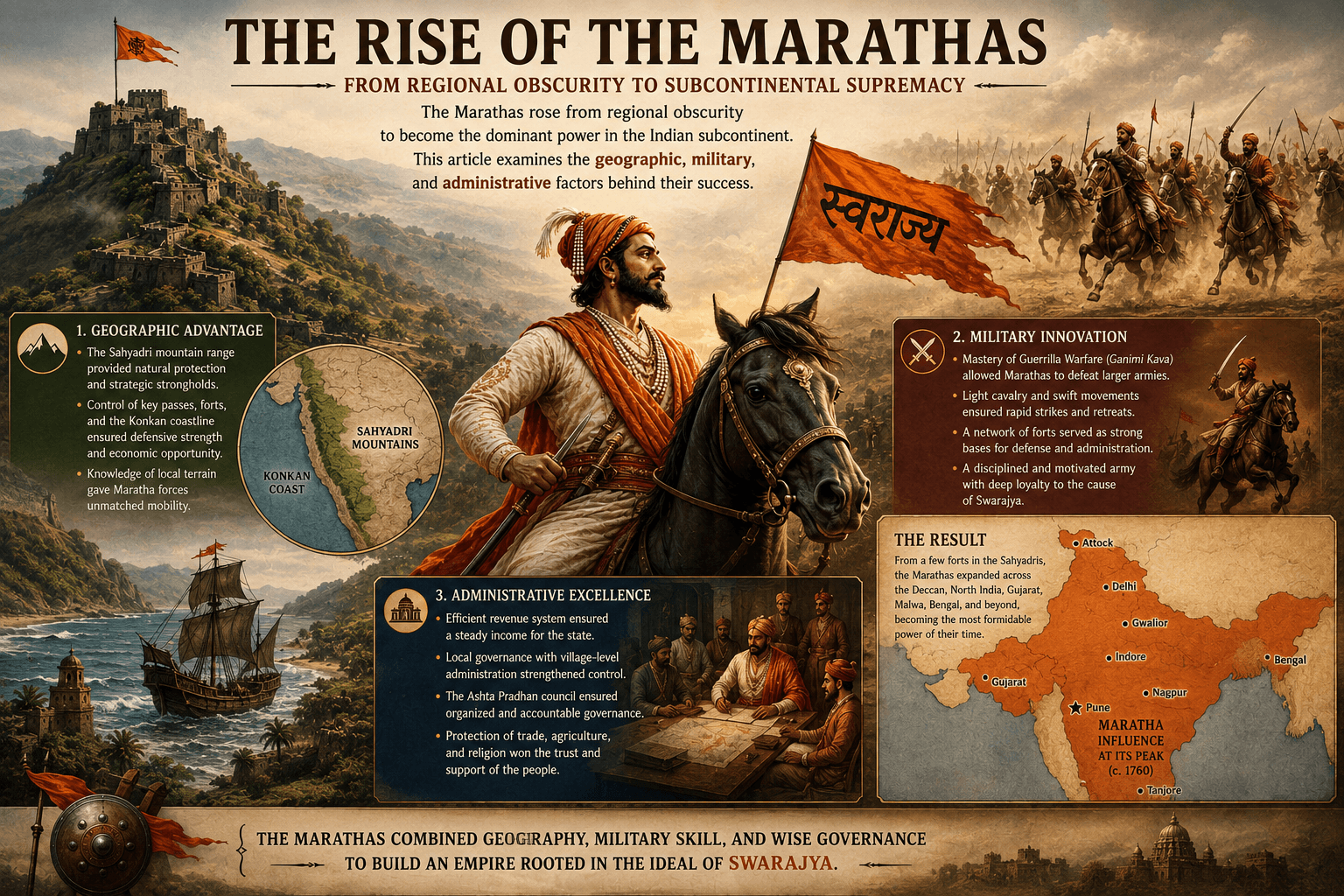
The hilly Maval region, with its forests and forts, was home to communities known for their resilience, self-sufficiency, and skill in mountain warfare. These qualities would later prove essential to the success of Shivaji Maharaj's early campaigns.