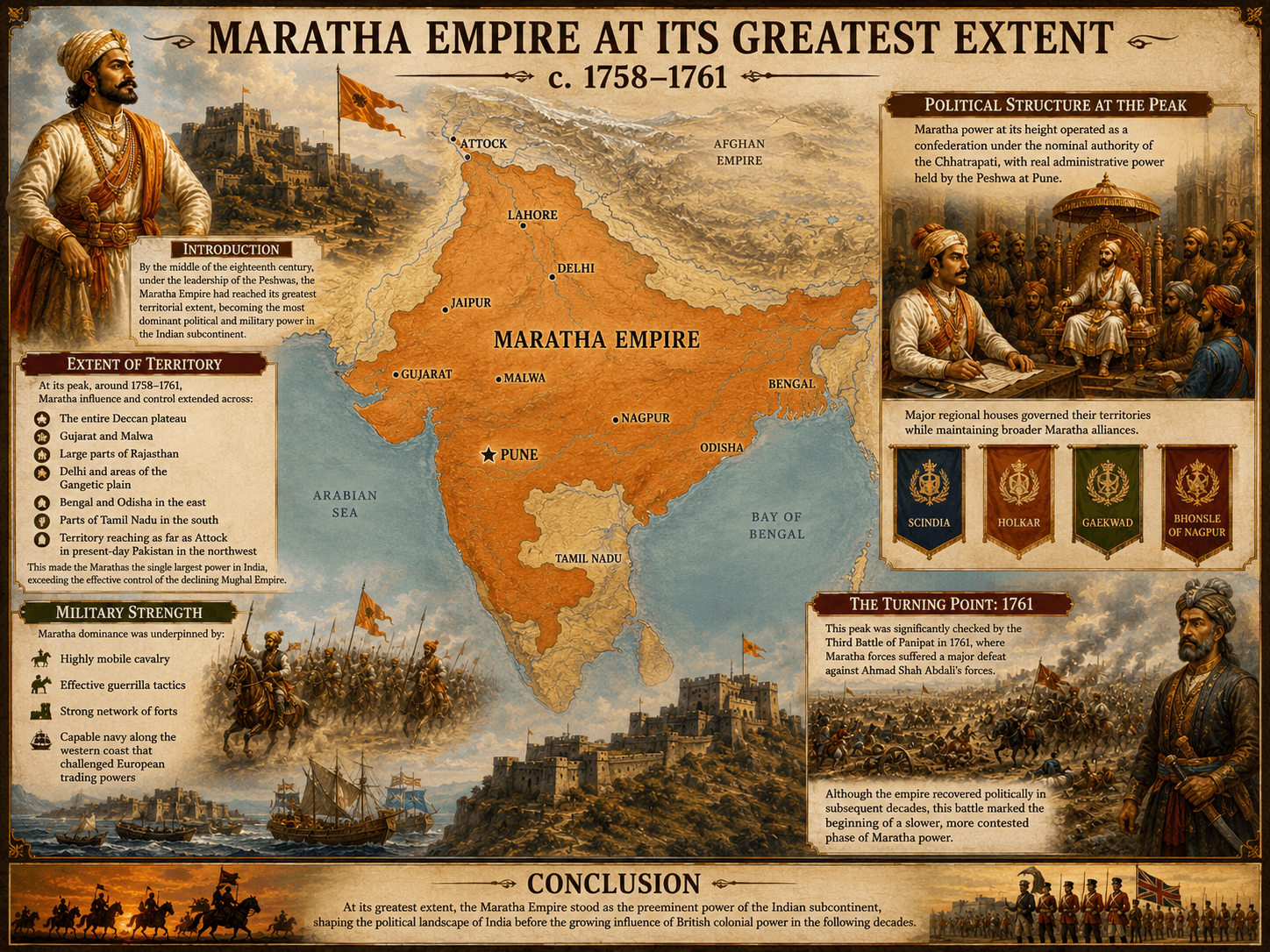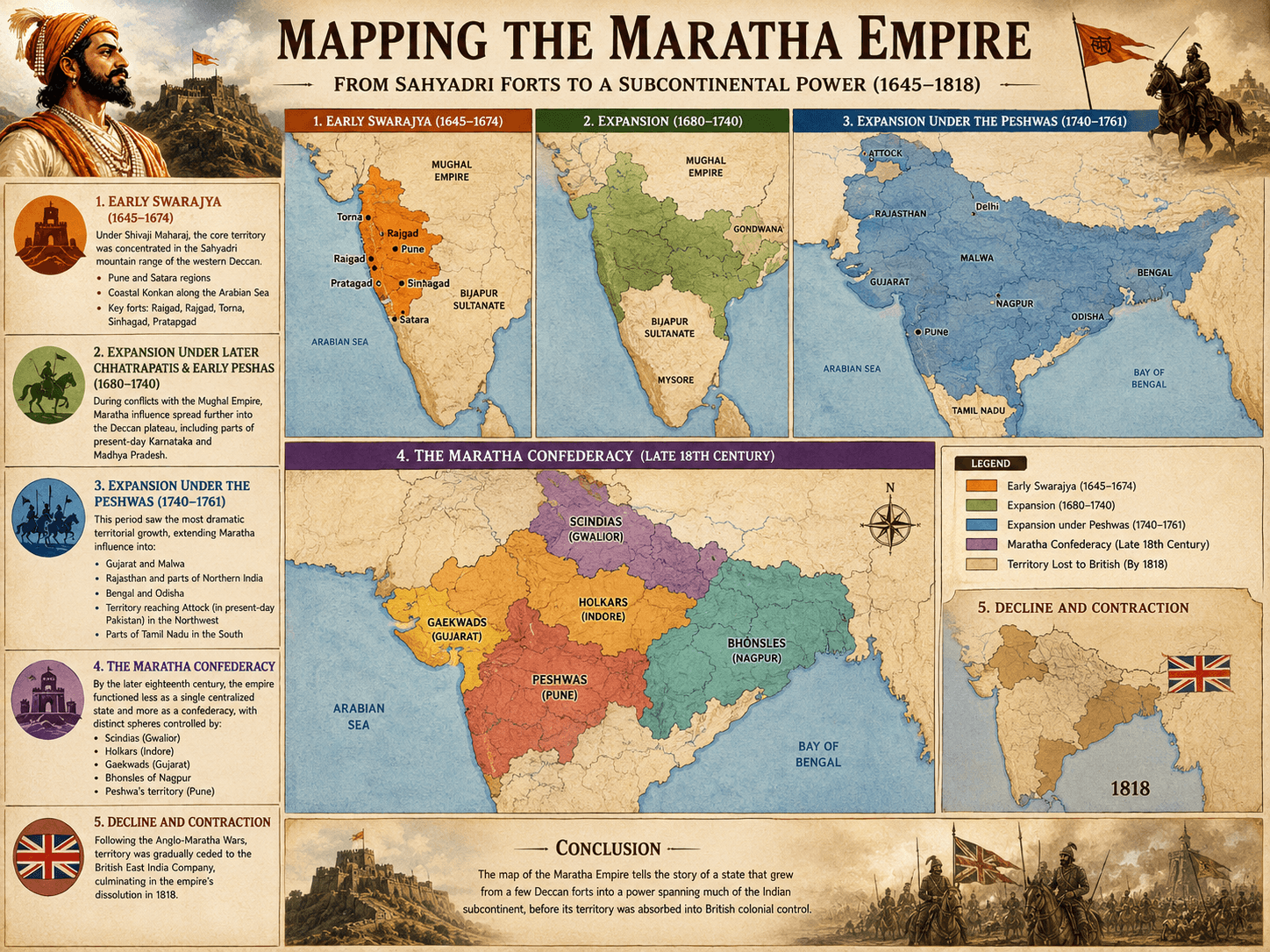
Introduction
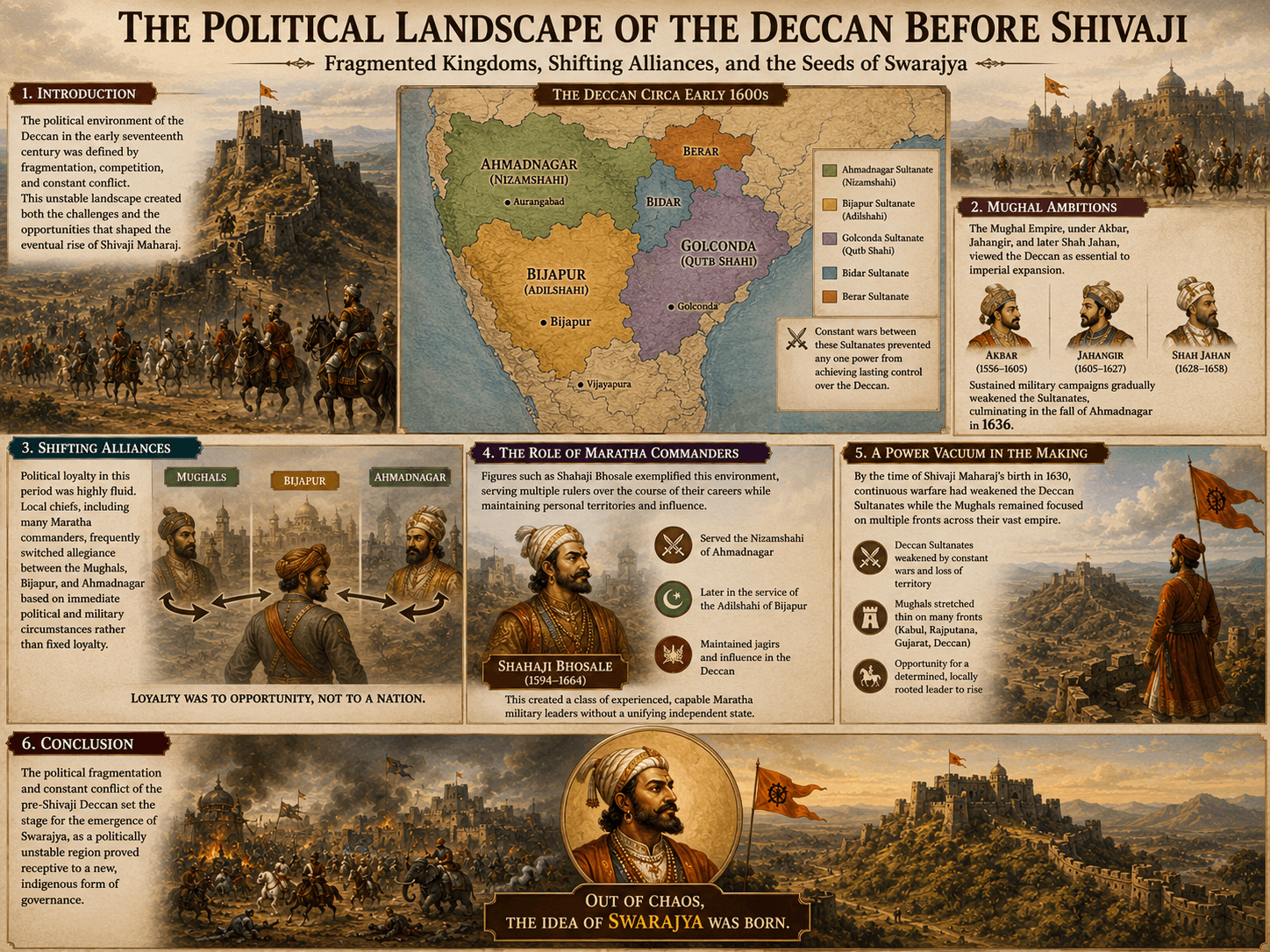
The political environment of the Deccan in the early seventeenth century was defined by fragmentation, competition, and constant conflict. This unstable landscape created both the challenges and the opportunities that shaped the eventual rise of Shivaji Maharaj.
A Region Divided
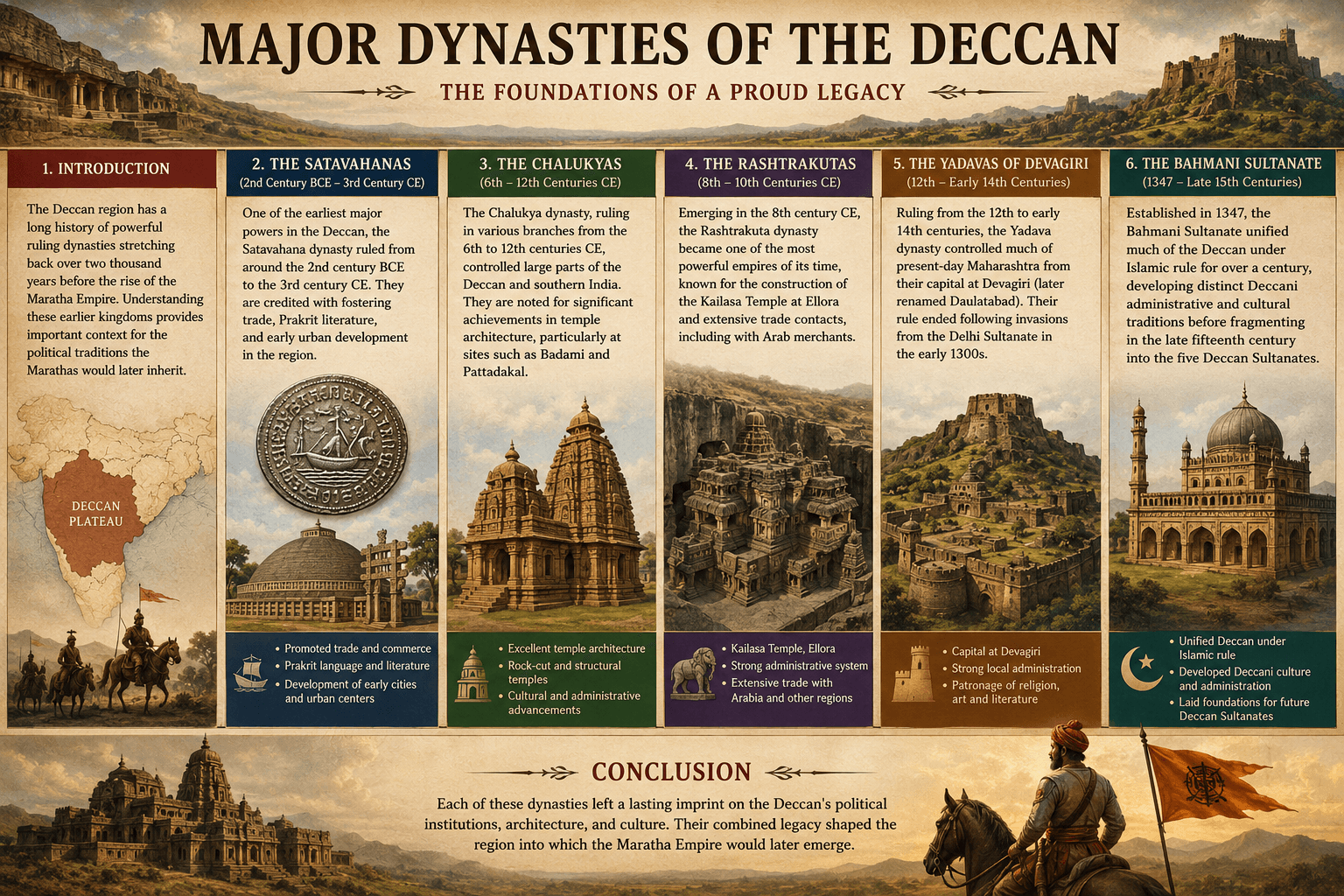
Following the collapse of the Bahmani Sultanate, the Deccan was split among several successor states, primarily Ahmadnagar (Nizamshahi), Bijapur (Adilshahi), and Golconda (Qutb Shahi), along with the smaller states of Bidar and Berar.
These Sultanates frequently fought one another over territory and resources, preventing any single Deccan power from consolidating lasting control.
Mughal Ambitions
The Mughal Empire, under Akbar, Jahangir, and later Shah Jahan, viewed the Deccan as essential to imperial expansion. Sustained military campaigns gradually weakened the Sultanates, culminating in the fall of Ahmadnagar in 1636.