

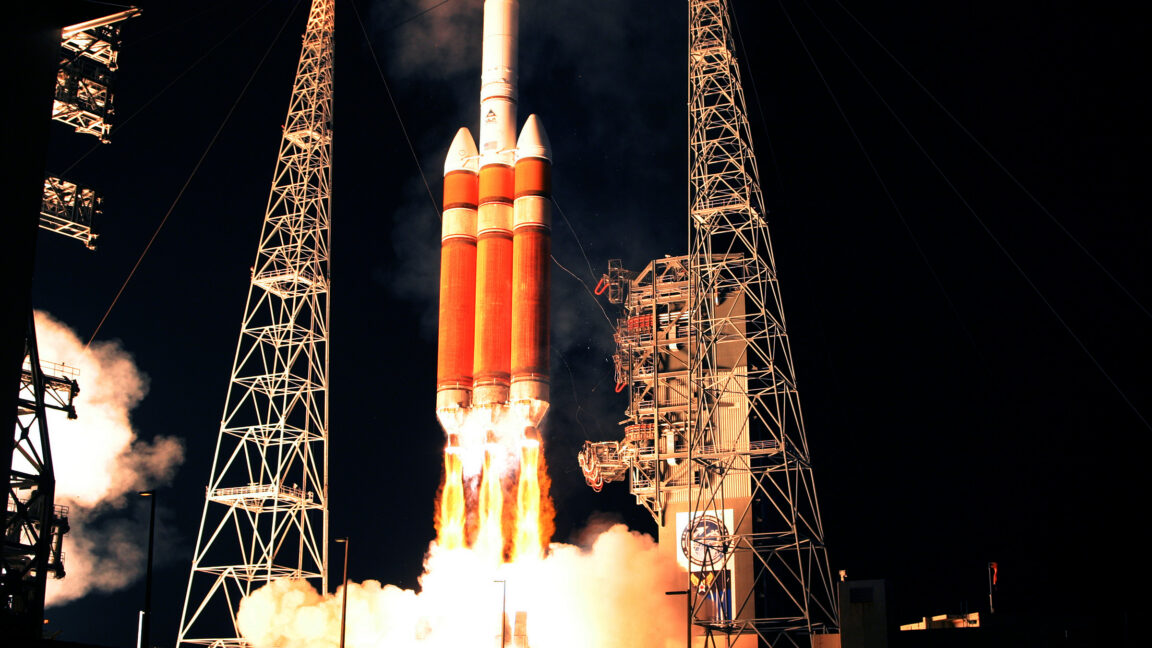
The US military has officially retired its long-running Defense Support Program (DSP) satellites, which have been crucial for detecting nuclear missile launches for over 55 years. The announcement was made by the US Space Force on Thursday, marking the end of an era for a program that began in the early 1970s.
Historical Context
The DSP satellites were first launched in 1970 and were designed to monitor missile launches globally. Initially built to identify Soviet ICBMs, these satellites played a vital role in nuclear deterrence during the Cold War. The first block of DSP satellites, launched from 1970 to 1973, weighed about 1 metric ton each and carried approximately 2,000 infrared detectors. Over time, the capabilities of these satellites expanded significantly, with later models featuring over 6,000 infrared detectors and a mass of about 2.5 tons.
Recent Developments
The final two surviving DSP satellites, likely DSP-20 and DSP-22, participated in an on-orbit maneuvering exercise in early September. Following this exercise, independent tracking confirmed that both satellites raised their orbits, a maneuver typically associated with decommissioning.