
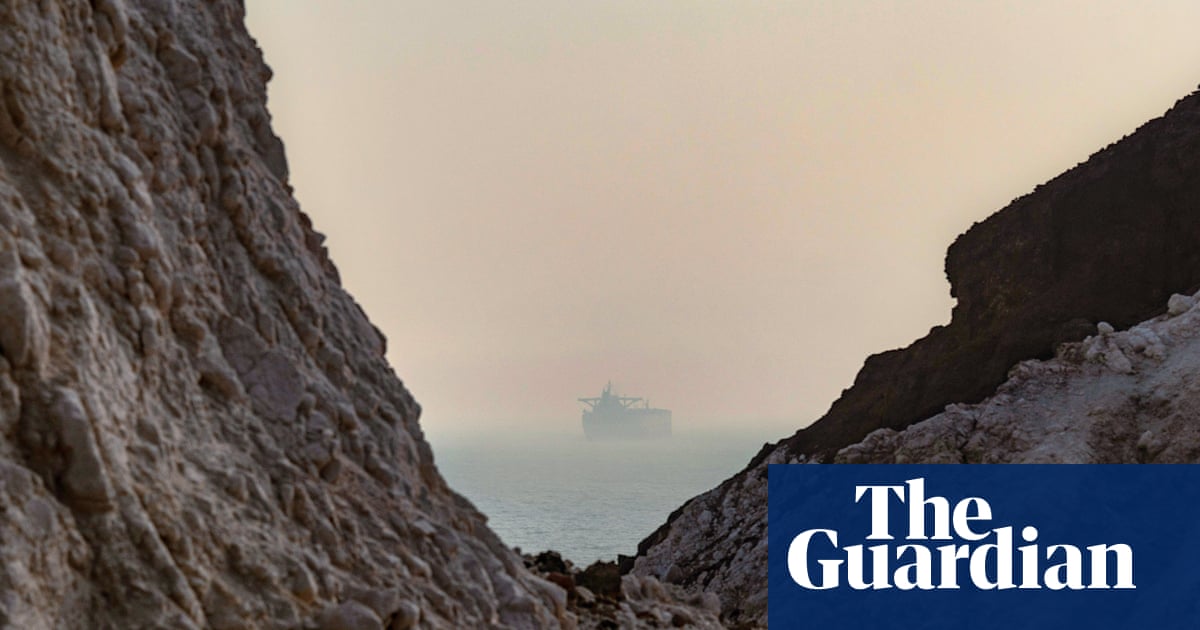
Despite US-Israeli airstrikes and Tehran’s attacks on shipping, the strait of Hormuz continues to serve as a lifeline for those who live and work in the area.
Life on the Ferry
Captain Farouq navigates his ferry as the terminal of Bandar Abbas fades into the distance. The navigation radar beeps periodically, its lights glowing in the darkness. Today, the ferry carries about 100 passengers, operating at half capacity as it heads into the strait. The journey to Hormuz Island takes about half an hour and costs 340,000 toman, roughly £1.
Farouq, who has been a captain for 18 years, describes the strait as his second home. He notes that despite the ongoing US-Israeli war on Iran that began on February 28, ferry crossings have not ceased, although passenger numbers have decreased and the journey has become more perilous.
“"I’ve heard explosions coming from the strait, but I can’t tell if they are air defense or attacks, or both," Farouq shares.
Inside the ferry, passengers have grown accustomed to the sounds of war. They drink tea, smoke cigarettes, and some even nap, while children play. The atmosphere is hot and humid, with fogged windows adding to the sense of confinement.
Impact of the War
Even with a fragile ceasefire, the war's presence is palpable along the coast. According to Iranian government sources, attacks on the southern port of Bandar Abbas have damaged 760 fishing and commercial vessels. Farouq mentions that his own ferry was hit by shrapnel while docked but was quickly repaired.