
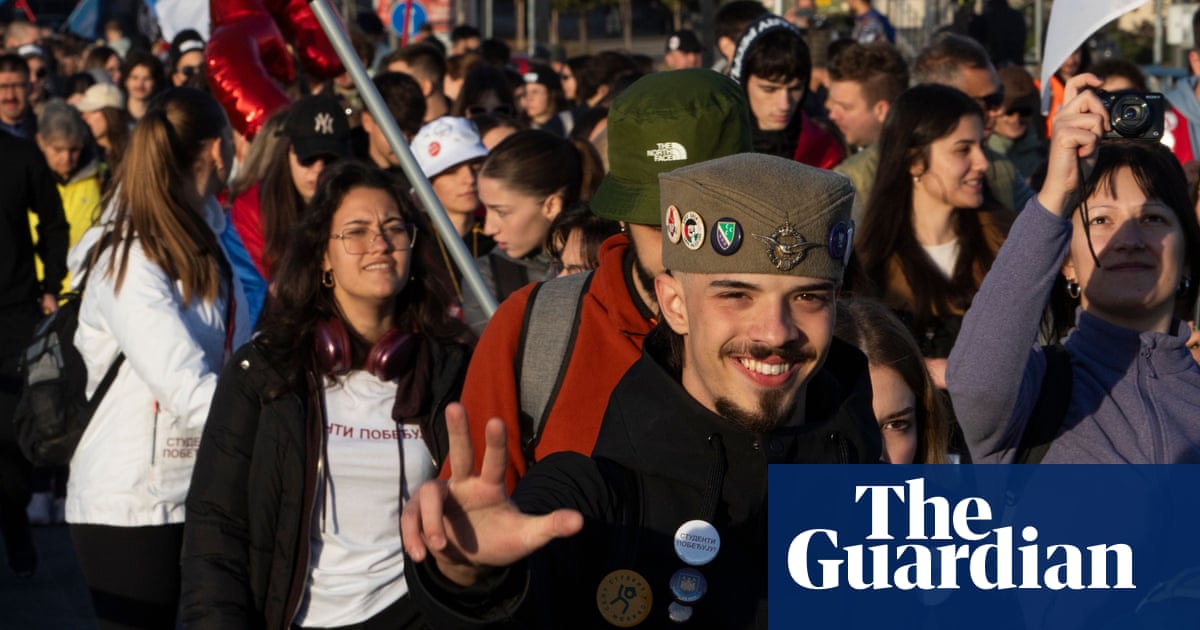
On a cool autumn evening, a team of Serbian student volunteers canvassed the housing estates of Krnjača, a suburb of Belgrade. Equipped with lanyards emblazoned with the word "victory," a list of questions, and a mobile app to track support, these volunteers are part of the Student List, a mass student movement that has been protesting for two years. This Sunday, they will present the most serious challenge to Aleksandar Vučić in his 12-year rule by fielding their own candidates in parliamentary elections.
Background of the Movement
The Student List hopes to replicate the recent defeat of Viktor Orbán in neighboring Hungary, aiming for a domino effect that could spark a democratic resurgence in Central Europe. Opinion polls have varied, but many observers suggest a close race is possible, with both sides unwilling to accept a loss, raising the risk of post-election unrest.
To succeed, the students' list of 250 candidates must break the mold of Serbian politics and challenge Vučić’s grip on power. Vučić stepped down as president last month, five months before the end of his term, to extend his influence as prime minister at the head of his Serbian Progressive Party (SNS).
Local Support and Issues
In Krnjača, law student Zak Veličković and campaign photographer Danijela Radojković received overwhelming support from residents. Most expressed their grievances and promised their votes, with some offering to help transport voters to polling stations. One local remarked, "Turnout is the key," referencing Orbán's defeat with an 80% turnout in Hungary.
The most common complaint among residents was corruption. According to Transparency International, Serbia ranks as the most corrupt country in Europe, aside from the dictatorships in Belarus and Russia. The Student List confronts this perception with their slogan: "Serbia or Mafia?"