

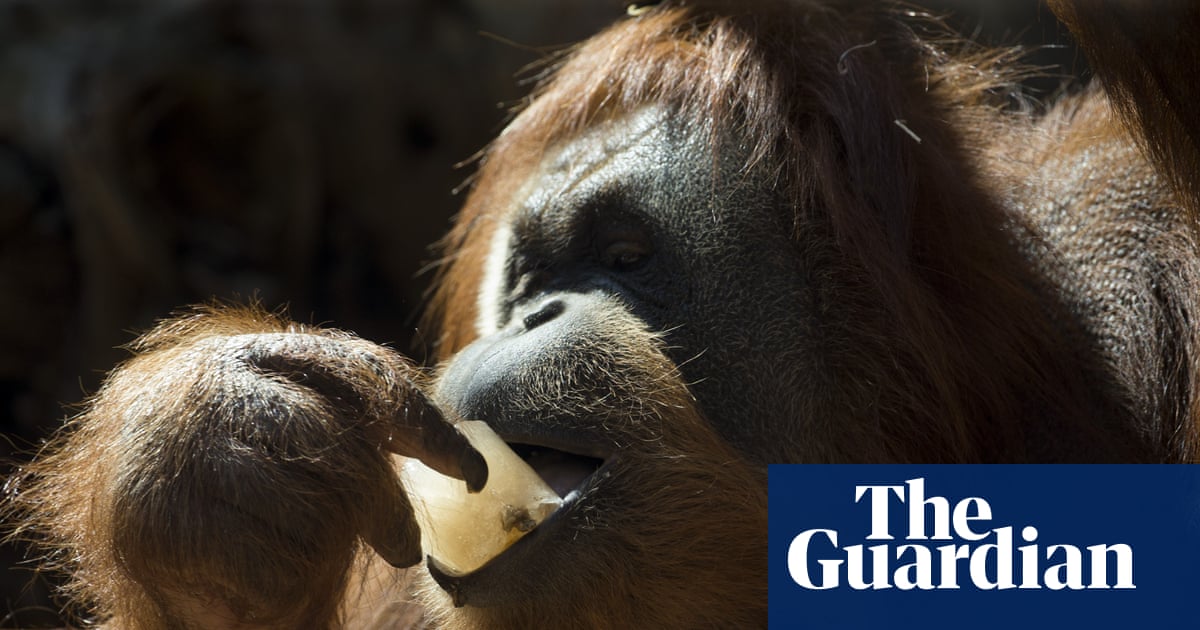
Orangutans base their food choices on whether others appear to be having a good time, research suggests. A study conducted by scientists on captive orangutans found that when the great apes heard the sound of their peers laughing before searching for a tasty treat, they valued the reward more highly.
Research Overview
Erica Cartmill, a professor of anthropology and cognitive science at Indiana University and senior author of the study, explained that this research is part of a larger project exploring whether animals feel joy and the implications of those emotions in areas such as cognition and learning.
““One of our big motivations … is building on human research that shows that emotion has important effects on rational thought – and that they aren’t two separate things; they really influence one another,” Cartmill said. “We wanted to extend that to animals – in this case to orangutans.”
The findings were published in the journal Biology Letters. Cartmill and her colleagues worked with six orangutans from two zoological institutions. The researchers first trained the orangutans to search through bowls to find food treats.
Experiment Details
The experiment involved presenting each orangutan with two bowls:
- One contained a tasty morsel buried under a harmless substance such as moss or sawdust.
- The other contained a different type of material but no treat.