
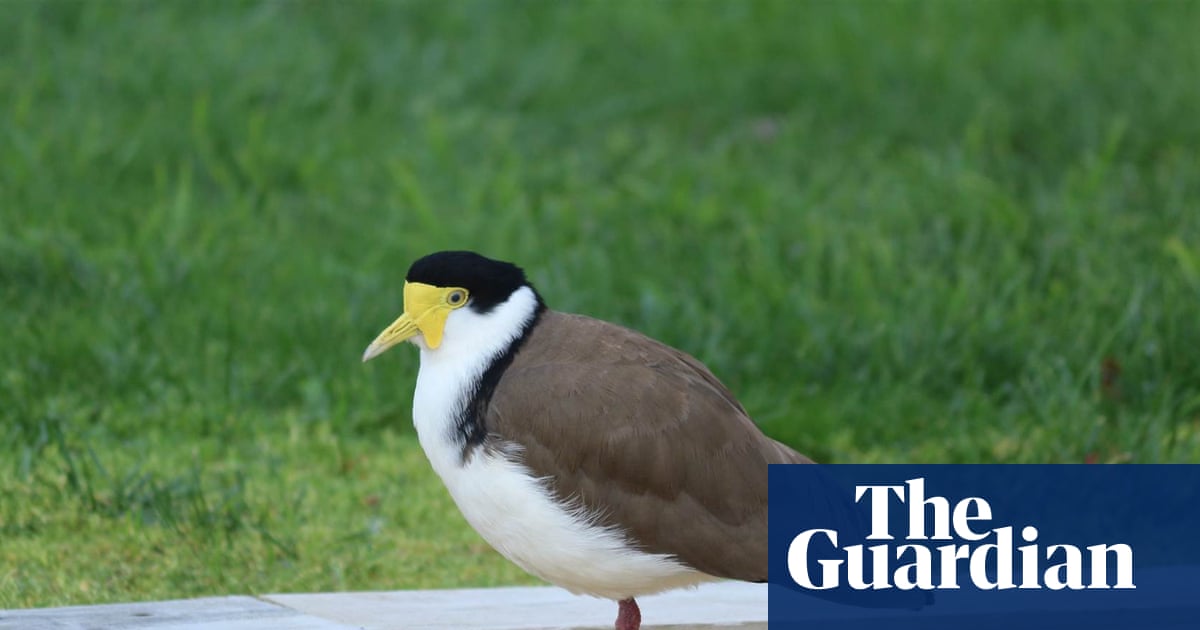
While masked lapwings have a reputation for swooping during nesting season, the resident plover at Windsor Park oval in Riverside, just outside Launceston in northern Tasmania, shows complete indifference to the weekend cricket matches taking place around it. Warming a nest of eggs, the bird has been affectionately dubbed “Faf Swoop Plessis” by locals, a play on former South African cricket captain Faf du Plessis.
Nesting in a Busy Environment
Because the species is protected under state law, carrying fines of up to $21,300 for disturbing nests, ground staff have had to mow around the site, while players steer clear. During a match early in the season, Great Northern Raiders player Caleb Brewer drew the short straw and was stationed directly beside the nest.
““At the start it was pretty weird, but towards the middle we kind of got used to it and the plover wasn’t too bad at the end,” Brewer told local paper The Examiner.
The following weekend, Riverside first-grade opener Josh Partridge was tasked with fielding near the plover but reached a peaceful “mutual understanding.”
““It was like the plover knew there was a game of cricket going on,” he said. “We weren’t interfering with what was going on in its life, so it didn’t want to interfere with what was going on in ours.”
A Sporting Truce
That kind of sporting truce is common, according to Mark Holdsworth OAM from BirdLife Tasmania.
““Lapwings will often become accustomed to the local patterns of people using a site and in many situations people modify their behaviour to avoid the core nesting area,” Holdsworth said. “Everyone has learned to live with each other.”
While masked lapwings—widely known across Australia as plovers—have an intimidating call and reputation for swooping during spring nesting season, choosing a wide-open lawn is actually a calculated survival tactic. Sports ovals are a “fantastic place” for them to nest, Holdsworth explained, because unobstructed views allow parent birds to spot threats early.