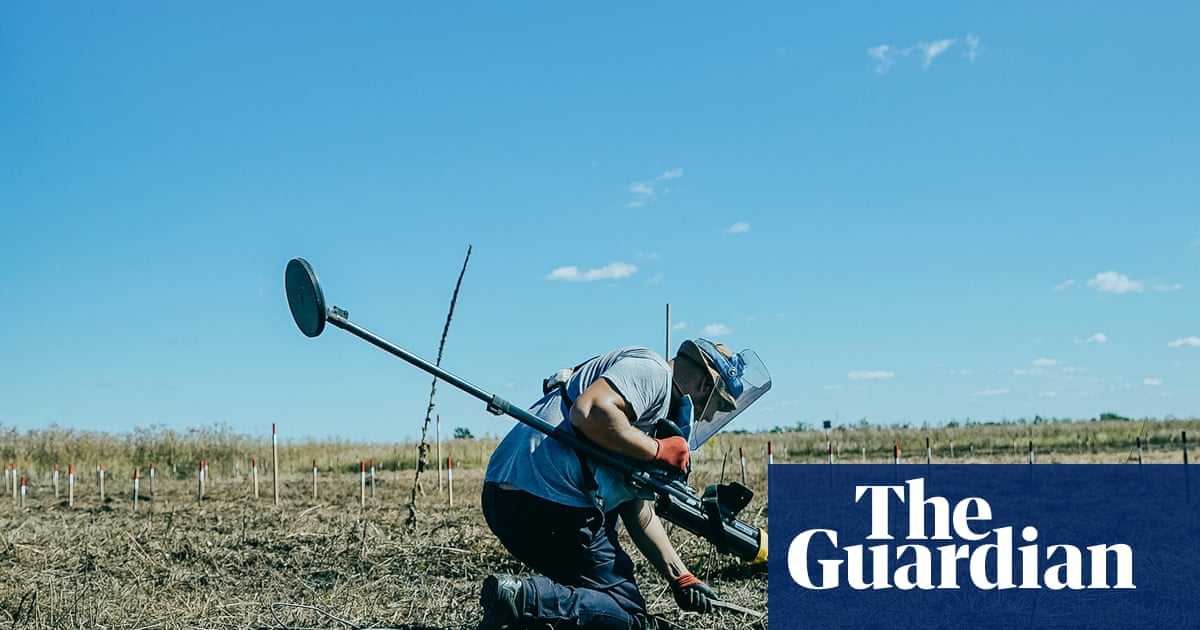
Faced with deadlier threats, demining groups in Ukraine are developing innovative methods to tackle the extensive landmine contamination left by the conflict. Olena Kabanova, a 58-year-old civilian, is one of many working to make the land usable again. Crouched in a field of weeds, she carefully digs around a suspicious object detected by her mine detector. This area, once occupied by Russian soldiers, is now under Ukrainian control but remains littered with landmines.
The Challenge of Landmines
Landmines are a persistent danger in conflict zones, rendering land unusable for years after hostilities cease. The task of removing them is both costly and perilous. The situation in Ukraine, often described as the most mine-contaminated country in the world, has worsened with the increased use of long-range drones.
Paul Heslop, the programme manager for mine action at the United Nations Development Programme in Ukraine, notes,
“"What we’re now seeing is the massive increase in the use of drone-delivered munitions. What already was a very high-intensity battle area is now potentially... becoming a much wider area of contamination."
New Threats and Innovations
The task of clearing landmines is fraught with dangers, including drone and missile attacks that threaten the safety of humanitarian workers. Newer threats, such as the POM-3 mine, which detonates from the vibrations of footsteps, complicate the situation further. Anda Riza, a unit commander of the Halo Trust, explains:
“"There are specific villages that we just completely avoid."