
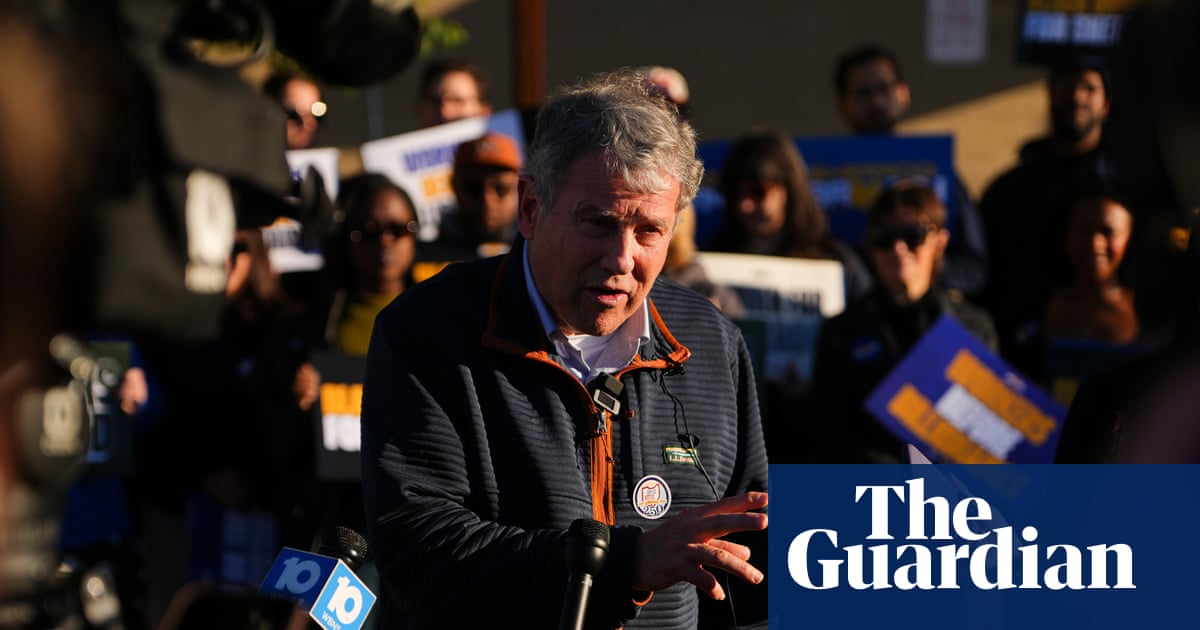
Former Ohio senator Sherrod Brown is making a bold return to politics as he campaigns for a Senate seat in the upcoming November midterm elections. Brown, a Democrat, has spent the past year traveling across Ohio, emphasizing how the "system is rigged" against everyday citizens. Recently, he shared his observations from a trip through the north-west Ohio countryside, where he encountered large datacenter construction sites.
Datacenter Concerns
At a coffee shop in Lima, Brown described the scene: "You’re driving on what looks like really good farmland, driving past fields, driving past barns, driving past milking parlors, and you see, all of a sudden, you see these huge cranes and you see these trucks coming." He expressed concern that these datacenters, part of the AI boom in which Ohio is a national leader, do little to benefit local communities.
“"Nobody knows they’re there. They eat up our land. They swallow up our water … then once they’re built, our electricity prices go up," Brown stated, resonating with the crowd.
This message aligns with Brown's long-standing political narrative: that powerful interests in the U.S. do not prioritize the needs of Ohioans. His populist approach has previously earned him seven terms in the U.S. House of Representatives and three in the Senate, even as Ohio has leaned more Republican in recent years.
Political Landscape
In 2024, Brown lost his bid for a fourth Senate term, with Ohio voters favoring Trump by an 11 percentage-point margin. However, he remains determined, stating, "It’s not, I promise you, the last time you’ll hear from me," before announcing his new campaign.
Now at 73, Brown has made opposition to datacenter developers a central theme of his campaign, labeling his Republican opponent, Senator Jon Husted, as "the face of datacenters." A report from Ohio’s chamber of commerce revealed that the state provided $2.5 billion in tax breaks for these facilities from 2017 to 2024, a period during which Husted served as lieutenant governor.
“"John Husted, I mean, he’s the guy that – he’s talking like he didn’t now – but he’s the reason these datacenters are here – 200 of them," Brown asserted.