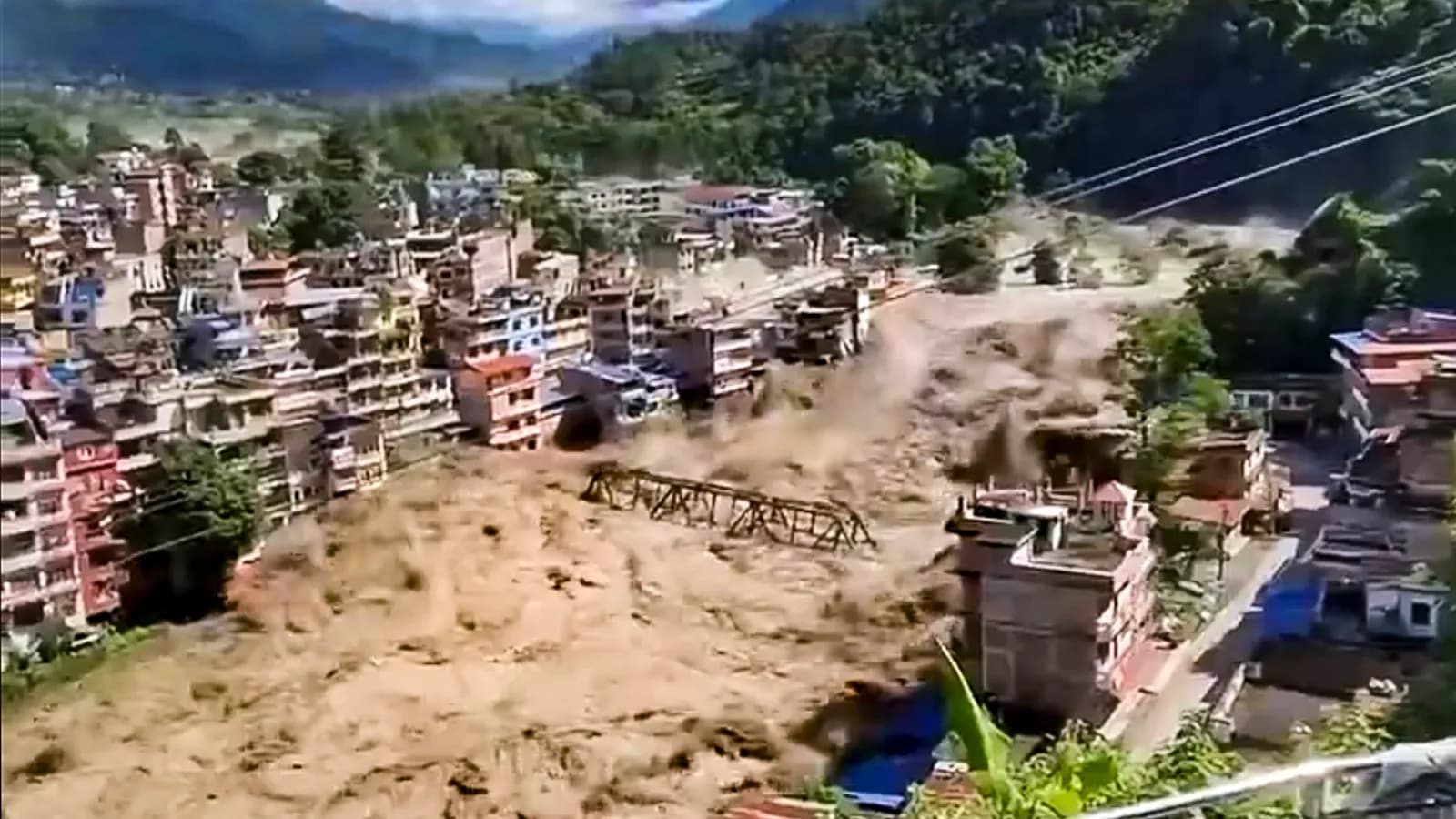
Over 150 people were killed while at least 484, including 105 Indians and 37 Non-Resident Indians (NRIs), were reported missing after massive flash floods in Nepal’s districts bordering Tibet on Wednesday. According to official figures, 391 foreign nationals and 93 from Nepal had been reported missing until 7 pm (local time). These included at least 60 working in hydel projects in the area.
Sources said most of the Indians reported missing were headed to Kailash Mansarovar. The remaining tourists are from the United States, Malaysia, United Kingdom, South Africa, Australia, and the Netherlands.
Casualties and Damage
Among the dead were 44 from Nepal’s Army, 28 from the police, and 13 from the Armed Police Force. The authorities fear higher casualties and widespread destruction. Initial reports from the affected areas and the National Disaster Risk Reduction and Management Authority said the border river flood, which began a little after 9 am local time, swept away many settlements across the 60-km road from Gyirong in Tibet, down to Rasuwa and Dhading districts in Nepal, both bordering Tibet, and Nuwakot district.
With these areas being part of Nepal’s old trade route with Tibet, they are thickly populated. Rasuwa is known for its trekking routes, with 108 lakes in the region including the sacred Gosaikunda Lake. Some of the missing were trekking to the Gosaikunda Lake, coinciding with the local festival of Janai Purnima on Friday.
Though the monsoon season is less favorable for trekking in Nepal, it’s a major season for Kailash Mansarovar Yatra, along the Rasuwa (Nepal)-Gyirong (Tibet) route. Dozens of multi-storied buildings, trucks, and vans were buried under the mud in Nuwakot, one of the worst-affected areas. Critical infrastructure, including at least a dozen hydropower projects, was also destroyed, affecting about 700 MW of power generation. Gorkha, Nawalparasi, and Chitwan were among the other districts affected.
Cause of the Flood
Climate experts at the Kathmandu-based International Centre for Integrated Mountain Development (ICIMOD) said an avalanche from a glacier likely caused the flash floods. Initial reports suggested that an earthquake in the area could have triggered an avalanche and caused the floods, Nepal’s Foreign Minister Shisir Khanal also told Parliament on Wednesday, according to local media reports.