
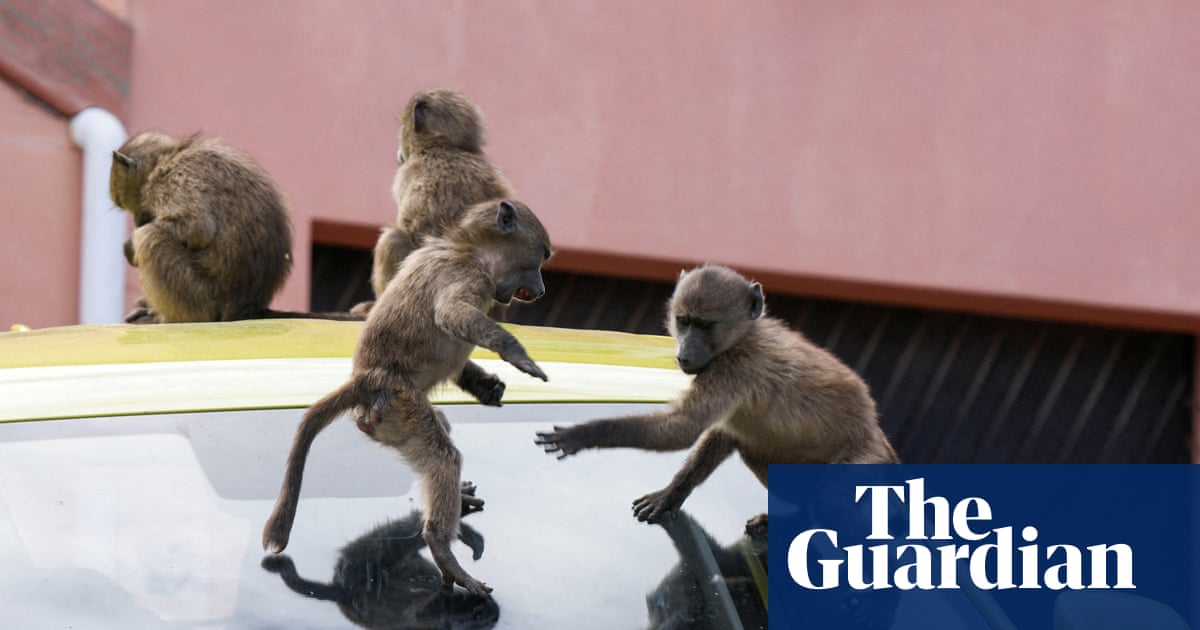
Two troops of chacma baboons are increasingly breaking into homes and shops in Cape Town, prompting the city council to announce plans to round them up. The council intends to sterilize the baboons and relocate them to a newly constructed sanctuary. However, this plan has faced fierce criticism from animal rights activists, who argue that coexistence is a viable solution and that less destructive alternatives have not been adequately explored.
Background
The issue of baboons in Cape Town has been escalating since the 2000s, particularly after the city ceased culling troops in the late 1990s due to public pressure. A 2025 census revealed that the baboon population had surged by a third since 2000, increasing from 360 to 493 individuals across 12 managed troops. This population growth has led to frequent conflicts, with baboons damaging property, stealing food, and disrupting residents' lives.
Current Situation
Residents in areas like Simon's Town report that baboons are now breaking into homes late at night and raiding convenience stores. Justin O’Riain, a behavioral ecologist at the University of Cape Town, noted,
“"It’s depreciated property values because it’s hard to sell a house when it’s covered in baboon faeces and paw prints, and you know they’re coming every day."
The geography of Cape Town contributes to the problem, as the baboons are confined between the steep terrain of Table Mountain National Park and urban development along the Atlantic Ocean. Joselyn Mormile, who leads the Cape Baboon Partnership (CBP), explained:
“"The underlying issue is that baboons will seek low-lying land. That is their natural drive – it’s better access to water and more productive vegetation."