
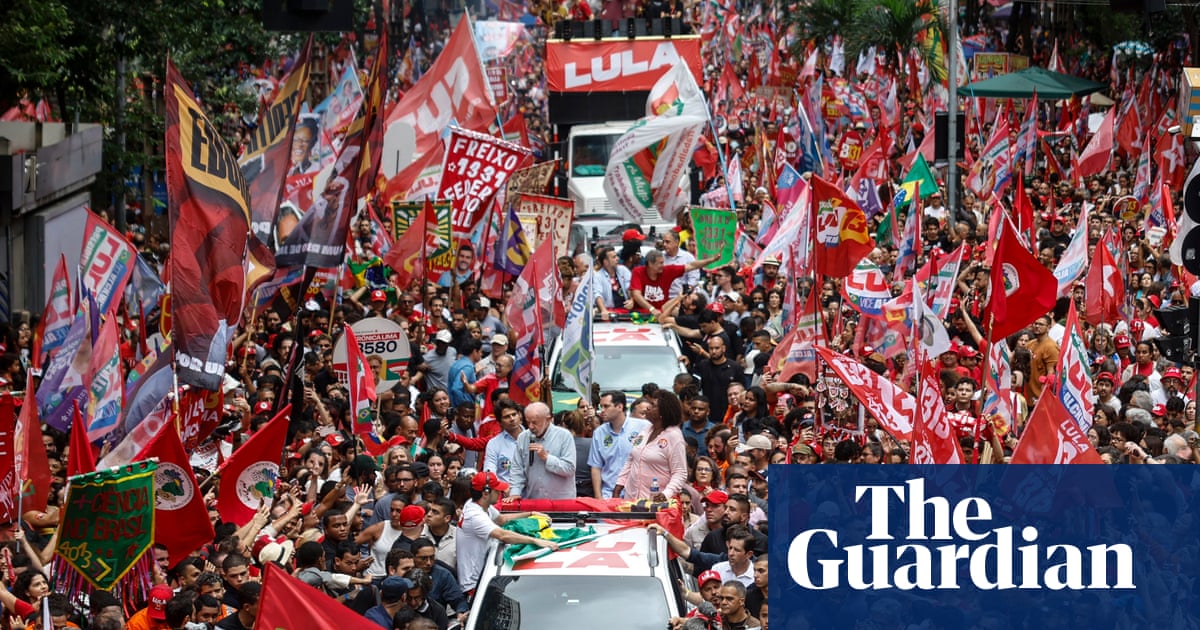
Brazilian President Luiz Inácio Lula da Silva has declared himself the only barrier against far-right "fascists" reclaiming power, as he led a massive rally in Rio de Janeiro ahead of a crucial election on Sunday. The 80-year-old leftist stated that he is seeking a historic fourth term to prevent the family of his right-wing rival, Flávio Bolsonaro, from returning to government.
“"If it weren’t for me standing up to these fascists they’d easily win another election. I’m the one standing in their way," Lula said in an interview on the popular podcast Flow. He emphasized, "It’s either me, or it’s barbarism."
Rally for Democracy
Hours after his remarks, Lula arrived in Rio for what his team termed a "victory march" between two historically significant locations in Brazil’s fight for democracy during the 1964-1985 military dictatorship. The march commenced from the Candelária church, where over a million people, including Lula, gathered in 1984 to demand direct presidential elections.
“"What’s at stake is not the victory of one man, it is the victory of an idea, it’s the victory of democracy," Lula stated after the parade.
From Candelária, a sea of red-clad supporters marched a mile south to Cinelândia, the site of the famous 1968 March of the Hundred Thousand protest. Lula vowed, "No gringo is going to lay a finger on Brazil’s things," indirectly referencing claims that the Trump administration is attempting to influence the election in favor of Bolsonaro through economic and diplomatic pressure.
Election Context
This year’s election has raised renewed concerns about the future of Brazil’s democracy. Polls indicate that Lula holds a narrow lead over his opponent, Flávio Bolsonaro, whose father, former President Jair Bolsonaro, is currently serving a 27-year sentence for plotting a failed coup after losing to Lula in the 2022 election. Many Brazilian democrats fear that if Flávio Bolsonaro wins, he may quickly work to free his father and other coup-plotters from prison and undermine the country’s democratic institutions, including the Supreme Court.