Introduction
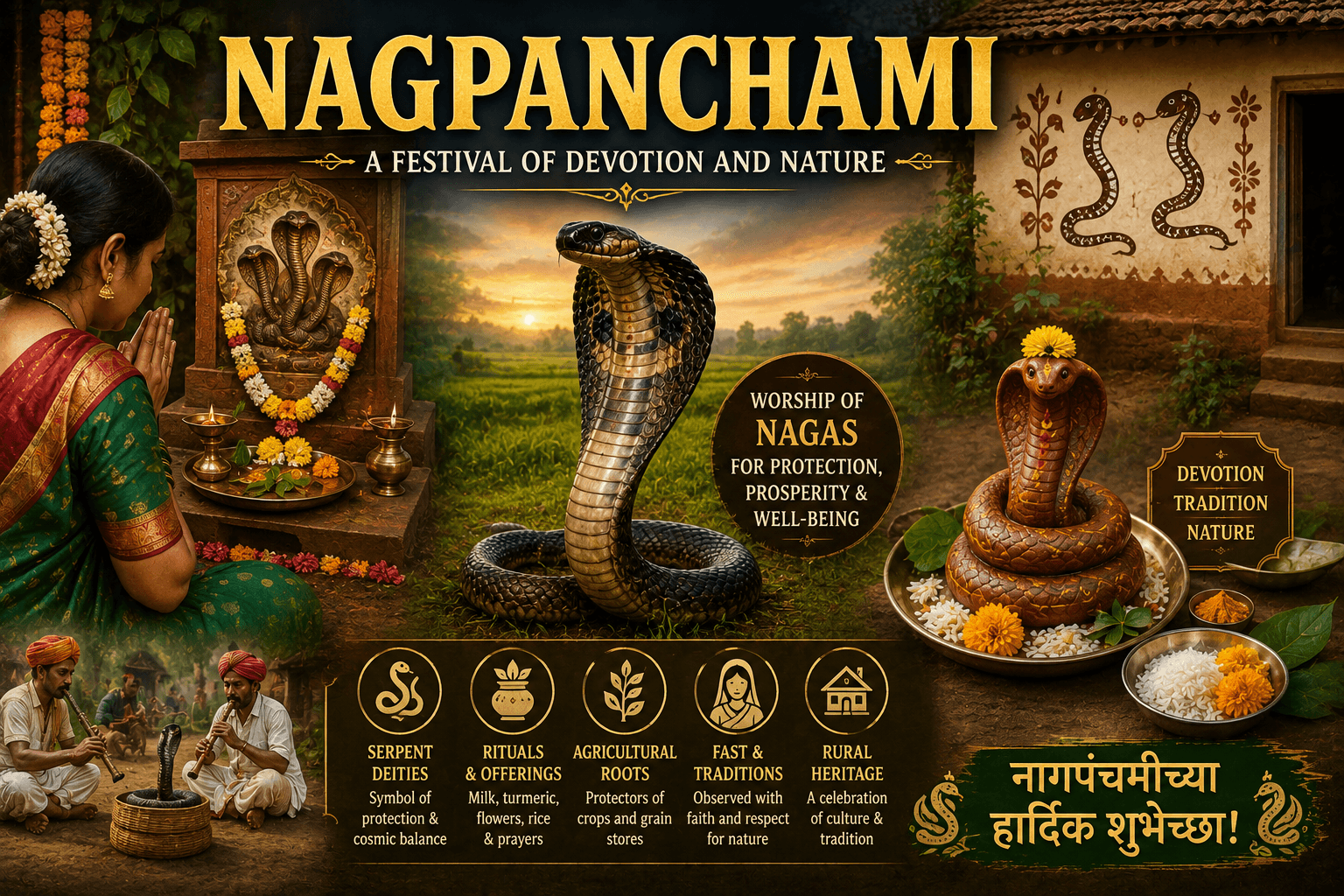
Nagpanchami is observed on the fifth day (Panchami) of the bright fortnight of the Hindu month of Shravan, and is one of the most widely celebrated festivals across Maharashtra, marked by the worship of serpent deities, or Nagas.
Cultural Beliefs
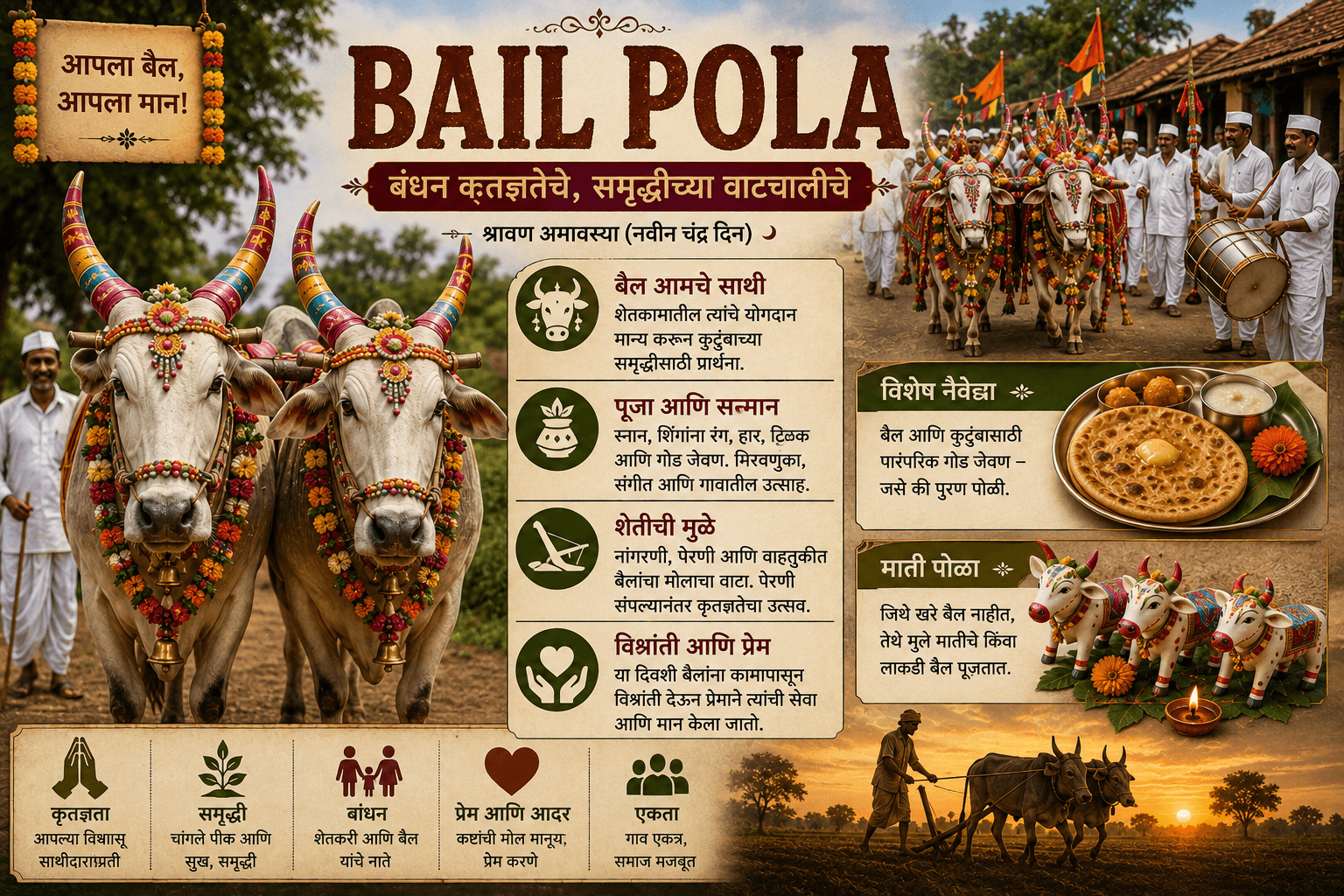
Snakes hold a significant place in Hindu mythology, often associated with protection, fertility, and cosmic balance, most notably through the image of Lord Shiva wearing a serpent around his neck and Lord Vishnu resting on the coils of Shesha Naga. On Nagpanchami, devotees worship live snakes or their images and idols made of clay, silver, or stone, offering milk, turmeric, flowers, and rice as a mark of reverence, seeking protection from snake bites and the wellbeing of their families.
Regional Customs in Maharashtra
In many parts of rural Maharashtra, women observe a fast and refrain from activities considered harmful to snakes, such as frying food in oil, digging the earth, or using sharp cutting tools, out of respect for the animal being worshipped. In some regions, snake charmers traditionally brought live cobras to villages for ritual worship, though this practice has significantly declined due to wildlife protection laws, with clay or painted idols now commonly used instead. Rural households also draw images of snakes on walls near entrances using cow dung or sandalwood paste as part of the ritual.