Introduction
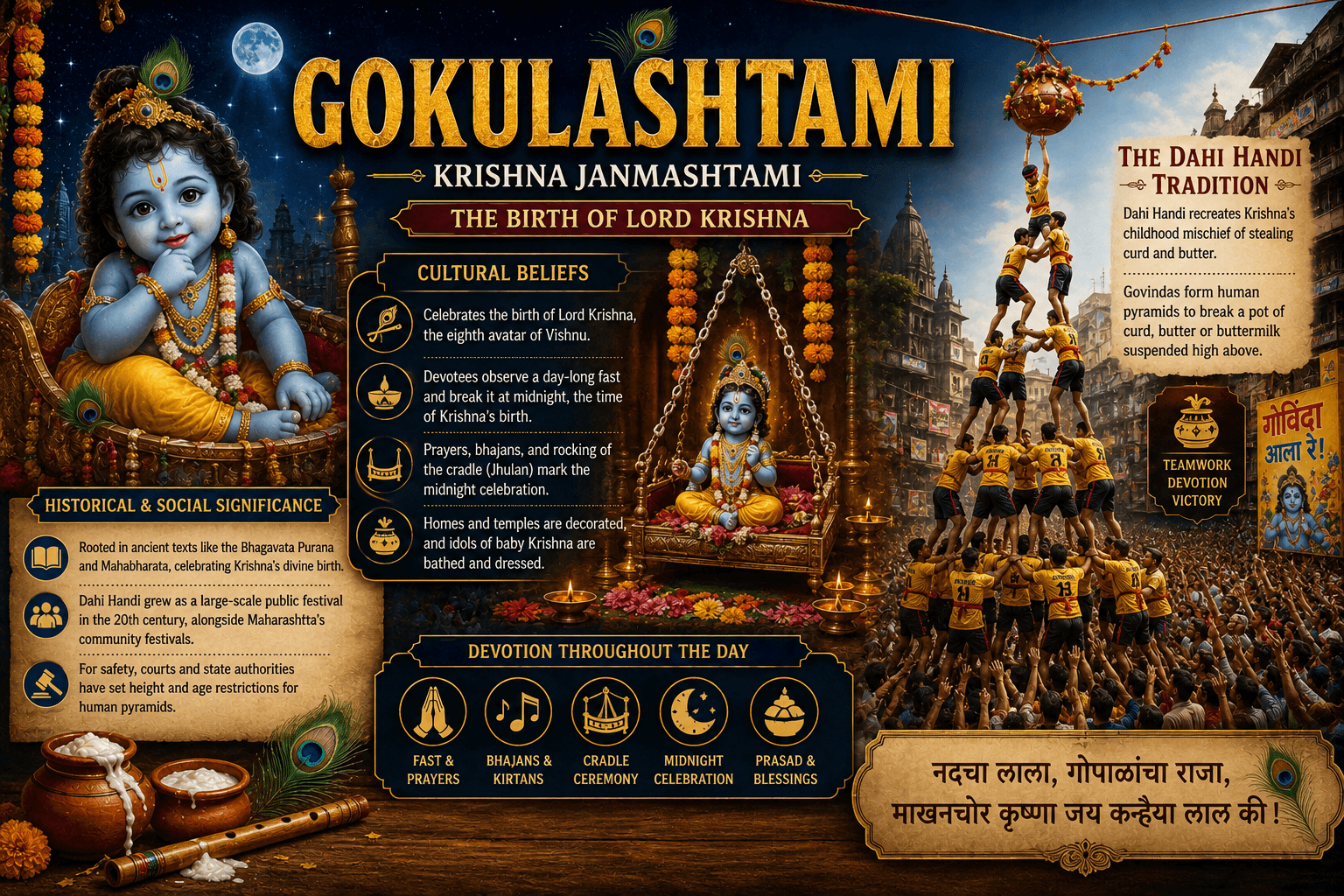
Gokulashtami, widely known as Krishna Janmashtami, marks the birth of Lord Krishna and is celebrated on the eighth day (Ashtami) of the dark fortnight of the Hindu month of Shravan or Bhadrapada. In Maharashtra, the festival is especially associated with Dahi Handi, a tradition unique in its scale and public celebration.
Cultural Beliefs
Lord Krishna is worshipped as the eighth avatar of Vishnu, born to end the tyranny of King Kansa, and Gokulashtami commemorates his midnight birth in Mathura. Devotees observe a day-long fast, breaking it at midnight, the believed hour of Krishna's birth, with prayers, bhajans, and the ceremonial rocking of a cradle representing the infant Krishna. Homes and temples are decorated, and idols of baby Krishna are bathed and dressed as part of the ritual observance.
The Dahi Handi Tradition
Dahi Handi re-enacts one of Krishna's most popular childhood exploits, his fondness for stealing curd and butter, for which he was affectionately called Makhan Chor. Groups of young men, known as Govindas, form human pyramids to reach and break a pot of curd, butter, or buttermilk suspended high above the ground, mirroring the playful mischief attributed to the young Krishna. Mumbai and Pune host some of the most prominent public Dahi Handi events, drawing large crowds, prize money, and organised competitions between neighbourhood groups.