
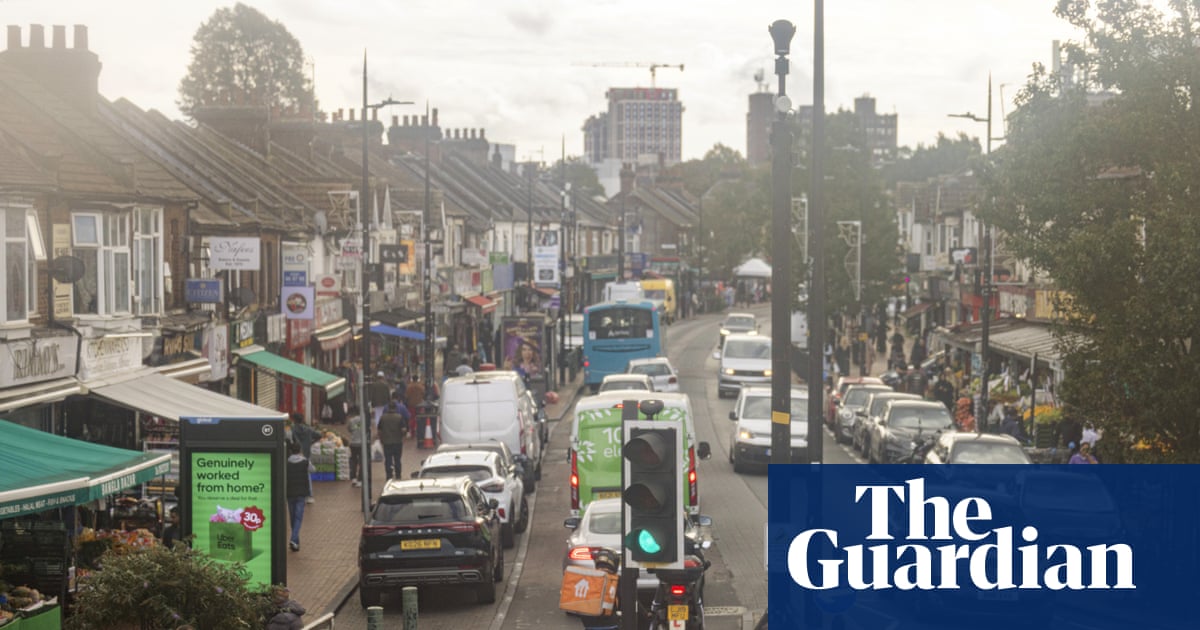
Little if any sign Bury Park is a place where any group might fear to tread, despite Tory MP’s comments to the contrary.
From behind the counter of his chippie, Tanner Ahmed is wrestling with the notion that the regular stop-off point for fans attending Luton Town’s nearby football ground could be in a “no-go zone” for white people.
““The whole point of setting up was to cater for thousands who were coming through here every week, especially in the first year when the club was in the Premier League,” said Ahmed, affectionately known as Mr T, in the Bury Park area, a predominantly Asian district of Luton.
Outside, on the day after a shadow Conservative Home Office minister had claimed there were “no-go zones” for white people in Luton, there was a hum of activity on Dunstable Road, a thoroughfare lined with restaurants, jewellery stores and shops selling pakoras and other snacks. Further along, shoppers of different races trundled trolleys through the car parks of Sainsbury’s and Lidl.
Blake Stephenson, the MP for Mid Bedfordshire, who lives in a village 15 minutes away from Luton, had claimed at the Tory party conference on Monday that the town was “a very dangerous place” where some communities “live in ghettoes.”
““There are parts where white people won’t go,” he said. “They are like no-go zones.”
His comments have been roundly condemned in Luton, but they echo the longer-term far-right framing of the English town as a poster child for the supposed dangers of Islamism and multiculturalism. As the home town of the far-right activist Tommy Robinson, whose real name is Stephen Yaxley-Lennon, it is also where the English Defence League (EDL), the street movement he used as a springboard to semi-celebrity status in likeminded circles, was launched.
International far-right figures have eagerly seized on his depiction of the town. The Australian senator Pauline Hanson joined him there in July for a walkabout filmed by a major Australian TV network.
The 2021 census found that 54.8% of Luton’s population were non-white, making it one of four places outside London at that time where the majority of the population was from minority groups.