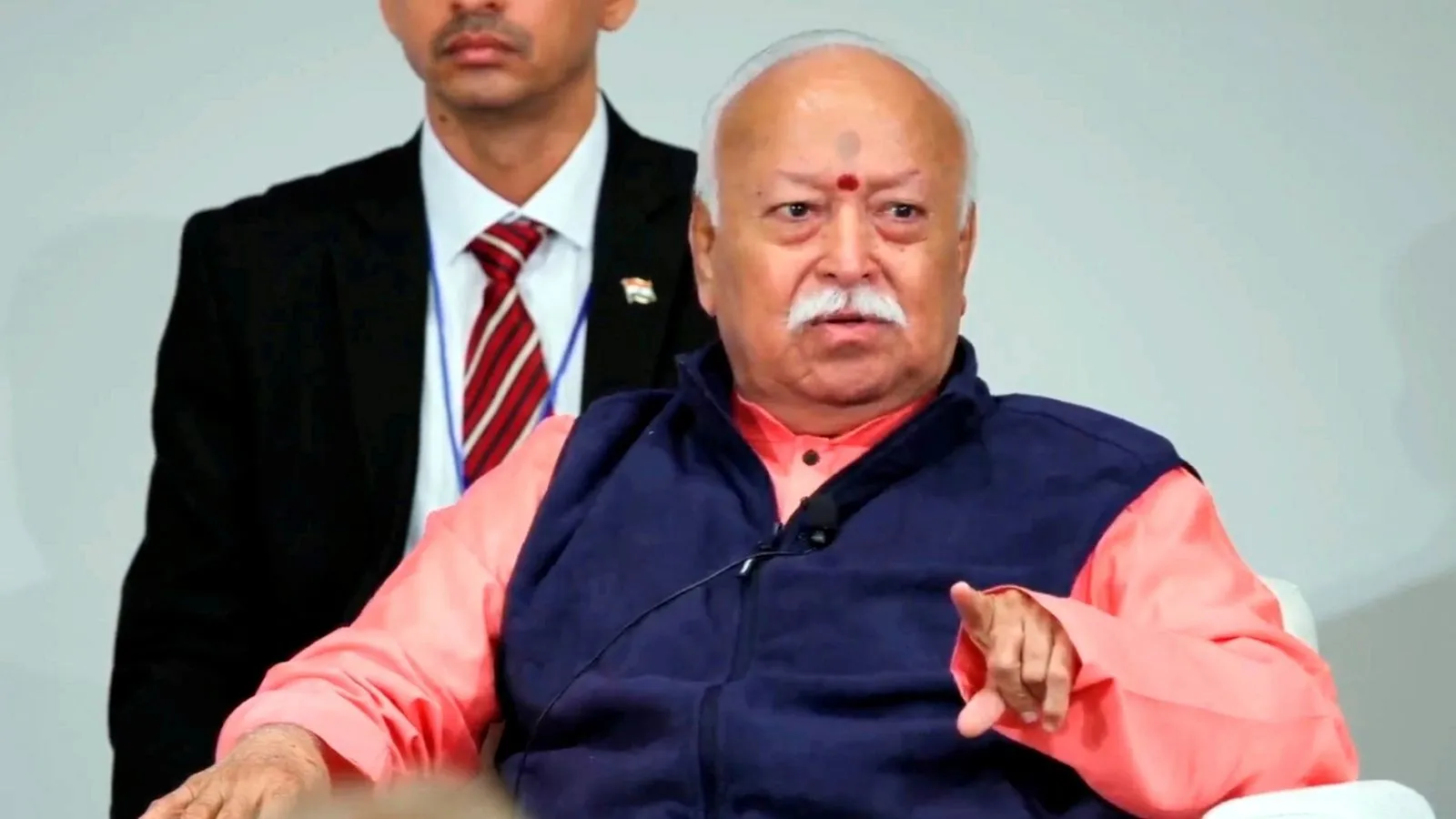
In an apparent articulation of the RSS’s worldview for an American audience, Rashtriya Swayamsevak Sangh (RSS) chief Mohan Bhagwat on Saturday stated that Bharat’s "destiny" was to make the world realize that unity could coexist with diversity. He emphasized that the country must demonstrate this "not by preaching, but by practice".
Addressing the Audience
Speaking to around 5,000 people at New York’s Madison Square Garden, Bhagwat remarked that nations are not merely geographical entities but have a "duty" to perform. Invoking Swami Vivekananda, he asserted that every nation has a message to deliver, a mission to accomplish, and a destiny to fulfill. He argued that Bharat’s mission is to showcase the idea of unity underlying diversity.
“"For Bharat, this unity and diversity are part of the DNA," he said. "Diversity has to be celebrated, has to be respected, has to be accepted. And at the same time, we must keep in mind this feeling of oneness. This is a real feeling."
Context of the Event
The event, organized by the AHEAD Forum as part of the RSS’s centenary-year global outreach, occurred amid controversy in New York regarding the program. Mayor Zohran Mamdani had previously expressed his disapproval of the RSS event, describing it as part of a movement based on an "exclusionary vision" and questioning its compatibility with the pluralistic and secular India he had grown up with.
Mamdani stated, "I don’t support the rally, but I don’t know if the city has any jurisdiction on canceling a private event." The controversy also attracted interfaith and civil rights groups, including Hindus for Human Rights, the Indian American Muslim Council, and the Interfaith Centre of New York, which held a press conference outside City Hall calling for the Madison Square Garden program to be canceled.
Bhagwat's Message
Against this backdrop, Bhagwat’s address served as an extended exposition of the RSS’s idea of India and its civilizational role. While the gathering took place at one of New York’s most iconic venues, the audience primarily consisted of members of the Indian diaspora. Bhagwat emphasized that the idea of oneness is not merely philosophical but has practical implications for how humans treat one another.