
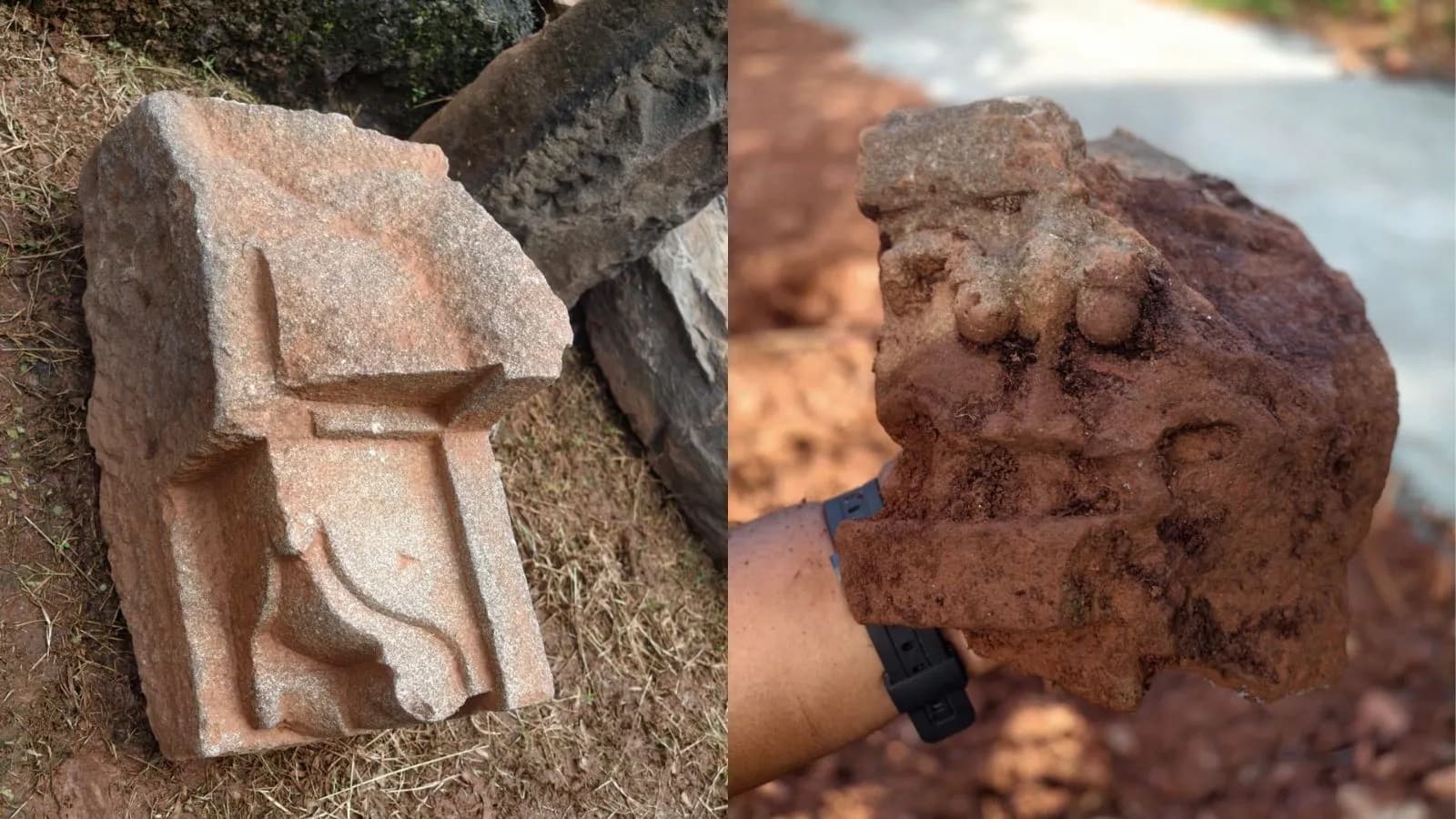
Ancient relics dating between the 14th and 16th centuries have been discovered during restoration work at the Saptakoteshwar temple site on Divar island, Goa. Chief Minister Pramod Sawant announced these findings on Thursday, highlighting the significance of the archaeological discoveries that indicate the existence of an ancient temple complex and a corridor.
Key Discoveries
The restoration work has unearthed several important artifacts, including:
- A Kirtimukh motif, traditionally carved above temple doorways.
- A carved capital of a temple pillar.
- Parts of Dev Khostam, used for placing idols.
Sawant emphasized that these relics strengthen the historical chronology and sacred legacy of this ancient site in Goa. In a post on X, he stated:
“"Relics and remains dating between the 14th and 16th centuries have been found along the old pathway between Koti Tirth and Madhavachi Talli, indicating the existence of an ancient temple complex and sacred corridor."
Context of the Restoration
The announcement came a day before a program titled “Udakshanti and Ganga Pujan”, organized by the Department of Archives under the Kotiteerth Corridor Development Project. This project aims to create a pilgrimage site for temples destroyed during the Portuguese rule starting in the 16th century.
Sawant reiterated the government's commitment to preserving and restoring Goa's rich civilizational heritage. He noted that nearly 1,000 temples in Goa were destroyed by the Portuguese, and the restoration project is part of efforts to revive these places of worship.