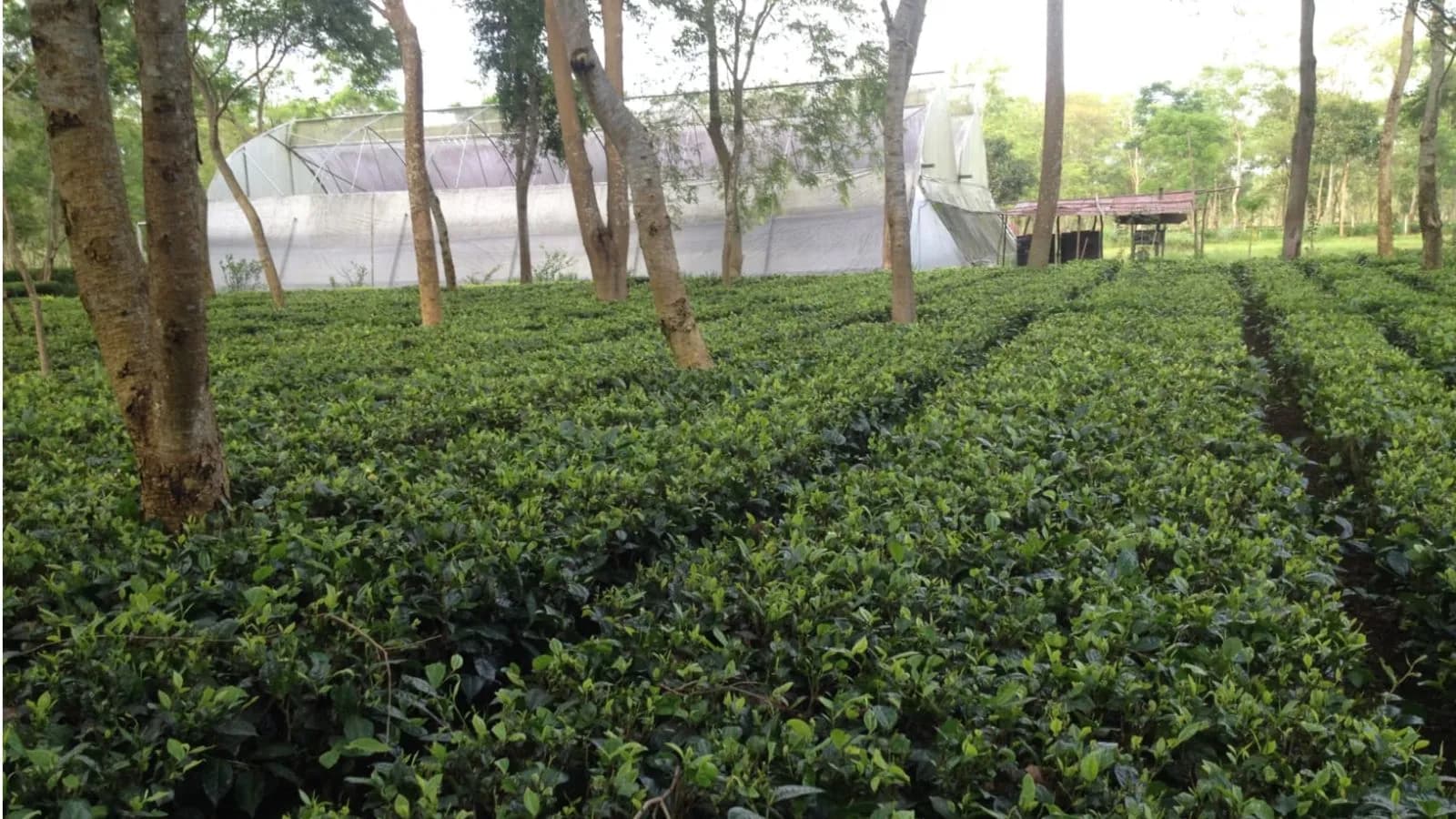
The first thing that strikes you at Chota Tingrai Tea Estate is the green. Spread across more than 1,000 acres in Assam’s Tinsukia district, rolling tea plantations stretch as far as the eye can see. By 7:30 am, the estate is already stirring: workers pass through the gates, tea baskets creak, and leaves rustle across the gardens. It is the familiar soundscape of an Assam tea estate beginning another day.
Inside the factory, however, something less familiar is underway. Leaves grown in Assam are being turned into matcha, a tea deeply rooted in Japan’s centuries-old tea culture and now finding new audiences around the world. The idea began with fourth-generation tea planter and Chota Tingrai director Mrityunjay Jalan. While studying in Singapore, Jalan was introduced to authentic green teas from Japan, China, and Southeast Asia. Around the same time, green tea was becoming increasingly popular in India.
““Everyone suddenly wanted green tea because it was considered healthy,” says Jalan.
But what was being sold as green tea in India was often very different from the teas he had encountered abroad. It led him to wonder: could Assam, known around the world for its black tea, produce something closer to the green teas of Japan?
““Most of the green tea available in India would brew into an orange liquor. That meant it had already oxidised. It wasn’t really what Japan or China would call green tea.”
When he returned to Assam, Jalan began experimenting.
““I wanted to create authentic green tea and not the blended, commercially processed versions that dominated the market,” he says.
The answer would emerge from an unlikely source: a friendship between two tea-growing families that had begun nearly four decades earlier. In the 1980s, Ichiro Hara of Japan’s Ume-no-En tea company travelled to Assam in search of black tea and met Jalan’s father, Mrigendra Jalan, who was managing the family business. Hara’s son, Shoji, accompanied him. The Jalans were already rooted in Assam’s tea industry. Mrityunjay’s great-grandfather, Murleidhor, was among the first Indians to commercially plant tea in Assam in the 1920s and establish Chota Tingrai Tea Estate in 1943. Their association led to the creation of Tea Land, a Ume-no-En subsidiary that processed and sold tea bags made with tea grown by the Jalans. The business eventually ended. The friendship did not.
More than 30 years later, when the Jalans decided to establish a Japanese-style green tea facility at Chota Tingrai, they turned to the Haras again.
““In 2016, Mrigendra Jalan and his son, Mrityunjay, approached us with the idea of producing green tea in India. We consulted with a machinery manufacturer to design a production line that would minimise breakdowns, ensuring reliability even in India, far from Japan,” says Shoji Hara.
But starting Japanese green tea production in Assam came with uncertainties. Japanese and Indian tea varieties were different. So were the climate, harvesting practices, and production traditions.
““The significant difference between Indian and Japanese tea varieties presented an unknown variable,” says Hara. “Fortunately, the Jalan family are an authority in the field and have been familiar with varieties similar to Japanese cultivars for fifty years.”
The Haras began introducing the Jalans to a network of Japanese tea experts, engineers, and machinery manufacturers. Jalan and his team travelled to Japan. Japanese specialists travelled to Assam. One of them was Masanori Yanagawa, a Japanese tea expert who spent nearly three years at Chota Tingrai, from 2016 to 2019, teaching the team how to make Japanese green tea.
The Journey to Matcha
While the estate’s Japanese-style green tea production dates to 2016, the team spent several years experimenting with matcha before producing it commercially for the first time in 2026. For the workers at the estate, it was the beginning of an education in a tea they had never made before. Augustina, who has worked at Chota Tingrai’s Green Tea Factory for nine years, was part of that journey almost from the beginning.
““We began learning about matcha almost a decade ago, starting with high-quality green tea. Making tea was familiar to us, but matcha was different. Each part of the process had to be learned and practised carefully,” she says.