
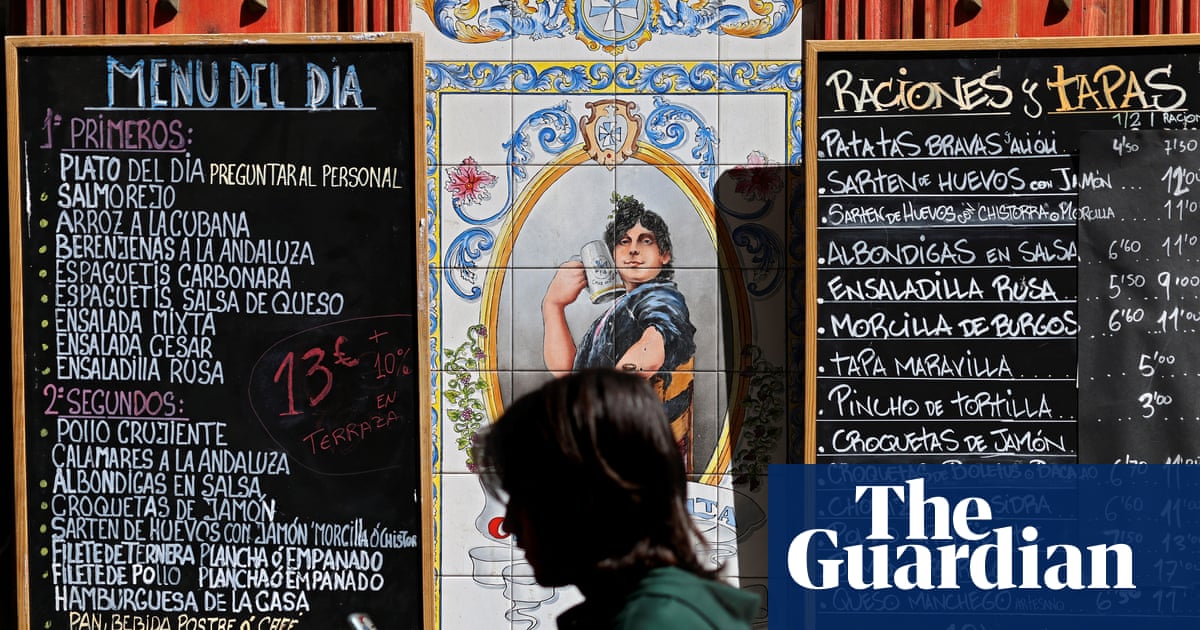
Established under the Franco dictatorship, the lunchtime ritual known as the menú del día is in decline, but all is not lost. A little before lunchtime each working day across Spain, evidence of this enduring legacy is carefully traced in chalk, marker pen, and printer ink. Beckoning to hungry workers from blackboards, whiteboards, and hastily taped pieces of paper, the competitively priced menú del día has been part of everyday Spanish life for more than half a century.
Declining Popularity
While 4 million menús are still served each weekday, Spain is slowly losing its appetite for this familiar ritual. Back in 2009, the country’s best-known chef, Ferran Adrià, went so far as to pronounce it dead—a victim of changing eating habits, economic downturns, and bistro-style restaurants trying to charge €20-€30 (£17-£25) for what should be a simple starter, a hearty main, and a choice of pudding or coffee, with bread and a drink included.
Seventeen years later, however, this diagnosis seems a little premature. A new book by Spanish food journalist Lakshmi Aguirre charts the history and evolution of the menú and argues that while the tradition is indeed in hot water, it hasn’t quite had its chips. Her book, Menú del Día: Everyday Scenes of a First Course, a Second Course and Pudding, begins with the unpalatable fact that it all started with a tourist menu dreamed up in the mid-1960s by Manuel Fraga, the information and tourism minister under Franco.
Historical Context
The regime, keen to show foreign visitors that food was plentiful, good, and affordable in the aftermath of the “years of hunger” following the Spanish Civil War, mandated that establishments serving food should offer:
- A starter of soup
- A main course chosen from at least three options based on egg, fish, or meat, accompanied by a side dish
- A pudding based on fruit, something sweet, or cheese
The price was set between 50 and 250 pesetas, and to prevent unscrupulous restaurant owners from watering down drinks, the law stipulated that the accompanying quarter-litre of wine had to be “reds and whites from Spain that are pure, clean, pleasant on the palate, and with an alcohol content of not less than 12%.”
In the early 1970s, the menú del día was rebranded to make it look less like an attempt to woo tourists and to give ordinary Spaniards the idea that they, too, could indulge. It is now so ubiquitous that many in Spain have no idea of its genesis.