

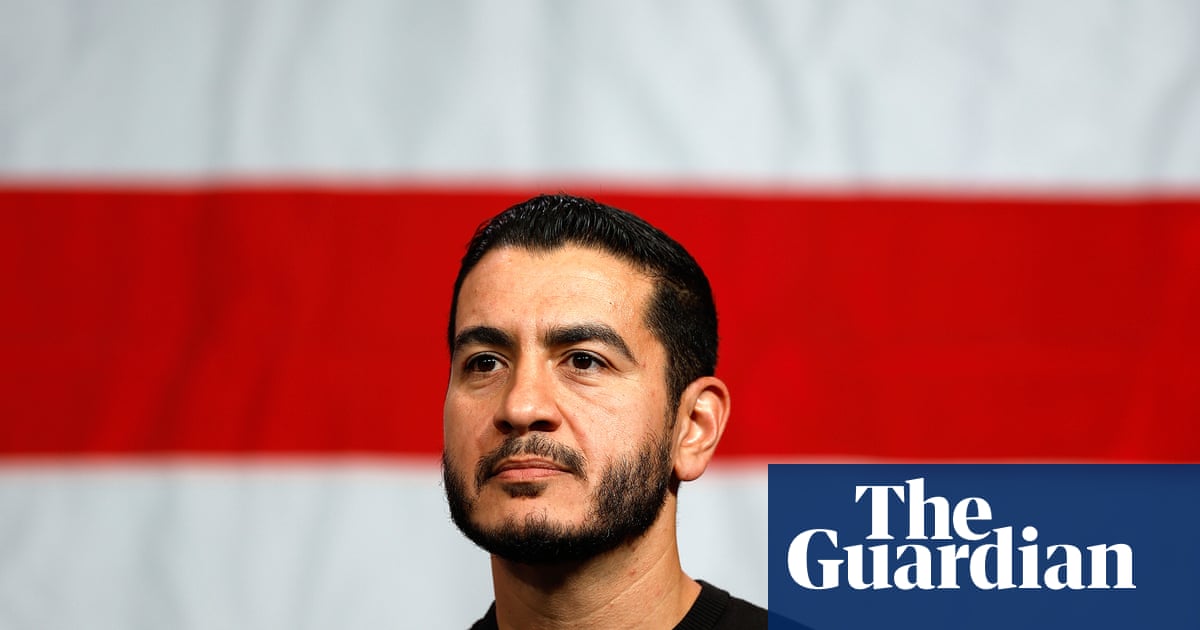
Against a backdrop of rising Islamophobia, Abdul El-Sayed, a Democratic candidate for the US Senate in Michigan, has challenged the premise of repeated questions regarding his affiliations with the Muslim Brotherhood, Israel, and his faith. Positioned at the center of what researchers describe as the worst Islamophobic attacks since the aftermath of 9/11, El-Sayed has opted to confront his critics directly rather than merely defending himself.
A Bold Approach
During a recent town hall meeting, which has garnered over 50 million views, El-Sayed faced a man in the audience who demanded he disavow the Muslim Brotherhood. El-Sayed responded, "Sure, yeah, absolutely. What are you implying? Do you assume that I wouldn’t?" He maintained this line of questioning for five minutes, drawing parallels to the doubts surrounding John F. Kennedy’s Catholicism and challenging the man on whether he would disavow reading religious doctrine into American law. The crowd cheered in response.
The questioner, identified as Thomas Teepell, a former aide to Republican Senator Josh Hawley, had a father whose firm received $250,000 from a non-profit for canvassing against El-Sayed. While this connection does not prove coordination, it adds another layer to the exchange, highlighting El-Sayed's confrontational style.
Confronting the Establishment
El-Sayed's direct approach has earned him the nickname “Mean Mamdani” or “Meandami”. Unlike fellow Muslim politician Zohran Mamdani, who uses warmth to connect with voters, El-Sayed confronts critics head-on. Both politicians have made establishment resistance a part of their political identity, but El-Sayed uses confrontation to expose what he perceives as a rigged political debate.